

I recently took a quick trip down to Puerto Rico—a much-needed escape from the routine—and as a watch enthusiast, I knew there was one landmark I couldn’t miss: the iconic clock tower at the University of Puerto Rico’s Río Piedras campus. Nestled in the heart of San Juan, this historic tower had long been on my radar, not just for its horological intrigue but for its cultural gravity. Even with only a few days to explore the island, making time to see La Torre in person was non-negotiable. And let me tell you—it didn’t disappoint. (By the way, don’t forget to catch a few bonus pics and videos from my trip at the end 😀 )


Sun, Soul, and Seafood: A Traveler’s First Impression
But before I get into all of that, I need to say one thing upfront: Puerto Rico genuinely surprised me. It’s easily one of the most underrated travel destinations I’ve ever experienced.
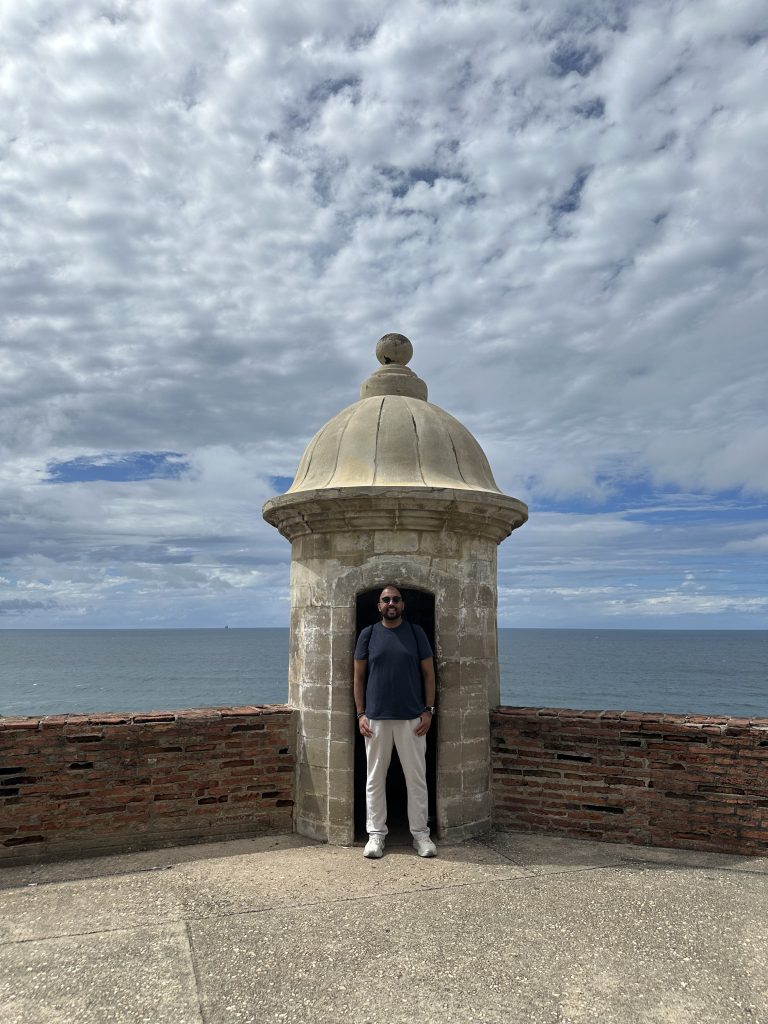

Yours truly, standing in front of a battlement at the San Cristobal fort in San Juan (left) and funning around with the giant shark in front of The Salty Pelican in Rincon (right)
The island is overflowing with richness in every sense—cultural, historical, natural, and culinary. In Old San Juan, the cobblestone streets radiate charisma. The pastel buildings, vibrant street art, and centuries-old forts give the city a unique blend of romance and resilience. Just a short drive away, El Yunque rises like a green cathedral—lush, mist-covered, and teeming with life. As the only tropical rainforest in the U.S. National Forest System, it offers a kind of beauty that feels almost otherworldly.


The El Yunque Yokahu Tower (left), A view of El Yunque from the base of the tower (right)
Further along the coast, you’ll find the quiet, sun-warmed beaches of Añasco, perfect for moments of reflection and stillness. Then there are the small towns—Rincón, Cabo Rojo, Luquillo—each with its own flavor and rhythm. Some feel like surf havens, others like hidden fishing villages or colorful hillside escapes, but all of them pulse with charm and coastal magic.


Sunset at the beach in Añasco (left), “Triple-Wristing” on the beach with my Seiko SUN065, Alba Manta Ray and Dan Henry 1970 dive watches (right)
And the warmth? It isn’t just in the weather. It’s in the people. Everywhere I went, locals welcomed me with sincerity—ready to offer directions, share a story, or insist I try something delicious they just pulled from the kitchen. Their generosity was effortless, their hospitality as natural as the breeze.


A view of the Mona Passage (connects the Caribbean Sea with the Atlantic) from atop a hill in Anasco (left), Some cool restaurant decor at highway junction between Anasco and Rincon (right)
Speaking of which—let’s talk about the food. The seafood alone deserves its own chapter. From just-caught grouper, fried to perfection, to Mofongo piled high with garlicky shrimp, every meal felt like a celebration of the island’s connection to land and sea.


Fried Grouper and Grilled Ahi from La Cambia in Rincon (left), Shrimp and Tuna Toast from Sinaloa in San Jose (Center), Green Shrimp Aguachile from Sinaloa in San Jose (right)
Puerto Rico doesn’t just belong on your travel list—it demands a return trip. Not because you missed something, but because you’ll want to relive it all over again.
As I wandered through the streets of Old San Juan, one of the first things that caught my eye was right underfoot—those iconic blue cobblestones, or adoquines as the locals call them. These bricks shimmer with a slate-blue hue, especially under the Caribbean sun or just after a rain. Far from decorative whimsy, these stones carry the weight of history. Originally brought over from Spain in the 18th century as ship ballast, they were later repurposed to pave the streets of San Juan. Made from furnace slag, the bricks developed their distinctive blue tint over time through oxidation. Today, they’re a beloved hallmark of the city’s colonial past—each step a quiet echo of centuries gone by.


My Seiko SUN065 against the adoquines (left), A charming residential street in Old San Juan (right)
In recent years, changes to Old San Juan’s infrastructure have threatened these historic pavers. While some sections have been replaced with modern gray bricks during renovations, preservationists continue to advocate for their protection. Rumors swirl about a petition to replace the blue stones, but regardless of the source, their gradual disappearance has stirred passionate debate. To many locals and visitors alike, the adoquines are more than cobblestones—they’re symbols of resilience, heritage, and the textured beauty of a city that refuses to forget its past.
So lets talk about La Torre: The Beating Heart of Time at the University of Puerto Rico
Rising proudly over the campus of the University of Puerto Rico in Río Piedras is one of the island’s most recognizable landmarks: the Franklin Delano Roosevelt Tower, affectionately known as La Torre. More than just a piece of architecture, this 173.5-foot clock tower stands as a symbol of intellectual legacy, cultural identity, and horological artistry.


A Chronicle of Knowledge and Nationhood
The University of Puerto Rico (UPR), founded in 1903 in Fajardo and relocated to Río Piedras a year later, is the oldest and largest institution of higher learning in the Caribbean. Originally conceived during a period of political and educational reform following the Spanish-American War, UPR was envisioned as a beacon of progress for a modern Puerto Rican society. The university’s early years were marked by a commitment to excellence, public service, and intellectual empowerment.

A postcard showing the University in Río Piedras, circa 1900-1917
Long before La Torre became the defining silhouette of the University of Puerto Rico’s Río Piedras campus, the land it now crowns was still finding its identity. In the early 20th century, Río Piedras was just beginning to emerge as the university’s permanent home. Scattered across the grounds were early signs of what UPR would one day become—modest classrooms, administrative offices, and academic buildings that hinted at a future not yet fully realized.
That future began to take shape in the 1930s, when the university embraced the bold vision of the 1924 Parsons Plan—a blueprint to transform the University of Puerto Rico into an institution rooted in Spanish Revival design and cultural identity. More than just a campus layout, it was a statement of purpose: to elevate UPR from a functional school to a modern, dignified center of learning—one that could stand proudly among its global peers. At the heart of that vision was the need for a symbolic centerpiece.
Enter La Torre.
Designed by celebrated Puerto Rican architect Rafael Carmoega in collaboration with William Schimmelpfennig, the tower was built in the Spanish Revival style with rich Andalusian and Baroque influences. Its construction was funded in part by the Puerto Rico Reconstruction Administration, a New Deal-era initiative that helped shape much of the island’s civic and cultural landscape during a time of renewal and reinvention.


Construction process of the Franklin Delano Roosevelt Tower at the University of Puerto Rico, Río Piedras Campus (left), View of the central courtyard at UPR Río Piedras, with workers building the future university theater. (right) (Source: The Puerto Rico Architectural Heritage Archive)
Completed in 1939, the 173.5-foot structure was far more than an architectural flourish—it was a declaration. La Torre didn’t just rise over campus—it rose with purpose. At 173.5 feet, it became the university’s visual and symbolic apex: elegant, enduring, and unmistakably Puerto Rican. Its clock faces and bells gave it function; its presence gave it meaning. From day one, it was a landmark meant to inspire—a symbol of academic ambition, cultural pride, and the belief that Puerto Rico could build something extraordinary, entirely its own. Today, La Torre still anchors the campus—not merely as its highest point, but as the standard it still strives toward.


Celebration of the first graduation at UPR Río Piedras. Top image shows graduates passing by the completed Franklin D. Roosevelt Tower; the other features the finished university theater with its narrow entrance and stairs. (Source: The Puerto Rico Architectural Heritage Archive, left), A view of the tower from under a nearby buildings arches today (right)
The tower isn’t merely a beautiful structure—it’s a lighthouse of learning. Referred to as El Faro del Saber (“The Lighthouse of Knowledge”), it marks the university’s role in guiding generations of Puerto Ricans toward enlightenment and civic leadership. Etched into its facade are intricate reliefs and the coats of arms of venerable institutions like Harvard and the National University of San Marcos, symbolizing UPR’s deep connection to global academia. These heraldic emblems were chosen not only for their academic prestige but also to reinforce UPR’s aspiration to be part of a larger intellectual tradition.


The Harvard and the National University of San Marcos coats of arms in the ornate imagery at the base of La Torre.
The Clockwork Heart of La Torre: A Horological Marvel
While its form is undeniably striking, La Torre also houses a remarkable feat of engineering: a functioning carillon and timekeeping mechanism that has been central to campus life for nearly a century.
The Face, Hands, and Machinery of Time
While much is written about the chimes, the clock itself—its face, hands, and underlying mechanism—deserves attention. Though less documented in public archives, photos and accounts show a set of classic Roman numeral clock faces on all four sides of the tower, likely driven by a master clock mechanism that coordinates with the carillon system.
Traditionally, these types of tower clocks would employ a weight-driven mechanism with pendulum regulation. However, given the tower’s updates and electrification, it is likely now operated via a modern electromechanical movement synced to the carillon controller. This ensures both the chimes and clock faces are in harmony, offering reliable timekeeping to all who look up from the surrounding courtyards.


The atrium inside the main entrance at the base of La Torre (left), The ceiling of the atrium inside the tower (right)
The bold, elongated hands sweep across each dial with timeless elegance, framed by the intricate Spanish Revival motifs that surround them. The juxtaposition of fine mechanical engineering and classical design elevates the tower from a mere utility to a celebration of craftsmanship.
The Carillon: A Symphony in the Sky
The tower’s auditory soul is a 25-bell carillon, originally produced by the J.C. Deagan Company—a name renowned for its craftsmanship in precision musical instruments.
A carillon is a monumental musical instrument made of tuned bronze bells, each fixed in place and sounded by a clapper. In traditional systems, a carillonneur plays it by striking a wooden keyboard with fists and feet, creating dynamic, expressive music. But in modern towers like La Torre, the performance is automated—yet no less enchanting.


A close up of the intricate columns supporting the arches under the tower (left), Below the tower there is a monument to the nations of the Americas portraying the coats of arms of the Organization of American States within a bronze circle, as a symbol of the PanAmerican Union. (right)
La Torre’s carillon spans two full octaves, from middle C to the C two octaves above. Each bell is struck by a 25-pound hammer triggered by an electromechanical controller. Following the Westminster chime sequence, it plays brief musical phrases every fifteen minutes, culminating in a complete melody at the top of the hour. In some moments, it also surprises listeners with full songs, many drawn from the rich catalog of Latin American composers like Rafael Hernández and Agustín Lara.
The system itself is a graceful fusion of old-world mechanics and modern technology. Electric impulses activate the hammers, while calibrated springs reset them, creating a rhythm of precision and elegance. Despite the updates, the core spirit of the carillon remains—mechanical coordination in service of beauty.
Far more than a timekeeping device, this carillon is a storyteller. Its melodies echo across the campus not just as reminders of passing time, but as living expressions of cultural identity and artistic pride.
Restoration and Renewal
Over the decades, as is the case with any mechanical system, wear took its toll. The carillon eventually fell silent until its restoration was entrusted to The Verdin Company. This meticulous refurbishment preserved the original tone and mechanical integrity while discreetly modernizing the components to ensure reliable long-term performance. Prior to this restoration, local maintenance crews had done their best to keep the system operational using improvised parts and temporary fixes—a testament to the community’s devotion to preserving the tower’s voice.

Collage of some of the iconic and historic clocks from The Verdin Company (Taken from The Verdin Company Site)
The Verdin Company: Timeless Craft Meets Modern Innovation
Founded in 1842 in Cincinnati, Ohio, The Verdin Company is a sixth-generation, family-owned business renowned for its bells, clocks, and carillon systems. With over 55,000 installations worldwide, Verdin has left its mark on churches, universities, and public spaces across the globe.
Their electronic carillon systems blend the tradition of bell music with modern technology—offering programmable chimes, music libraries, and remote controls. Verdin’s restoration of the University of Puerto Rico’s carillon is a prime example of their ability to preserve historic character while updating performance for modern use.
Today, the carillon continues to perform its dual function—announcing the time and celebrating Puerto Rico’s musical heritage.
A Personal Encounter with Time
Standing beneath La Torre, the gentle resonance of the carillon overhead, one feels the passage of time as something tangible, melodic, and meaningful. It’s not just about marking hours—it’s about experiencing a living symbol of heritage and progress. The scent of tropical flowers from the university gardens, the distant murmur of students in conversation, and the warm touch of Caribbean sunlight all combine to create a multisensory moment anchored by the steady toll of the tower’s bells.


A beautiful arched hallway, leading to the atrium under La Torre (left), A close-up of some of the tile work ornamenting La Torre’s interior (right)
As the bells toll and the hands turn, La Torre does more than tell time. It tells a story—Puerto Rico’s story.
Flora & Fauna
The grounds surrounding La Torre offer far more than historical and architectural beauty—they’re part of a living, breathing ecosystem that pulses with tropical life. Nestled within the broader San Juan Ecological Corridor, the University of Puerto Rico’s Río Piedras campus is a sanctuary for native flora and fauna, where wild nature and academic life intertwine seamlessly. Palm-lined walkways, vibrant blooms, and shade-drenched trails lead you through scenes that feel more like a curated botanical dream than a traditional college campus.


An image of a 5’2 person (blocked) standing next to the truly massive Monstera leaves on the UPR campus (left), Another gorgeous entryway on the campus (right)
The nearby San Juan Botanical Garden, an extension of the university itself, boasts over 30,000 plant species spread across themed spaces—from aquatic gardens and Taíno heritage plots to palm groves and orchid sanctuaries. It’s here you might spot the striking Stahlia monosperma (cóbana negra), an endangered native species, or marvel at the textured foliage of Monstera deliciosa climbing high into the canopy. With its large, split leaves, this tropical favorite—alongside the more petite and perforated Monstera adansonii—thrives in the island’s lush humidity, lending the grounds their familiar Jurassic charm.


The astounding height that this Monstera has climbed to on their massive tree on the UPR campus (left), A bottom up view of the majestic palm trees in the middle of the campus quadrangle, with the tip of La Torre at the edge of the frame (right)
And the wildlife? It’s not just present—it’s participatory. The iconic coquí adds its nighttime serenade, while birds like the iridescent Antillean mango hummingbird and the charismatic Puerto Rican tody flash through the trees like living jewels. These aren’t just background sounds or fleeting glimpses—they’re part of the rhythm here. As the bells of La Torre ring out overhead, nature responds in chorus, reminding every passerby that time on this campus isn’t just measured in hours—it’s rooted in life.


A mural paying tribute to local Flora & Fauna right outside UPR’s School of Architecture, Medallions commemorating UPR and La Torre that are mounted on the walls inside La Torre (right)
Where Identity Takes Root
The University of Puerto Rico isn’t just an academic institution—it’s one of the cultural heartbeats of the island. Since its founding, UPR has been a crucible for Puerto Rican identity, where history, art, activism, and intellect converge. It’s where national pride has been nurtured in classrooms and cultivated on stages, in galleries, and across open plazas buzzing with energy and ideas.


UPR Love on display outside La Torre (left), A cool mural on the walls of the inner courtyard of the School of Architecture building (right)
Its influence goes well beyond lecture halls. Through museums, concerts, public debates, and community events, UPR has helped preserve Puerto Rican heritage while also pushing its boundaries. Generations of writers, artists, musicians, and instruments of change have walked its corridors—many of whom have gone on to shape the island’s cultural voice. And when Puerto Rico has faced moments of social reckoning, the university has often been right there: a sounding board, a starting point, and sometimes even a spark. To understand Puerto Rico is, in many ways, to understand UPR—an institution that reflects both the island’s spirit and its ongoing story.
Take Me Back Soon..


The walls of the San Cristobal fort overlooking Old San Juan (left), An example of the cool murals that can be found all over the island (right)
In just a few days, Puerto Rico reminded me how deeply time and place can intertwine. From the rhythmic chimes of La Torre to the shimmer of San Juan’s blue cobblestones and the rustle of rainforest leaves in El Yunque, this island carries its history not just in books or buildings, but in the air, the people, and the pace of life. As a watch enthusiast, I came looking for mechanical precision—and I found it, echoing proudly from a 1930s bell tower. But I also found something more: a living clockwork of culture, nature, and resilience that keeps Puerto Rico ticking with beauty and soul.


A view of the Port of San Juan from the street outside the San Cristobal fort (left), Oh to be back in PR, sunning myself like this Iguana on a tree in Rincon (right)
The University of Puerto Rico’s clock tower is more than a marvel of gears and bells—it’s a storyteller. For anyone drawn to horology, history, or heritage, La Torre is a must-visit. But don’t stop there. Let the island surprise you with its warmth, its flavor, and its effortless blend of past and present. Whether you’re chasing chimes or chasing sunsets, Puerto Rico invites you to slow down, look closer, and fall into rhythm with a place where time is measured not just in minutes—but in meaning.
Bonus Pics & Vids!


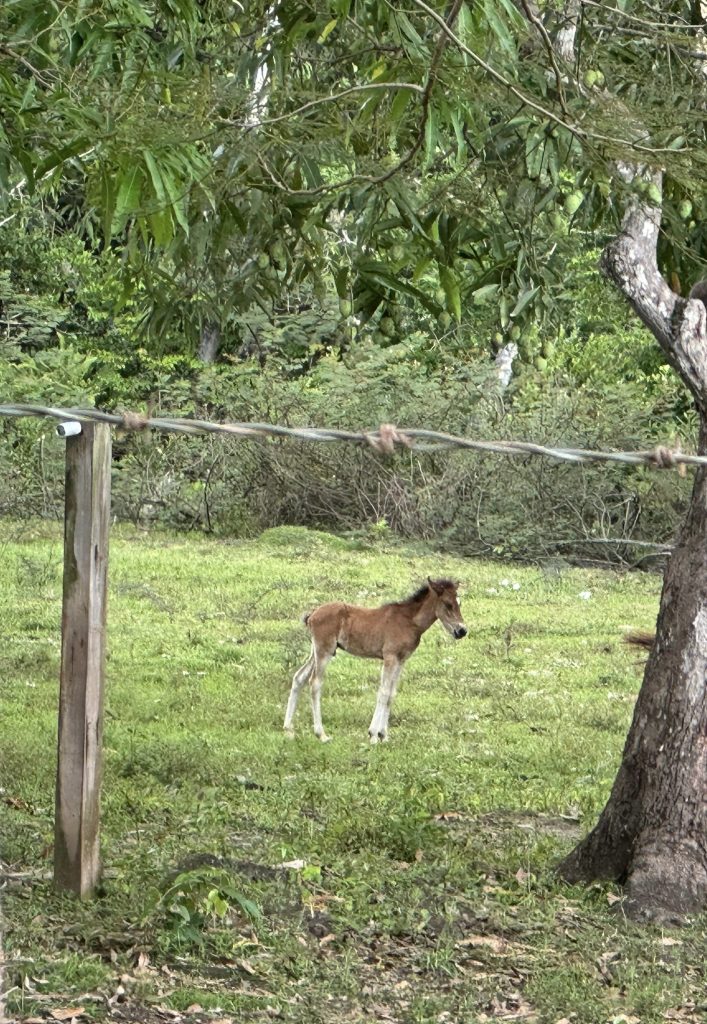
Yours truly taking pictures of a leaf (left), A rooster that I caught serenading the town square in Old San Juan (center), A foal shyly stumbling away from us on a farm in Añasco (right)


Another cool mural (left), Ocean Sunset (center), A gorgeous Egret that I found in a roadside farmers market along the coast (right)


The waters of the Rio Grande Añasco mixing with the ocean after a rain storm (left), Mural of a Puerto Rican Tody (center), Waterfalls in the El Yunque Rain Forest (right)
A thunder storm rolling in from the ocean off the coast of Añasco at sunset
It’s the chickens’ show and we are all here to play a part.
To explore more horological landmarks and stories that tie time to culture, follow along at @bowearswatches and www.bowearswatches.com.


