
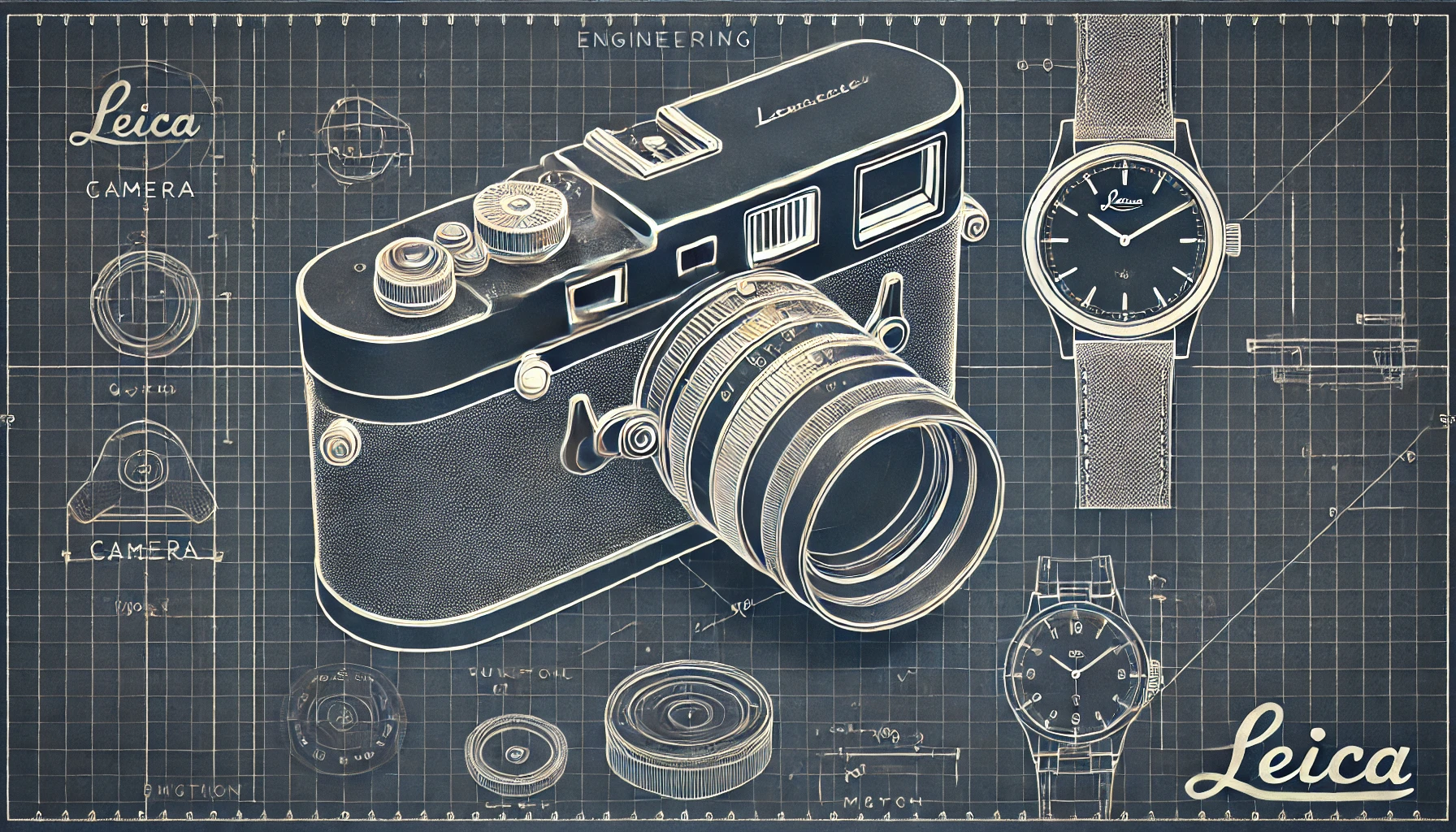
Watch collectors and camera enthusiasts often find themselves on overlapping paths. At first glance, these worlds might seem distinct, but dig a bit deeper, and it becomes clear why so many collectors of one find themselves drawn to the other. Both watches and cameras represent an intricate blend of craftsmanship, engineering, and an appreciation for aesthetics paired with function. A watch on the wrist, like a camera in hand, is an object that combines beauty with purpose. Its design must capture the eye, but its build quality and functionality are paramount. This is why watch collectors, who inherently value these aspects, can develop a strong appreciation for classic cameras and the stories they tell.
The parallels are undeniable. A high-quality mechanical watch is essentially a piece of wearable machinery, crafted with precision and intended to endure the test of time. Similarly, classic film cameras, and even modern digital ones, embody a level of craftsmanship that goes beyond the sum of their parts. Just as a watch’s movement represents the heartbeat of horology, a camera’s lens and shutter mechanism represent its core—converting light into memories and moments frozen in time. Both are objects meant to be used and appreciated over decades, telling stories not just of their wearers or users but of the hands that crafted them.

There’s also something in the tactile nature of watches and cameras that appeals to collectors. The feel of winding a mechanical watch, hearing the soft click of the crown, or observing the movement’s mesmerizing dance of gears and springs is echoed in the experience of adjusting a vintage camera, feeling the satisfying snap of the shutter, and manually focusing a lens. In both, there is a sense of connection to the past, to a time when objects were made to last, with careful attention to detail. Ultimately, for a watch enthusiast, the leap to cameras wouldn’t be a big one; it’s a natural extension of the appreciation for fine mechanics, heritage, and timeless design.
So why do I bring this up today?
I recently came across the coolest thing. Leica, the legendary German camera brand renowned for its precise engineering and timeless design, has recently ventured into the world of watchmaking—a move that has sparked curiosity and excitement among both camera enthusiasts and horology fans alike. Known for crafting some of the most iconic cameras in history, Leica’s step into the watch industry feels like a natural progression. Just as their cameras are celebrated for their meticulous craftsmanship, Leica’s watches showcase the same dedication to quality, with a blend of sleek, minimalist design and precision engineering that echoes their legacy. I want to dive into Leica’s journey from lenses to lume, exploring how their heritage in capturing time through photography has seamlessly translated into measuring it through watchmaking.


From the Left: Leica’s Corporate Headquarters in Wetzlar, Germany; Leica advert from the early 1900s
One of the first thoughts I had was wondering just why a camera company would want to enter the world of Horology. What I found was intriguing. Leica’s entry into watchmaking in 2018 can be determined to have been driven by a few key motivations. Already known for their precision engineering and dedication to craftsmanship, Leica saw an opportunity to expand its legacy into horology. Creating high-end watches allows Leica to apply its technical expertise in fine mechanics to a field that equally values meticulous attention to detail. This move has broadened Leica’s product line while preserving the same standards of precision and design that have been fundamental to its success in the camera industry.

Photo: Side view of a Leica watch
Leica’s cameras are celebrated worldwide for their minimalist, functional designs, and the company has brought their philosophy into its watches. Like cameras, watches are highly personal items that demand a balance of form and function. Leica’s entry into horology allowed it to create products that, while technically complex, are clean and straightforward in appearance, echoing the simplicity and elegance of its iconic rangefinders.
Heritage and brand identity also played a significant role in Leica’s decision to create watches. Leica has a rich legacy built on tradition, heritage, and luxury—qualities that align well with the luxury watch market. This move attracted an audience appreciative of finely crafted, collectible items. Culturally, watches and cameras share a connection, as both are instruments that measure time—whether capturing a split second in photography or marking hours and minutes. By creating watches, Leica is fortifying its reputation as a brand that values artistry, function, and heritage.



From the left: Leica advert from 1934 (source Alamy), Dr. Andreas Kaufmann, majority owner of Leica Camera AG, A Leica ZM 11
Leica’s journey into watchmaking is part of their broader expansion into the luxury lifestyle market. The brand has increasingly moved beyond cameras to lifestyle products and luxury goods, from camera bags to collaborations in eyewear. The luxury watch market was a natural next step, appealing to Leica’s audience of collectors and enthusiasts who appreciate both style and functionality. Leica watches allow the brand to reach a wider audience, appealing even to those who may not be photographers but still resonate with Leica’s reputation for quality and style.
By entering the watchmaking industry, Leica has leveraged its strengths in precision engineering and German craftsmanship, tapping into an established community that values exclusivity and heritage. This venture not only reinforces Leica’s legacy but also expands its presence in the luxury market, adding a sophisticated new dimension to the brand and captivating a broader audience of enthusiasts.
Leica’s History
Leica was established in 1869 as the Ernst Leitz Optische Werke, named after its founder, Ernst Leitz. Ernst Leitz took over a small optics workshop and established the Ernst Leitz Optische Werke in Wetzlar, Germany. Originally a manufacturer of microscopes, Leica eventually expanded into the field of photography. The name “Leica” itself was derived from the founder’s surname (Leitz) and the word “camera”.


From the left: Oskar Barnack, A commemorative plaque marks the spot in Wetzlar Germany where Barnack tested his Ur-Leica
The brand became renowned in 1914 when an employee of Leitz created the first 35mm film camera, which revolutionized photography and helped establish Leica’s reputation for precision engineering and innovation. In the early 1900s, Oskar Barnack, began experimenting with the idea of a small, portable camera using 35mm film. His goal was to develop a tool that would allow him to capture the world with mobility, something traditional, bulky cameras at the time did not permit. In 1914, Barnack created the first 35mm prototype, the Ur-Leica. Although World War I delayed its commercial release, this camera prototype laid the foundation for what would become the modern compact camera.


From the left: An early example of Barnack’s Ur-Leica, A close-up of Barnack’s commemorative plaque
In 1924, Ernst Leitz II, son of the founder of Leica, decided to take a risk on Oskar Barnack’s innovative camera design. Moving forward with production, Leitz introduced the Leica I to the public in 1925. This groundbreaking model utilized 35mm film, making it one of the first mass-produced cameras to adopt this format. Leica’s compact and accessible design transformed photography by making it more mobile and democratic, setting the stage for the era of street and documentary photography.


From the left: An early Leica 1 and it’s accessories, An example of the extremely rare “Luxus” Leica 1
Throughout the 1930s, Leica continued to evolve its rangefinder technology, improving upon the original Leica I design. In 1932, Leica introduced the Leica II, which featured interchangeable lenses, offering photographers greater creative versatility. This innovation was followed by the Leica III series, which added a slow shutter speed range, further enhancing the camera’s capabilities. Leica’s technical advancements attracted legendary photographers like Henri Cartier-Bresson and Robert Capa, who used Leica cameras to capture some of the most iconic images of the 20th century.


From the left: An example of the Leica ii, The Leica ii with an enhanced lens
During the tumultuous 1940s and World War II, Leica continued to produce cameras while also contributing to military optics manufacturing. After the war, Leica resumed its focus on civilian products, refining its rangefinder cameras. The Leica IIIc, introduced during this period, gained popularity among photojournalists for its compact design and superior optics, securing Leica’s place in the world of professional photography.
In 1954, Leica introduced the iconic Leica M3, which marked a significant leap forward in rangefinder technology. With its sleek, robust design and innovative viewfinder system, the M3 set new standards for 35mm cameras. Its precision engineering, compatibility with interchangeable lenses, and ease of use made it the go-to camera for professionals worldwide. The Leica M system became legendary, and its design principles continue to influence modern photography equipment, with updated models still revered by enthusiasts and professionals alike.


From the left: The Leica M3 in its black, original metallic and military green livery
From the 1960s through the 1980s, Leica faced increased competition from Japanese manufacturers, who were producing affordable and technologically advanced cameras. In response, Leica introduced its first single-lens reflex (SLR) camera, the Leica R series, in 1964. Despite this innovation, Leica struggled to keep up with rapid technological advancements from brands like Canon and Nikon. Leica’s cameras remained niche products, valued by enthusiasts and professionals for their exceptional craftsmanship. By 1986, the company restructured, forming Leica Camera GmbH, and diversified its offerings by exploring digital imaging technology while maintaining a strong commitment to traditional camera craftsmanship.
The 1990s marked a period of reinvention for Leica as the photography industry began shifting from film to digital. Leica was initially slower to adopt digital technology, staying true to its focus on analog cameras. Eventually, however, Leica entered the digital market with its first digital rangefinder model, the Leica M8, released in 2006. This model marked the beginning of a new chapter for Leica, combining its classic design with modern digital capabilities and capturing the attention of both traditionalists and tech-savvy photographers.


From the left: Front and all around views of the Leica M8
In the 2000s, Leica’s digital renaissance continued with the successful release of the Leica M9 in 2009, the world’s first digital rangefinder camera equipped with a full-frame sensor. This model was popular with both traditional and modern photographers, as it married the beloved form factor of Leica’s M series with digital convenience. Leica also introduced the S system in 2008, a digital medium-format camera targeting professional photographers with its high-resolution sensor and superior optics, further solidifying Leica’s commitment to digital innovation.


Images: Front and back view of the Leica Q Type 116
During the 2010s, Leica broadened its portfolio with the introduction of the Leica Q series, a compact fixed-lens camera equipped with a high-quality full-frame sensor and sharp Summilux lens. The Q series quickly gained popularity, adding to Leica’s digital successes. The company also collaborated with brands like Panasonic, expanding into the luxury compact camera market. Beyond cameras, Leica ventured into other luxury segments, including eyewear and watches, as it continued to redefine itself as not only a camera manufacturer but a luxury lifestyle brand.
And then along came 2018 and something wonderful happened!
In 2018, Leica ventured into the world of horology, launching its first line of watches—the Leica L1 and L2. These timepieces were crafted with the same meticulous attention to detail and design principles that define Leica’s renowned cameras.


From the left: A Leica L2 being assembled, a closeup of the Leica L1 movement
Building on this success, Leica expanded its horological collection with the Leica ZM series, where “ZM” stands for “Zeitmesser,” the German word for “timepiece.” This name choice underscores Leica’s dedication to craftsmanship, embodying the brand’s philosophy of precision and sophisticated design. Through these collections, Leica has skillfully translated its expertise in optics and engineering into the art of watchmaking, captivating both watch enthusiasts and fans of the iconic camera brand.
The Leica ZM 1 and ZM 2 watches share the same hand-wound movements as the Leica L1 and L2 models. Both sets of watches are powered by movements developed in collaboration with Lehmann Präzision GmbH, a German precision engineering company. Leica’s hand-wound movements bring exceptional craftsmanship and innovation to Leica’s L1 and L2 watch models. Entirely “Made in Germany,” with production centered in Germany’s Black Forest region, these movements reflect a commitment to quality, allowing for a high level of vertical manufacturing integration.

Image: Leica L1 (left) and Leica L2 (right)
The Leica L1 movement operates at a frequency of 28,800 vibrations per hour (4 Hz) and boasts a robust 60-hour power reserve, with 25 jewels enhancing smoothness and reducing friction within the mechanism. The L1 model includes functions for hours, minutes, a sub-dial for seconds, a date display, a power reserve indicator, and a unique crown-setting indicator. The L2 model builds on this by incorporating additional functionalities for frequent travelers, such as a GMT function and a day/night indicator. Since they share movements, the ZM 1 & ZM 2 models mirror this functionality.


From the left: Leica L1, Leica L1 clear case back, Leica L2
One of the most distinctive aspects of these models is the patented push-crown mechanism, inspired by the shutter release button of a camera. This mechanism allows the wearer to set the time by pressing the crown, resetting the seconds hand to zero. This innovative design differs from conventional watches, where the crown is usually pulled out to stop the movement, and offers a precise time-setting experience and a unique tactile feel reminiscent of using a Leica camera.
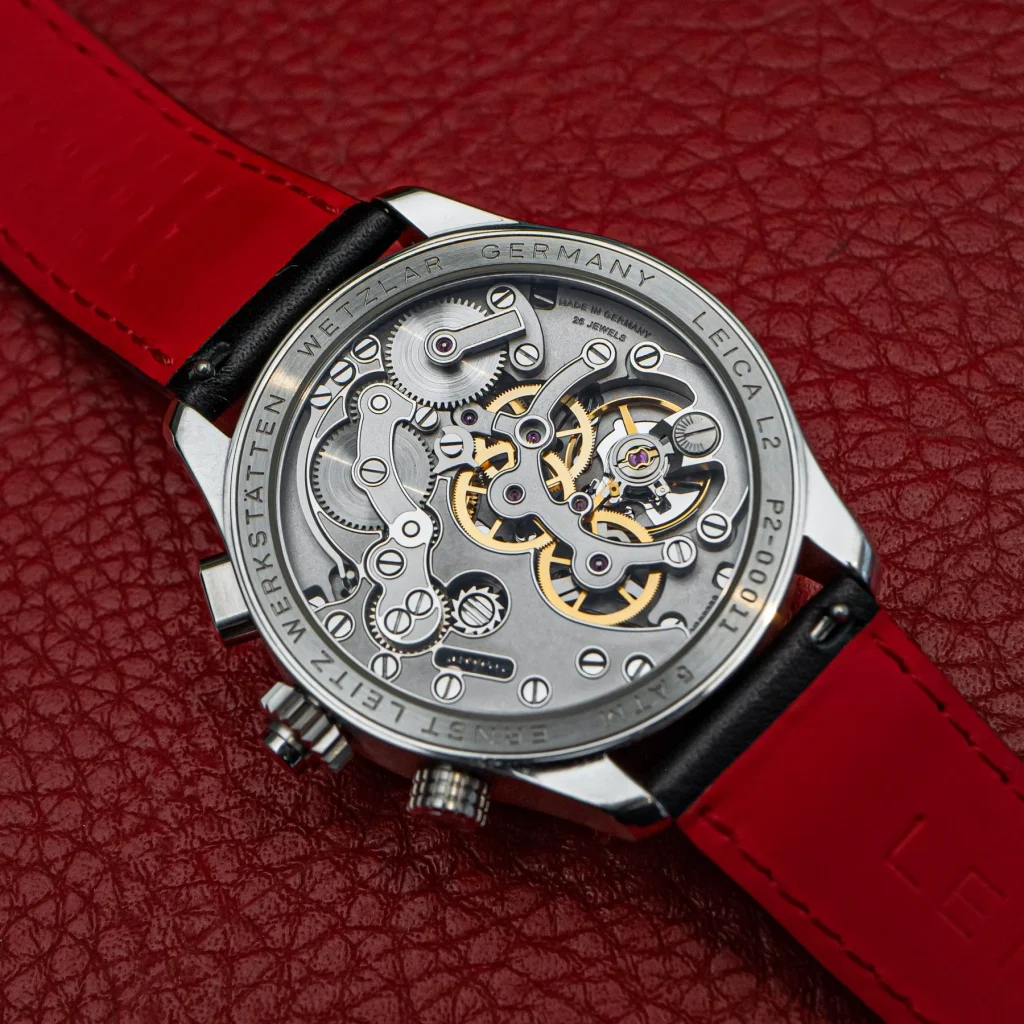


From the left: Leica L2 clear case back, Leica ZM crown shot, Leica L2 strap
Building upon the success of the ZM 1 and ZM 2, Leica introduced the ZM 11, a self-winding watch that combines classic design principles with advanced engineering. The ZM 11 showcases a unique dual-layered dial that creates a subtle gradient effect, achieved through meticulous mechanical craftsmanship. This design pays homage to Leica’s iconic design language, evoking the visual appeal and heritage of its esteemed cameras. The ZM 11 is powered by the Leica caliber LA-3001, developed in collaboration with Chronode, a Swiss movement developer known for its expertise in crafting top-tier mechanical movements.


From the left: Leica ZM 1 Monochrom, Leica ZM 1 on the wrist, Leica ZM 2
The Leica Calibre LA-3001 is a 35-jewel automatic movement that operates at a frequency of 28,800 vibrations per hour (4 Hz). It features a 60-hour power reserve and is regulated to maintain a precision of -4 to +6 seconds per day, measured in five positions, aligning with chronometer standards. Its design incorporates sandblasted bridges with brushed chamfers and Ruthenium plating, giving it a modern and distinctive appearance. The partnership with Chronode ensured that the ZM 11 met the high standards of precision and reliability that are synonymous with the Leica brand.

Image: Leica ZM 11 in three different dial and band/bracelet variants
All of Leica’s watches are characterized by minimalist design, high-quality materials, and meticulous attention to detail. The cases are made from durable and refined materials such as stainless steel and titanium. The dials emphasize clarity and simplicity, featuring legible indices and hands for easy readability. Domed sapphire crystals and exhibition case backs add a level of sophistication, allowing enthusiasts to appreciate the intricate movements within. The straps are crafted from premium materials, designed for both comfort and style, with some models featuring an innovative Easy-Change locking system. This system enables effortless switching between different strap options, including stainless steel, titanium, rubber, and fabric, allowing users to adapt their timepiece to various occasions without sacrificing comfort or security.

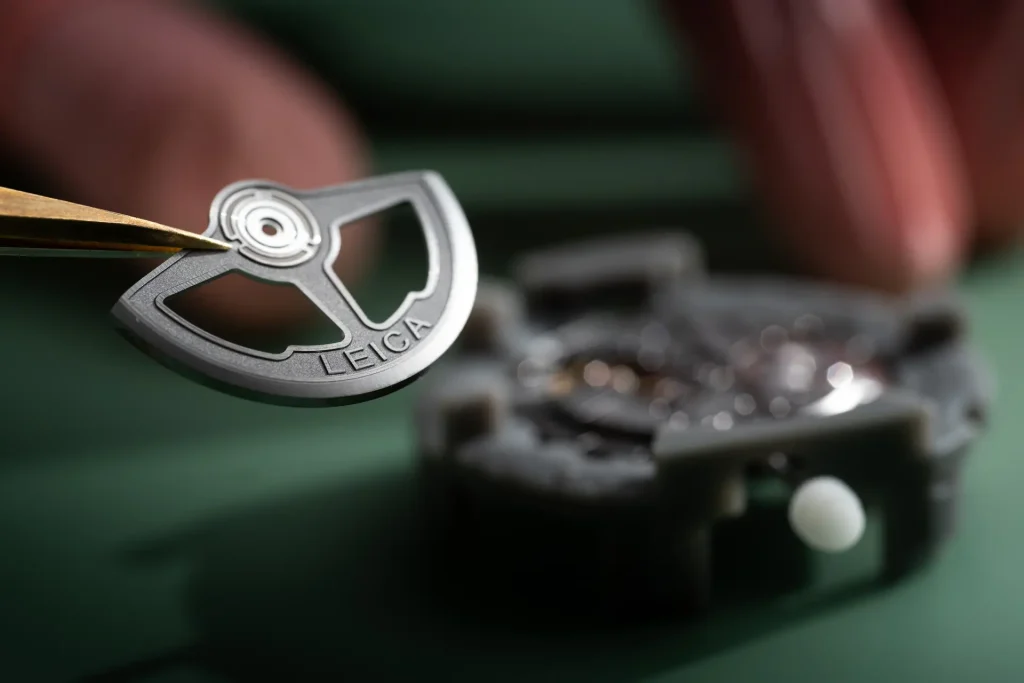
From the left: Leica ZM 11 display case back, Leica Calibre LA-3001 movement rotor
Given their exclusive nature, Leica watches are produced in limited quantities and are available only through select Leica stores and authorized dealers worldwide. This exclusivity ensures that each timepiece retains its value and appeal, making them especially desirable for collectors and enthusiasts who appreciate fine craftsmanship and unique design.


From the left: Leica ZM 2 dial close-up, Leica Power Reserve Indicator
Leica is expected to expand its watch collection in the near future. There has been speculation that in 2024, coinciding with the 70th anniversary of the Leica M series, the company is expected to introduce the next generation of its timepieces. Among the anticipated releases is the Leica L3 watch, which may feature a mechanical alarm complication. While specific details and exact release dates have not been officially confirmed, we eagerly anticipate that Leica will maintain its ongoing commitment and still has much to offer in the realm of horology.
The convergence of watches and cameras is more than a coincidence; it’s a shared celebration of craftsmanship, design, and functionality. Leica’s journey from its pioneering role in photography to its ventures in horology exemplifies this connection, merging its legacy of precision and artistry into timekeeping. For collectors and enthusiasts, Leica’s watches are not merely instruments for telling time—they are extensions of the brand’s storied history, embodying its ethos of innovation and timeless elegance.


From the left: Leica ZM 1, Leica Monochrom
As we look ahead, Leica’s anticipated expansion in horology, especially with the potential introduction of the Leica L3 watch, promises to further solidify its position as a luxury lifestyle brand. Whether through its iconic cameras or its meticulously crafted timepieces, Leica continues to resonate with those who value objects that tell a story—objects designed not just to be used, but to be cherished. With its enduring commitment to quality and innovation, Leica’s presence in horology stands as a testament to the harmonious union of engineering, aesthetics, and tradition.
Unrelated to watches, but here are some iconic moments captured using Leica technology:
“Behind the Gare Saint-Lazare” by Henri Cartier-Bresson (1932)

Cartier-Bresson used his Leica to capture this iconic image of a man jumping over a puddle behind the Gare Saint-Lazare train station in Paris. Known for his “decisive moment” philosophy, Cartier-Bresson relied heavily on Leica cameras throughout his career, favoring their discreet size and quiet operation.
“D-Day Landing at Omaha Beach” by Robert Capa (1944)

Robert Capa’s images of the D-Day landings were taken on a Leica camera, capturing the harrowing first moments of the Allied invasion of Normandy. These photographs have since become some of the most significant images of World War II, despite the loss of many original negatives.
“Falling Soldier” by Robert Capa (1936)

Taken during the Spanish Civil War, this photograph shows a soldier at the exact moment of death. Capa captured this image using a Leica, and it remains one of the most powerful and controversial images in the history of war photography.
“Che Guevara’s Portrait” by Alberto Korda (1960)

The iconic image of Che Guevara, known as *Guerrillero Heroico*, was taken by Cuban photographer Alberto Korda on a Leica. Captured during a memorial service in Havana, this photograph became an international symbol of revolution and is one of the most widely reproduced images in history.
“V-J Day in Times Square” by Alfred Eisenstaedt (1945)

Eisenstaedt used a Leica IIIa to capture the iconic image of a sailor kissing a nurse in Times Square, celebrating the end of World War II. The spontaneous moment became one of the most famous photographs in American history.
This photo is often lauded as an iconic photograph, celebrated for its striking composition and the evocative moment it captures. Taken in 1945, the image depicts a soldier passionately kissing a nurse on the streets, evoking themes of romance and spontaneity in post-war America. However, it is also important to critically examine the context of such imagery. Closer analysis reveals that the kiss was uninvited, raising significant ethical questions about consent and the power dynamics at play. While it continues to be revered as a moment frozen in time, its characterization as a romantic gesture has been increasingly scrutinized in light of evolving understandings of personal agency and respect. This duality—being both a celebrated photograph and a depiction of an unsettling interaction—underscores the importance of reassessing historical works within modern cultural and ethical frameworks.
“The Kiss” by Elliott Erwitt (1950s)
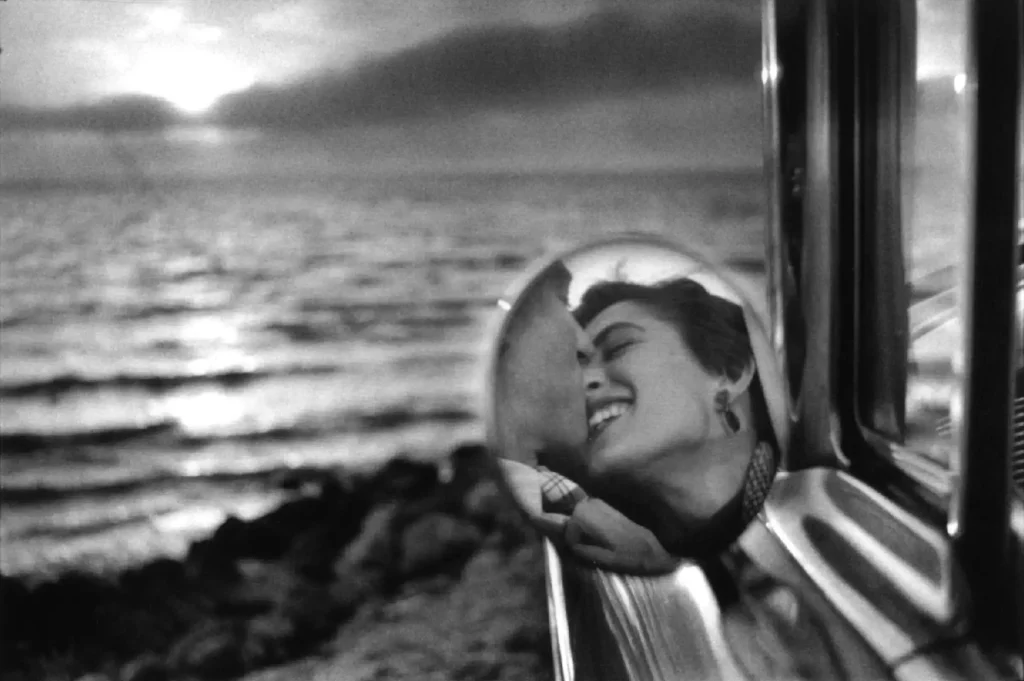
Elliott Erwitt captured the romantic, reflective photograph of a California couple kissing through a car’s side mirror with his Leica. Known for his candid, often humorous street photography, Erwitt’s Leica allowed him to capture moments unobtrusively and spontaneously.
Self-Immolation of Thích Quảng Đức by Malcolm Browne (1963)

Malcolm Browne used his Leica to capture the powerful image of Buddhist monk Thích Quảng Đức’s self-immolation in Saigon as a protest against religious persecution. This photograph became one of the most enduring images of the Vietnam War era.
These photographs illustrate Leica’s critical role in capturing powerful and spontaneous moments in history, often with an intimate and direct perspective that few other cameras could achieve.


