

As the snow fell over the weekend and with a polar vortex gripping the nation this week, we decided to stave off the cold tonight by watching a movie. Our pick for the evening? The live-action remake of a timeless classic, Beauty and the Beast. As we settled in, I realized that beyond being a beloved story, this is a movie that may hold a special appeal for watch collectors and horology enthusiasts, due to one of it’s supporting-role characters.

A movie poster/banner for the 2017 Beauty and the Beast film
The origins of Beauty and the Beast can be traced back centuries, rooted in folklore and literature that explore themes of transformation, love, and redemption. The first formal version of Beauty and the Beast appeared in 1740, written by French author Gabrielle-Suzanne Barbot de Villeneuve. Her La Belle et la Bête was a lengthy and detailed story for adults, including extensive backstories for Beauty and the Beast as well as magical elements like fairies and curses. This version emphasized moral and emotional growth through the Beast’s transformation and Beauty’s trials. In 1756, Jeanne-Marie Leprince de Beaumont published a simplified version in her book Magasin des Enfants (Children’s Collection). Beaumont’s version, tailored for children, focused on moral lessons, portraying Beauty as virtuous, selfless, and intelligent, while highlighting the Beast’s inner goodness despite his fearsome exterior. This retelling became the foundation for most later adaptations.


Left: A portrait of French author Gabrielle-Suzanne Barbot de Villeneuve, Right: An Illustration from her La Belle et la Bête
The story has often been interpreted as an allegory of arranged marriages, personal transformation, and the value of inner beauty. Historically, it served to reassure young women entering marriages with older or intimidating partners, emphasizing patience and the discovery of hidden virtues. Over time, Beauty and the Beast gained enduring popularity through various adaptations, including operas, European theater productions, and Jean Cocteau’s 1946 film, which brought the story to life with surrealist visuals and romance. Disney’s 1991 animated classic transformed the tale into a cultural phenomenon, adding humor, music, and a focus on the enchanted household staff. This legacy continued with Disney’s 2017 live-action adaptation, which enriched character backstories and modernized the story’s themes.

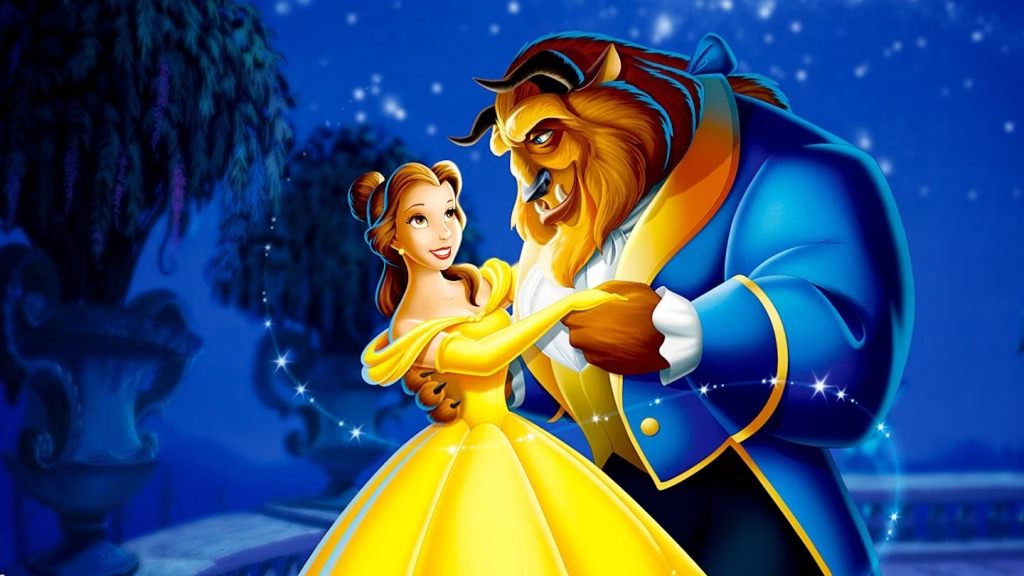
Frames of Belle dancing with the beast in the 2017 (left) and 1991 (right) versions of the movie.
Today, Beauty and the Beast endures as one of the most beloved fairy tales, celebrated for its timeless message that true love looks beyond appearances. With its emphasis on compassion, redemption, and personal growth, the story continues to inspire retellings in literature, film, and art, cementing its place as a timeless classic.
Cogsworth
One of the main characters in the movie is an animated clock, Cogsworth, whose intricate design and symbolism offer more than just comic relief. This character serves as a unique way for the story’s writers to provide subtle social commentary, blending humor and deeper meaning into the narrative.
In Disney’s Beauty and the Beast, the character of Cogsworth plays a pivotal role as the enchanted castle’s resident clock. While he serves as comedic relief in many scenes, his presence is integral to the story’s themes of time, redemption, and loyalty. Cogsworth’s transformation from a human servant to a charming, anthropomorphic mantel clock provides depth to the narrative and an opportunity for viewers to connect with the idea that time is of the essence—both literally and metaphorically—in the tale as old as time.

Cogsworth alongside his “co-star” Mrs. Potts who is the castle’s housekeeper turned teapot.
Cogsworth serves as the castle’s majordomo, overseeing the household and maintaining order with clockwork precision. As the chief steward, his responsibilities include managing the enchanted staff, coordinating tasks, and upholding structure within the Beast’s sprawling estate. His personality—a blend of meticulousness, rule-following, and devotion to duty—reflects this role perfectly, making his transformation into a French mantel clock a fitting metaphor for his character. Even under the strain of the curse, Cogsworth remains committed to his role, striving to bring stability to a chaotic environment.
A majordomo historically ensured the seamless operation of grand estates, much like Cogsworth does in the castle. His clock form symbolizes precision and reliability, mirroring his attempts to manage the household with the same harmony and efficiency as a well-oiled timepiece. This transformation also underscores his internal struggle to maintain control amidst the unpredictable behaviors of those around him, such as Lumière’s playful irreverence or the Beast’s temper. Just as a clock’s mechanisms must work in sync, Cogsworth works tirelessly to ensure the castle functions, even when faced with overwhelming challenges.
Beyond his literal transformation, Cogsworth embodies the thematic importance of time in the story. The curse’s resolution hinges on a strict temporal deadline, making his role as a living clock a poignant reminder of the stakes at hand. His focus on punctuality and order underscores the urgency of breaking the spell and the fleeting nature of time. As the castle’s steadfast organizer, Cogsworth symbolizes the balance between structure and warmth, showing that even in a world thrown into disarray, precision and humanity can coexist.

A frame of Cogsworth and Lumière and their shenanigans in the 1991 cartoon movie.
Though he initially resists Belle’s presence in the castle, fearing the Beast’s wrath, Cogsworth eventually warms to her and participates in the household’s collective effort to ensure she feels welcome. He even advises the Beast on winning Belle’s affection, though his ideas often lean toward the overly formal or impractical. Through these interactions, Cogsworth’s role as both a comedic and heartfelt character shines.
Cogsworth’s Design and Appearance
Cogsworth is based on a classic French mantel clock, a type of timepiece often associated with elegance and opulence. These clocks, popular in the 18th and 19th centuries, were typically ornate and elaborately designed, featuring intricate carvings, gilded details, and often Roman numerals on their faces. Cogsworth’s design reflects these characteristics, with a regal and formal appearance that complements the grandeur of the Beast’s castle. The choice of a mantel clock is fitting, as it conveys a sense of precision and order—qualities that align perfectly with Cogsworth’s personality as a meticulous and rule-abiding character. His pendulum, visible within his clock body, adds to the authenticity of his function as a working timepiece while emphasizing his role as a symbol of time within the story.

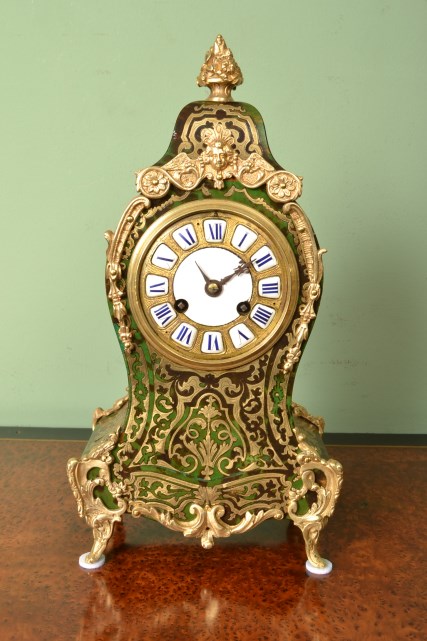
Left: Cogsworth as he is portrayed in the 2017 movie, Right: A French Mantle Clock in Carriage form
Cogsworth’s design as an enchanted clock is as intricate as the castle itself. He takes the form of a classic French mantel clock, adorned with regal carvings and ornamentation that reflect the grandeur of the Beast’s estate. His clock face doubles as his actual face, complete with Roman numerals and clock hands that he uses expressively in conversations. Inside his body, a visible pendulum swings, emphasizing his functionality as a working timepiece.
These enchanted traits are not merely decorative. They allow Cogsworth to engage in physical comedy and highlight his personality traits. For example, his movements are often jerky and precise, mimicking the ticking of a clock, while his exasperated expressions and flustered reactions add humor to tense moments. His design perfectly encapsulates his blend of formality and charm.
Classic French Mantel Clocks: A Brief Overview


Two examples of ornate French Mantle Clocks from the Rococo and Neoclassical periods
French mantel clocks epitomize the elegance and craftsmanship of the late 17th to 19th centuries. Designed to sit on mantels or shelves, these timepieces served both functional and decorative purposes. Their popularity soared during the reign of Louis XIV and continued through the Rococo and Neoclassical periods, reflecting the evolving aesthetic trends of their time. These clocks were often crafted with gilded bronze Ormolu (a decorative gilding technique that coats bronze or brass with gold using mercury), marble, or wood, featuring intricate designs. Rococo-style clocks showcased elaborate, asymmetrical curves and nature-inspired motifs like flowers and vines, while Neoclassical designs emphasized clean lines and classical elements such as columns, urns, or mythological figures.


A movement similar to the ones found in mantle clocks of the period. While I am unsure of the exact year of this particular one, the source of this image stated that it is an 8-day movement, giving us a good indication of just how advanced these clocks were for their time.
Mechanically, these clocks required regular winding and often included striking mechanisms to chime on the hour or quarter-hour. Some advanced models even featured complications such as moon phases or calendar functions. Beyond their utility, mantel clocks symbolized sophistication and wealth, as they were expensive and frequently custom-made for aristocrats and affluent households. Often placed as centerpieces in salons or drawing rooms, they highlighted their owners’ refined taste and status.


Left: A portrait of André-Charles Boulle, Right: One of the finest examples of craftsmanship and clockwork that he is known for.
Notable French clockmakers such as André-Charles Boulle and Abraham-Louis Breguet played significant roles in the history of these clocks. Boulle was celebrated for his intricate marquetry and gilt bronze designs, while Breguet gained renown for his technical innovations. Together, these historical timepieces represent a harmonious blend of precision engineering and artistic expression. Cogsworth’s character design pays homage to this rich tradition, embodying the technical precision and aesthetic grandeur synonymous with French craftsmanship.
Memorable Scenes
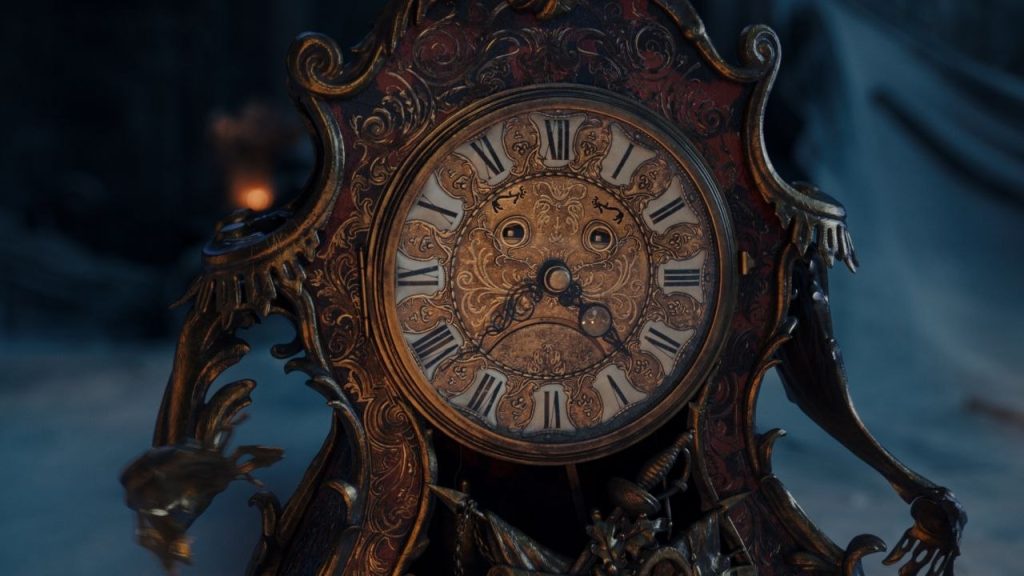

Left: A closeup of Cogsworth’s face in the 2017 movie, Right: Ian McKellen who voiced Cogsworth in the 2017 picture
Cogsworth’s personality is brought to life by the talented voice actors who portray him. In the original 1991 animated film, David Ogden Stiers delivers a performance that perfectly captures Cogsworth’s blend of officiousness and charm. In the 2017 live-action adaptation, Ian McKellen takes on the role, adding his own gravitas and humor to the character. The live-action version also gives Cogsworth a more intricate and lifelike design, with visible gears and moving parts that enhance his clock-like appearance.
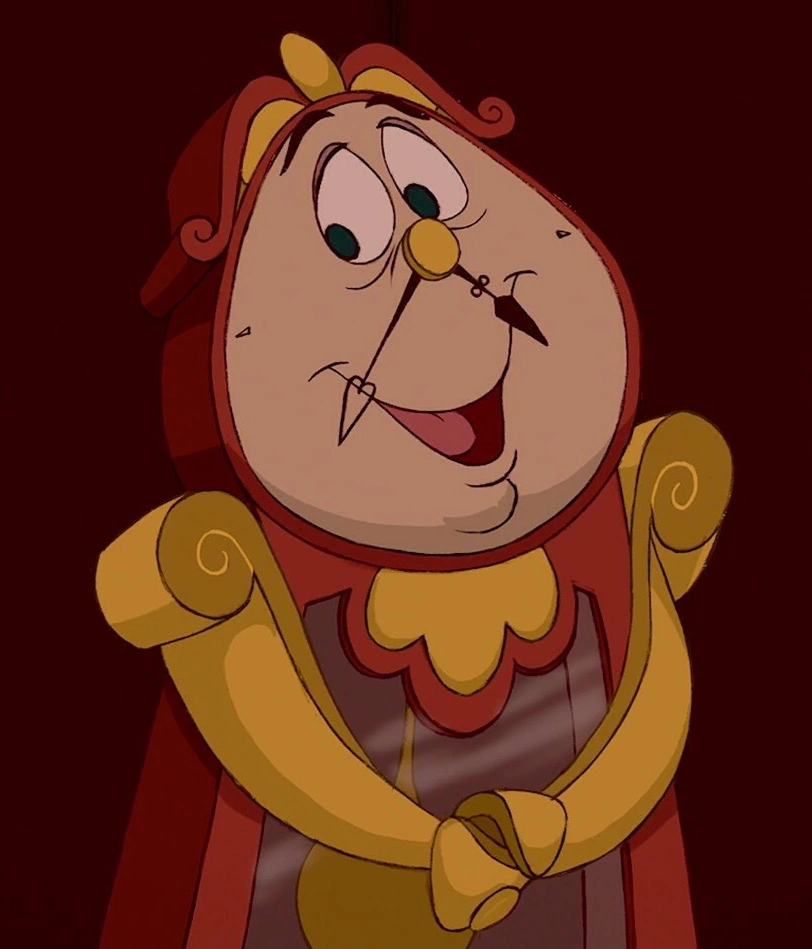
Cogsworth in the 1991 cartoon movie
Cogsworth has several standout moments in the film that showcase his wit, loyalty, and occasional bravery. One of his most notable appearances is during the iconic “Be Our Guest” sequence. While Lumière takes center stage, Cogsworth’s begrudging participation adds levity and highlights his dynamic with the other characters. Another significant scene is the climactic battle, where Cogsworth dons armor and valiantly fights off the villagers attacking the castle. His use of clock hands as weapons provides a humorous yet courageous moment, reinforcing his dedication to protecting the castle and its inhabitants.

In this still from the 2017 movie—Cogsworth, Lumière, Mrs. Potts, and Plumette—stand together, each reflecting their unique personalities in their animated forms. Their camaraderie and charm shine through as they prepare to support Belle and the Beast in their journey toward breaking the spell.
In quieter moments, Cogsworth serves as a counselor to the Beast, offering advice on matters of etiquette and romance. His earnest, albeit sometimes misguided, efforts to help the Beast win Belle’s heart reveal his underlying kindness and desire to see the curse lifted.
Symbolism and Themes
Cogsworth’s role as a clock is deeply symbolic within the story. He embodies the passage of time, a crucial element of the narrative. The curse’s resolution hinges on the Beast finding true love before the last petal of the enchanted rose falls, making time both a literal and metaphorical antagonist. Cogsworth’s constant awareness of time underscores this urgency and reminds the audience of what’s at stake.
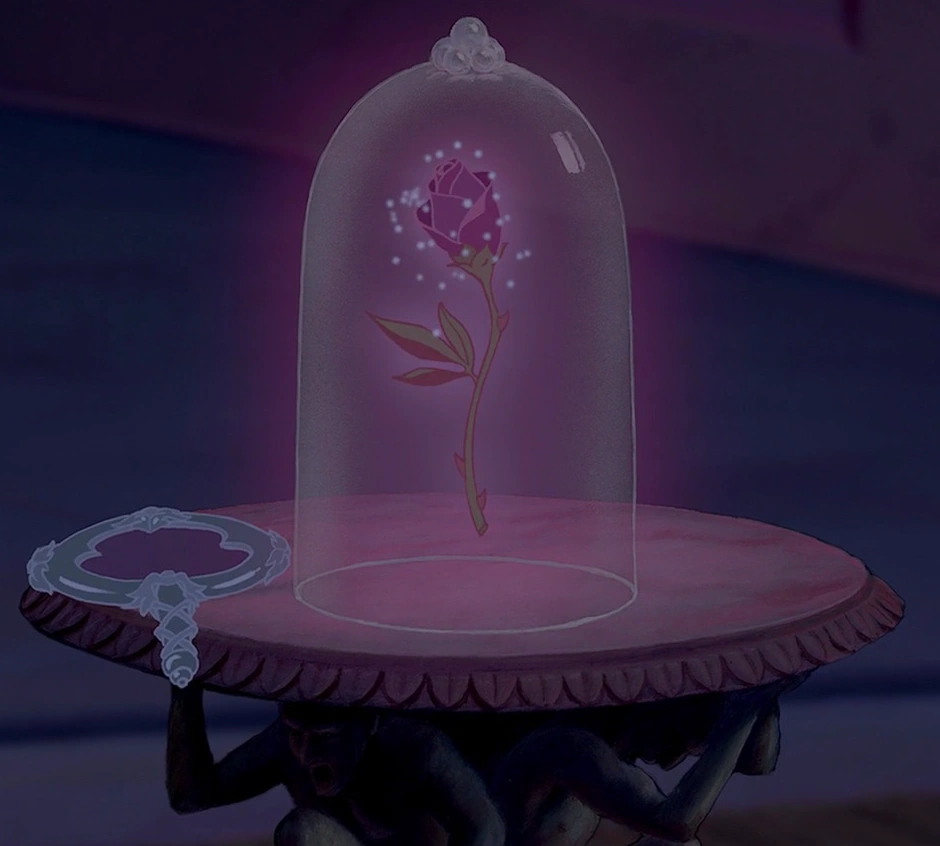

1991 (left) and 2017 (right) depictions of the enchanted rose, a mystical bloom suspended in a glass dome, serves as both a symbol of the Beast’s curse and a ticking clock, its falling petals marking the urgency of finding true love before time runs out.
Beyond time, Cogsworth represents the balance between order and chaos. His rigid, rule-following nature contrasts sharply with Lumière’s free-spirited personality. Together, they highlight the importance of both structure and spontaneity, a theme that resonates throughout the film.
Cultural Impact

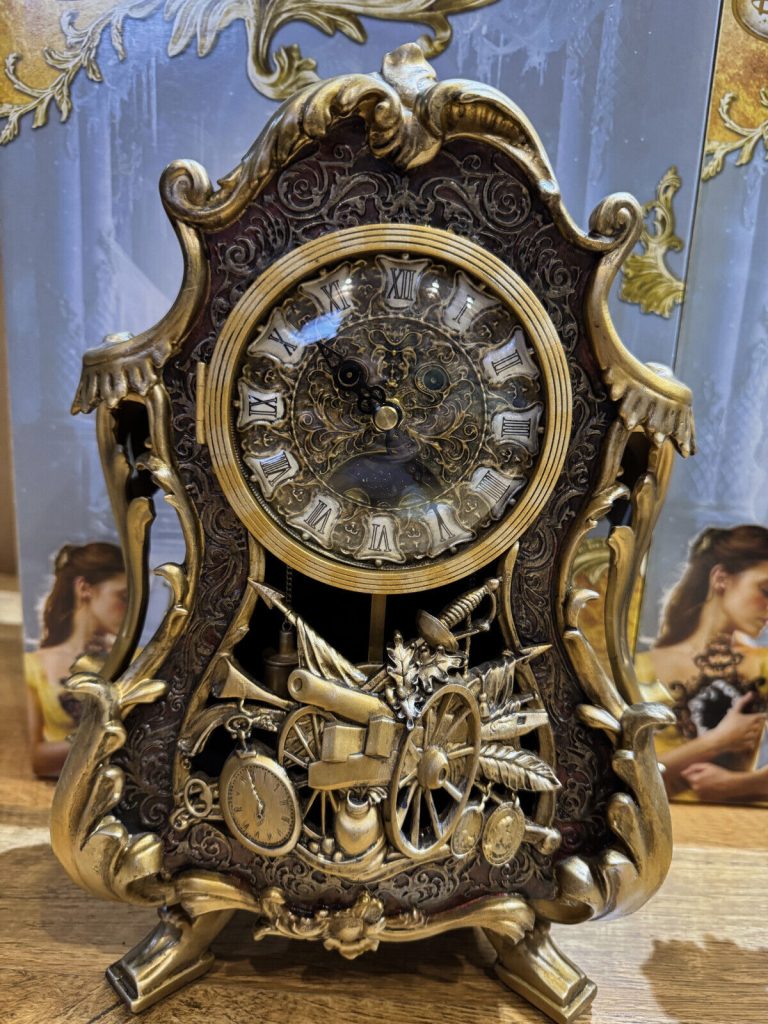
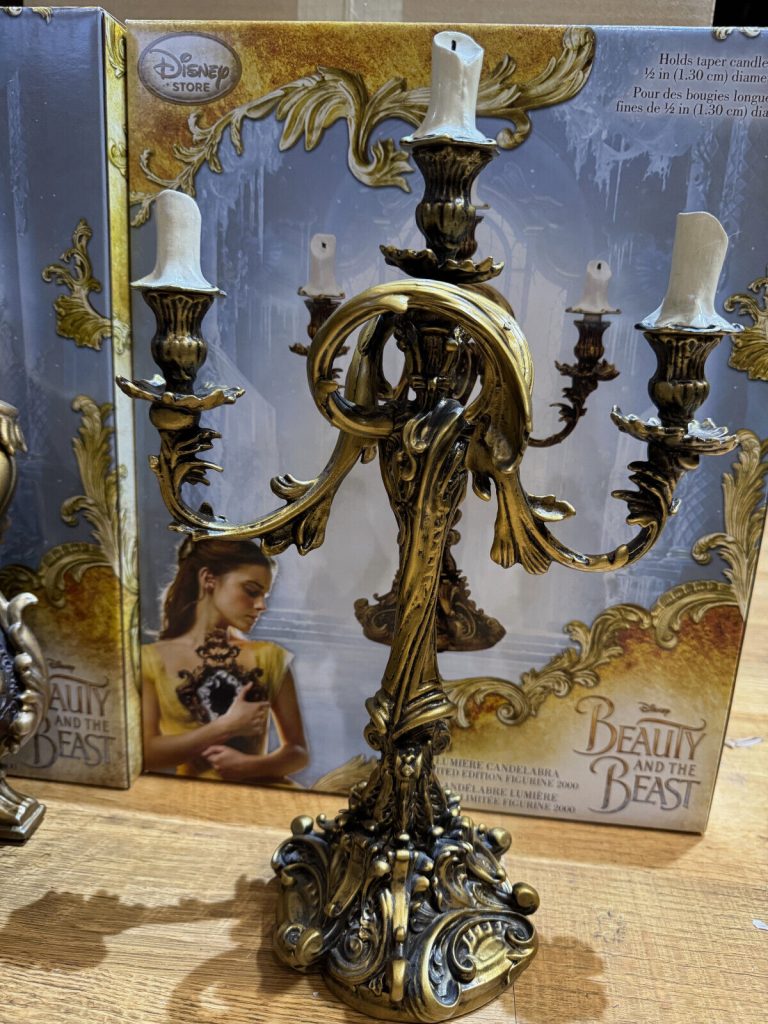
From the left: A statue of Cogsworth and Lumière in one of the Disney parks, A figurine of Cogsworth, A figurine of Lumière
Over the years, Cogsworth has become an enduring symbol of Beauty and the Beast. He has appeared in various merchandise, including plush toys, figurines, and even functional mantel clocks modeled after his design. At Disney theme parks, Cogsworth often accompanies Lumière in attractions and character meet-and-greets, delighting fans of all ages.

Limited edition collectibles of both Cogsworth (left) and Lumière (right) that I found listed for sale on eBay.
Cogsworth’s witty remarks and iconic lines, such as “If it’s not Baroque, don’t fix it!” have cemented his place as a fan-favorite character. His blend of humor, heart, and symbolism ensures that he remains an integral part of the story’s legacy.
Cogsworth is much more than a supporting character in Beauty and the Beast. He represents the importance of time, order, and loyalty while providing humor and warmth to the story. His transformation into a clock and eventual return to human form symbolizes the redemptive power of love and the triumph of humanity over rigidity.

Cogsworth (right) and Lumière (left) providing advice to the Beast in a scene from the 2017 movie.
Beauty and the Beast is more than just a magical tale; it’s a narrative rich with symbolism, artistry, and timeless themes, all embodied in characters like Cogsworth. His design, inspired by the elegance of French mantel clocks, and his personality, rooted in order and loyalty, highlight the film’s deeper messages about time, redemption, and balance. As a clock, he reminds us of the fleeting nature of time and the urgency of seizing meaningful moments. As a character, his wit, courage, and growth reflect the broader themes of love and transformation. Cogsworth’s enduring charm and cultural impact ensure that he remains an essential part of the story’s legacy, enchanting audiences with his blend of humor and depth in a tale as old as time.


