
Note: This is part one of a three part article series. Stay tuned for part two next week!
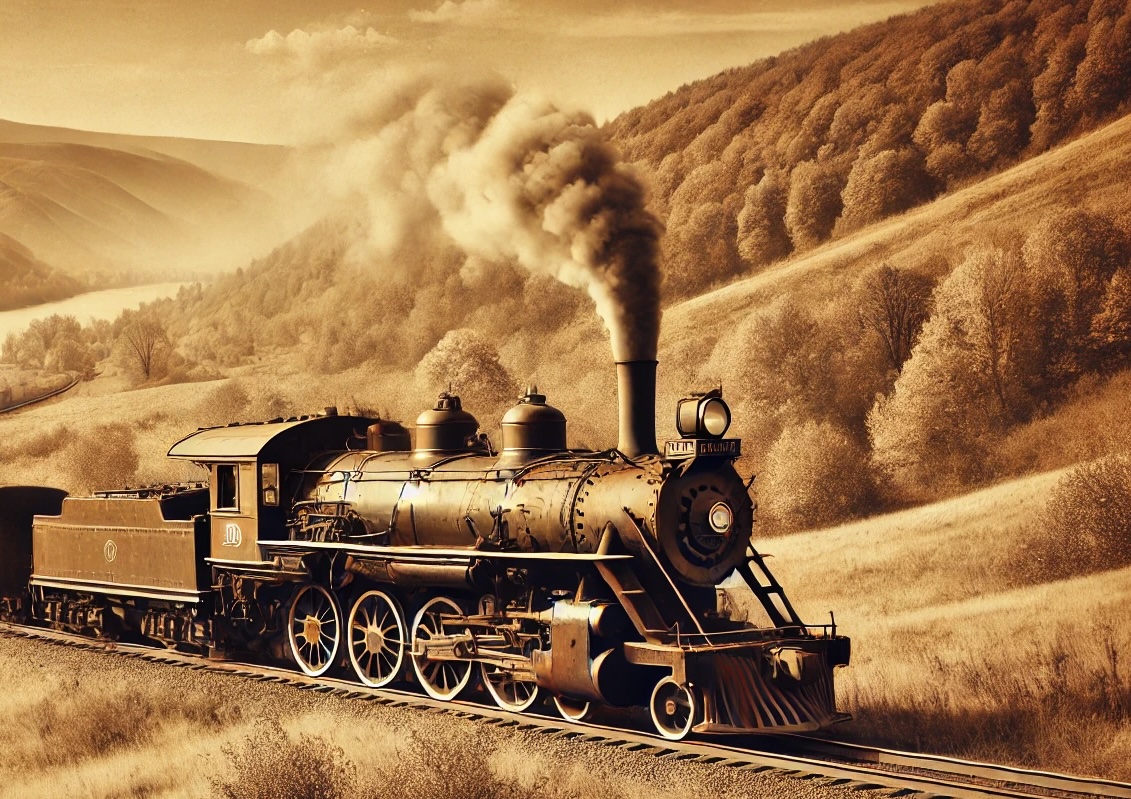
Fall is finally here!! And I couldn’t be more excited! One thing that always comes to mind this time of year is the nostalgia of trains and railroads. There’s something about the crisp air and the rich, warm colors of the changing leaves that reminds me of scenic train rides across the country. The rhythmic sound of the tracks, the gentle sway of the train, and the breathtaking views as you pass by endless stretches of autumnal landscapes create a sense of peace and adventure that’s truly one-of-a-kind. It’s the perfect season to appreciate the beauty around us and embark on journeys that capture the spirit of fall.
Speaking of trains and fall, it’s the perfect time to dive into the fascinating world of railroad watches! These timepieces have a rich history, playing a crucial role in ensuring train schedules ran with precision during the golden age of rail travel. From their high standards of accuracy to the unique design elements that made them easy to read, railroad watches are more than just vintage collectibles; they’re a testament to a time when staying on track was literally a matter of life and death. In this article, we’ll explore how these watches became an integral part of the railroading world, their impact on horology, and why they still captivate watch enthusiasts today.


Images (from the left): The Ball Official Standard Watch, The front of a locomotive from the 19th century
Let’s start back in the early 19th century. As railroads began to expand, there was no standardized time, leading to significant confusion and inefficiency in train schedules. Each town operated on its own local time, often set by a town clock. Conductors and engineers used their personal pocket watches, but these varied greatly in accuracy and quality, which posed serious safety risks as train traffic increased.
A major turning point in railroad timekeeping occurred on April 19, 1891, when two trains collided in Kipton, Ohio, resulting in several deaths. The investigation into the crash, dubbed the Kipton Disaster, revealed that one conductor’s watch had stopped for four minutes, leading to the accident. In response to this tragedy, Cleveland jeweler and watchmaker Webb C. Ball was hired by the railroad companies to establish a system of precise timekeeping. He became the first Chief Time Inspector and the newly established Ball Watch Company was tasked with developing and implementing stringent standards for railroad watches.


Images (from the left): an image from the Kipton Disaster, a locomotive similar to the one involved in the Kipton Disaster
During the early 20th century, a period that can be referred to as “The Golden Age of Railroad Watches”, American watch companies such as Hamilton, Waltham, Elgin, Illinois and Ball became the leading producers of railroad-approved watches. These brands produced high-quality pocket watches that met or exceeded railroad standards, and some of the most famous models from this era included the Hamilton 992 and 992B, the Illinois Bunn Special, and the Waltham Vanguard. These watches were revered for their accuracy, reliability, and craftsmanship.
After World War II, wristwatches gained popularity due to their convenience and practicality. By the 1950s, many railroad workers began transitioning from pocket watches to wristwatches. Companies like Hamilton, Ball, Seiko and Bulova started producing wristwatches that met railroad standards, maintaining high accuracy and legibility. These wristwatches often featured white dials, bold numerals, and a similar aesthetic to their pocket watch predecessors.
The introduction of quartz watches in the 1970s brought unprecedented accuracy and affordability, far surpassing mechanical railroad watches. This reliability and precision of quartz technology led to a rapid decline in the demand for mechanical watches. As quartz watches became the norm, the need for strict railroad watch standards diminished, and railroads gradually stopped requiring specific watch certifications due to the unparalleled accuracy offered by the new technology.
Today, digital technology controls everything and Railroad personnel are not required to carry certified timepieces. Railroad watches are now highly collectible and cherished for their historical significance, craftsmanship, and connection to an era when precision timekeeping was a matter of life and death. Modern brands continue to produce watches inspired by the classic railroad style, incorporating elements such as the distinctive railroad track minute markers and bold numerals. These wrist watches often pay homage to the golden age of railroad watches, combining vintage aesthetics with contemporary technology.
What are the key aspects that make railway certified watches special?
Webb C. Ball implemented strict criteria for watches to be approved for railroad use. These timepieces were essential tools for railway workers, helping to prevent accidents and ensure punctual schedules through strict adherence to precision standards. Let’s explore the rigorous standards these watches were held to, from their highly legible dials to their robust mechanical movements, highlighting what made them so vital to the railway industry.


Images (from the left): A photograph of Webb C. Ball, an advert for W.C. Ball’s business before the Ball Watch Co.
Railroad watches were required to maintain a daily accuracy within a margin of just ±30 seconds a week, ensuring that all railway personnel had synchronized time, which was crucial for preventing accidents and maintaining punctual schedules. Most of these certified watches were mechanical, and achieving such high accuracy was an impressive feat, especially in the late 19th and early 20th centuries.
The dial design of railroad watches prioritized legibility, featuring large, bold Arabic numerals that allowed for easy reading, even in dim lighting. This clarity was essential for conductors, engineers, and other railway workers who needed to check the time quickly. The watches needed to have legible dials, highly visible hands and minute markers. Many railroad watches had black dials with white markings or vice versa, providing high contrast for better visibility. A distinctive required feature was the “railroad track” style minute markers around the dial, which ensured precise readability of each minute.
They were required to be designed to have consistent and reliable movements. They often included temperature and isochronism adjustments for temperature compensation, allowing them to remain accurate even in varying weather conditions. Typically, these watches had 17 or more jewels in their movements, which helped reduce friction and enhance accuracy. Moreover, they were constructed robustly to withstand vibrations, shocks, and the daily wear and tear of railway work, ensuring they maintained their precision even in demanding environments.
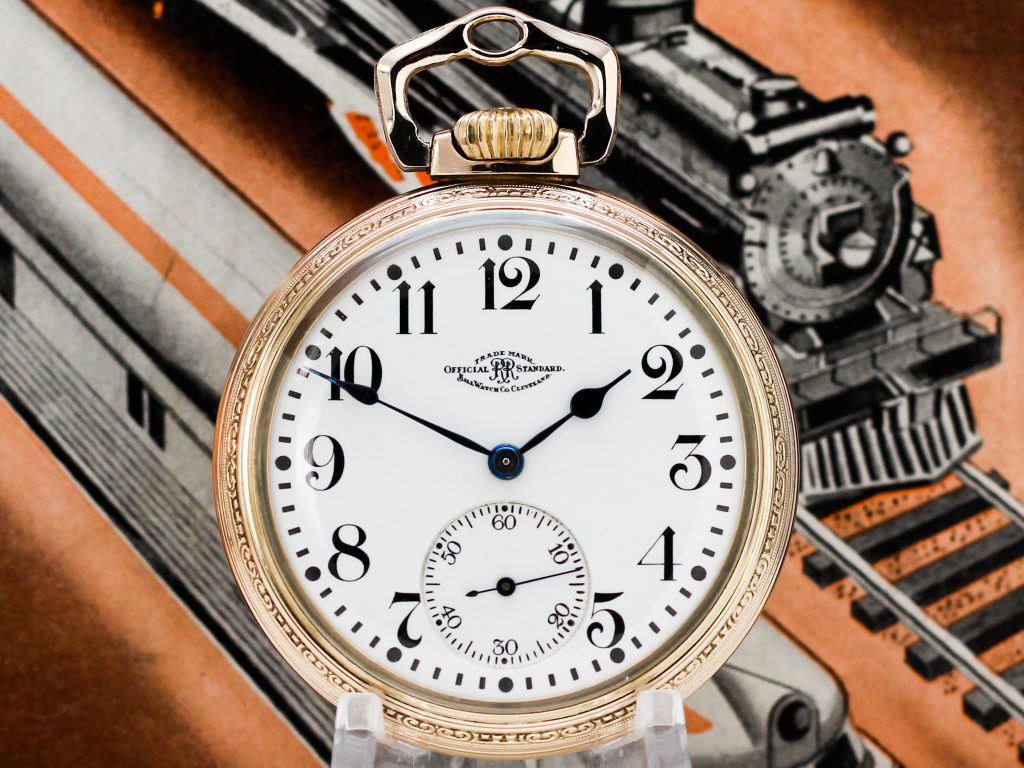

Images (from the left): The Ball Official Standard Watch, The beautiful movement inside of the Ball Official Standard Watch
To maintain accuracy regardless of how they were carried or worn, railroad-certified watches were adjusted to be accurate in multiple positions, usually five, such as face-up, face-down, and crown positions. This adjustment ensured their precision in various orientations.
Railroad pocket watches were required to have an open-face design, meaning they had no cover over the dial, ensuring quick and easy readability. This design also placed the winding crown at the 12 o’clock position instead of 3 o’clock, preventing any confusion when reading the time.
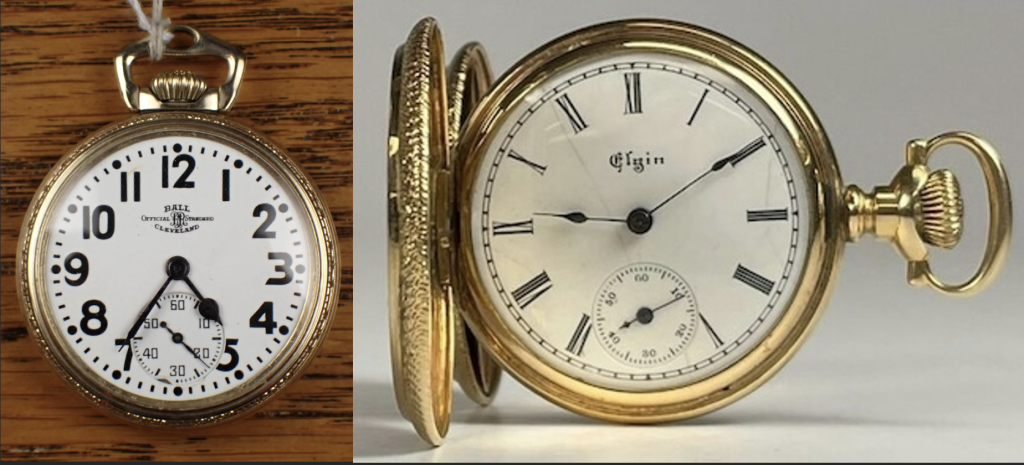
Images (from the left): The Ball Official Standard Watch, An Elgin Watch Co. timepiece from the era that didn’t conform to approved standards with the crown at the 3 o’clock position and a closable case
To prevent accidental time changes, railroad watches used a lever-set system. Unlike the typical crown-setting mechanism, the lever-set design required a small lever to be pulled out before the crown could be turned to adjust the time, ensuring that no unintentional adjustments occurred that might cause discrepancies.
Lastly, these watches were required to undergo regular inspections (bi-weekly or monthly) by certified watch inspectors to ensure they met all requirements for accuracy and functionality. Brands producing railroad-grade watches had to adhere to the strict standards set by railroad companies, making these watches part of an elite group of timepieces recognized for their reliability.
The history of railroad watches is a captivating journey that takes us back to a time when precision timekeeping was essential for the safety and efficiency of train travel. These timepieces were more than just instruments for telling time; they were indispensable tools that ensured punctuality and prevented accidents on the rails. From the tragic Kipton Disaster that led to the establishment of rigorous standards by Webb C. Ball to the iconic models produced by brands like Hamilton, Waltham, Elgin, Illinois and Ball Watch Companies, railroad watches played a pivotal role in shaping the evolution of horology.
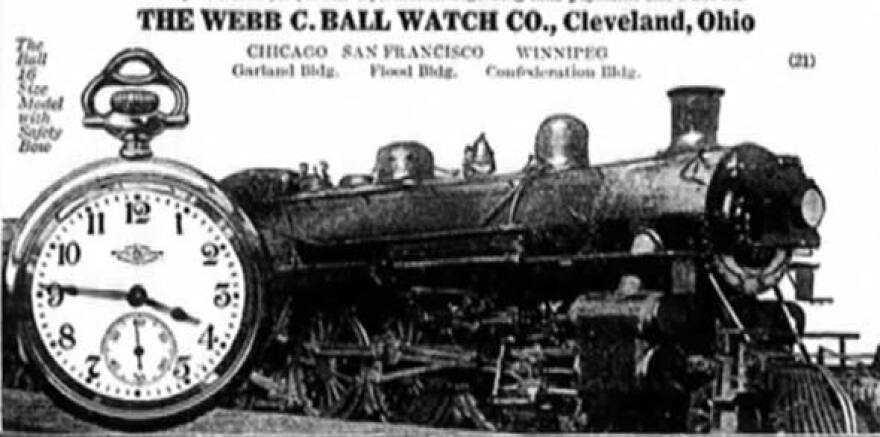
Image: An advert for the then, newly established Ball Watch Company
Even today, the legacy of railroad-approved watches lives on, with modern brands paying tribute to this era through designs that blend vintage aesthetics with contemporary craftsmanship. The enduring appeal of these watches lies in their rich history, timeless design, and the reminder of a period when staying “on track” was a matter of life and death. For collectors and enthusiasts alike, railroad watches represent more than just timepieces—they are a testament to the remarkable blend of engineering, craftsmanship, and historical significance that has stood the test of time. As we celebrate the beauty and nostalgia of fall and its association with railroads, it’s the perfect moment to appreciate the enduring legacy of these iconic timekeepers.
Stay tuned for part two next week!!! We will continue our conversation take a deeper dive into America’s premier Railroad watch brands and some of the iconic models that they produced for us!
May there forever be a weight on your wrist and a ticking in your ears!


