

Recently I was chatting with my friend @solotov67 on Instagram (check him out if you want to see some amazing vintage dive watches) about a piece he’d picked up but wasn’t entirely happy with because of its condition. I teased him not to think of it as “damaged” — after all, every vintage watch has patina. Without missing a beat, he fired back: “It’s patina if I like it. It’s damage if I don’t.”

Let’s be honest, every collector has said some variation of this line at least once. It’s the kind of sentiment you’d expect to see slapped onto a meme template — maybe the sweaty man stuck between two buttons marked “patina” and “damage,” or the distracted boyfriend turning away from “flaw” to swoon over “character.” But behind the joke sits an uncomfortable truth: the very same aging effect that sends one watch into the stratosphere of desirability is the same thing that makes another unsellable. Patina is poetry. Damage is disaster. And most of the time, the deciding factor is nothing more than our own bias.
Patina, Defined (Sort Of)
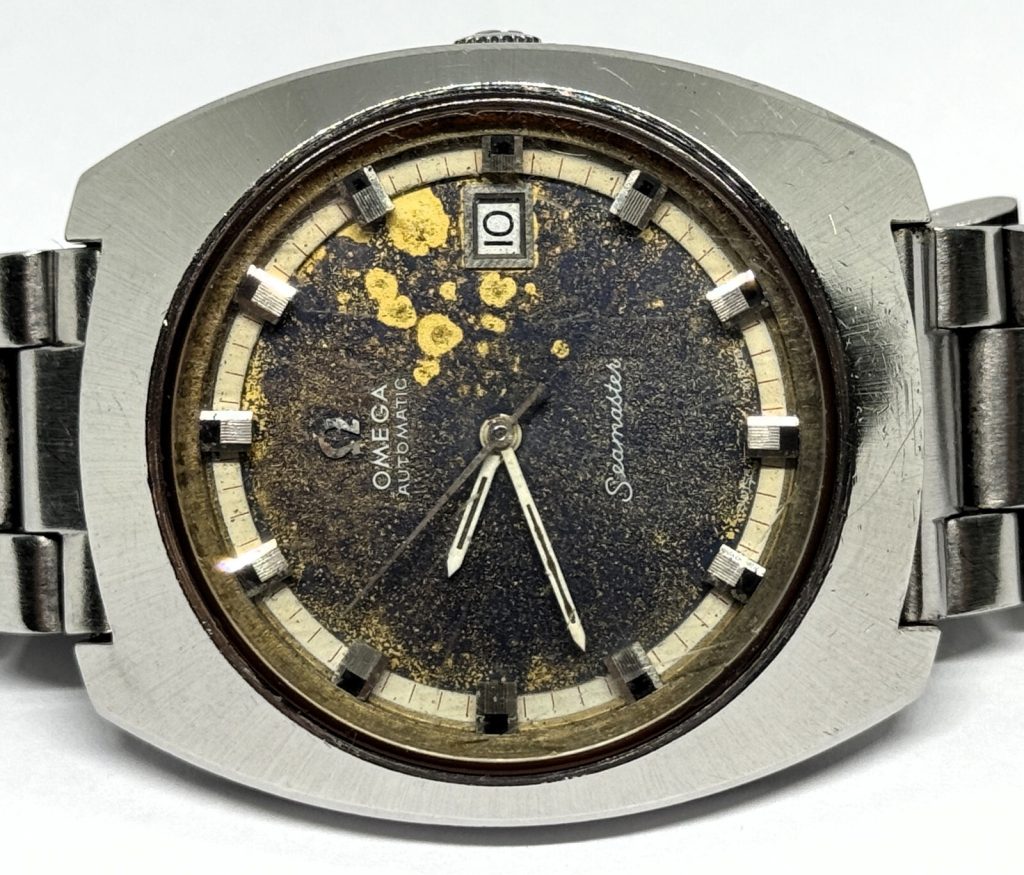

The heavily “Patina’d” dial of this circa 1970s Omega Seamaster 166.110/Cal 1002
In the antique world, patina originally meant the soft green or brown oxidation that forms on copper and bronze. In watches, the word has ballooned to describe just about any sign of age. Black dials mellow into chocolate brown, tritium lume once bright white softens into pumpkin tones, bezels fade into cloudy gray ghosts, and case edges lose their sharpness after decades of wear. In theory, all of these changes are simply chemistry plus time, evidence that a watch has lived.
But here’s the kicker: if the watch in question is a Rolex Submariner or an Omega Speedmaster, those changes are celebrated as “honest aging.” If it’s a Seiko 5 left too close to a sunny windowsill? That’s just “sun damage.”
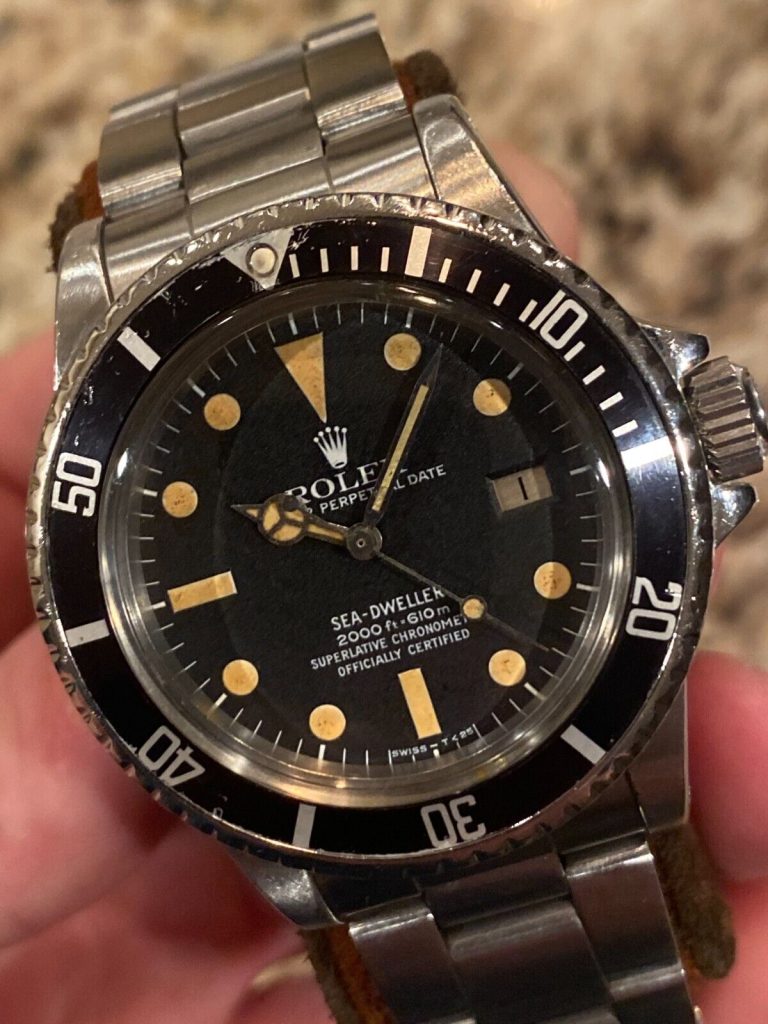
The yellowed Lume plots on this Rolex Vintage 1665 Sea Dweller Stainless Steel Diver
Auction houses, dealers, and resellers have perfected the art of spinning wear into romance. A cracked Rolex lacquer dial is not broken — it’s a “spider dial.” A hazy bezel is not worn out — it’s a “ghost bezel.” Blotchy lume plots are never called stains — they’re “warm patina with unique charm.” Meanwhile, the same flaws on a humble Timex or Citizen are dismissed as defects. This is where the market shows its hand. Patina only counts when the watch is already desirable. Otherwise, the story never takes hold.

The cracked enamel dial on this Special Princeps Enamel Dial Watch Cal 1178 (possibly a vintage Seiko)
And let’s be honest: half the time, our definition of patina versus damage depends on whether we already own the watch. When we want it, lume plots are creamy perfection. When we don’t, they’re blotchy and ruined. When we’ve already bought it, we become instant poets, spinning tales of honest wear to justify our purchase. Psychologists call this confirmation bias. Watch collectors just call it Tuesday.
Even the same person can shift gears. On Monday, a tropical dial is stunning character. By Friday, the very same dial is unacceptable degradation. The flaw hasn’t changed — only our mood has.
Romance vs. Reality
Nowhere is this double standard more obvious than in the tropes of vintage collecting. The tropical dial of a Rolex is “Caribbean sun turned into chocolate perfection,” while a sunburned Seiko dial is simply “cooked.” The cracked lacquer on a Datejust becomes “desirable spider texture,” while the same on a Bulova calls for a redial. A ghosted Submariner bezel is “ethereal,” but an Invicta that suffered the same fade prompts questions about neglect. Even rust isn’t safe from reinterpretation. On a military-issued Longines, it becomes a battle scar. On a modern diver, it’s a sign of poor storage.
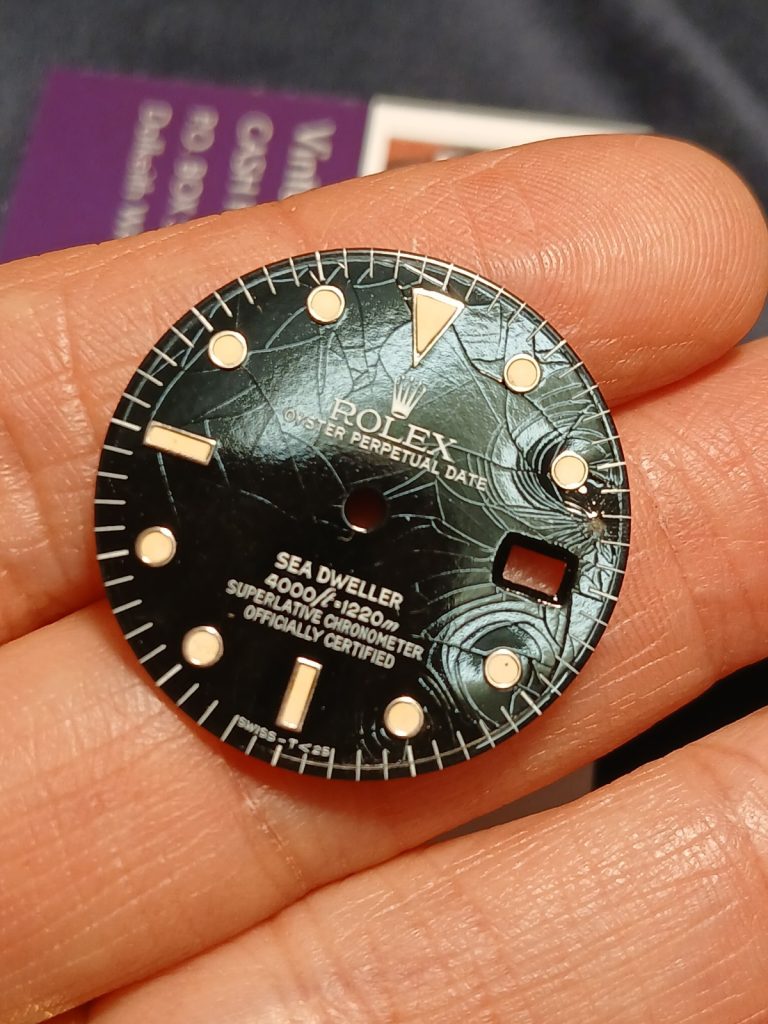
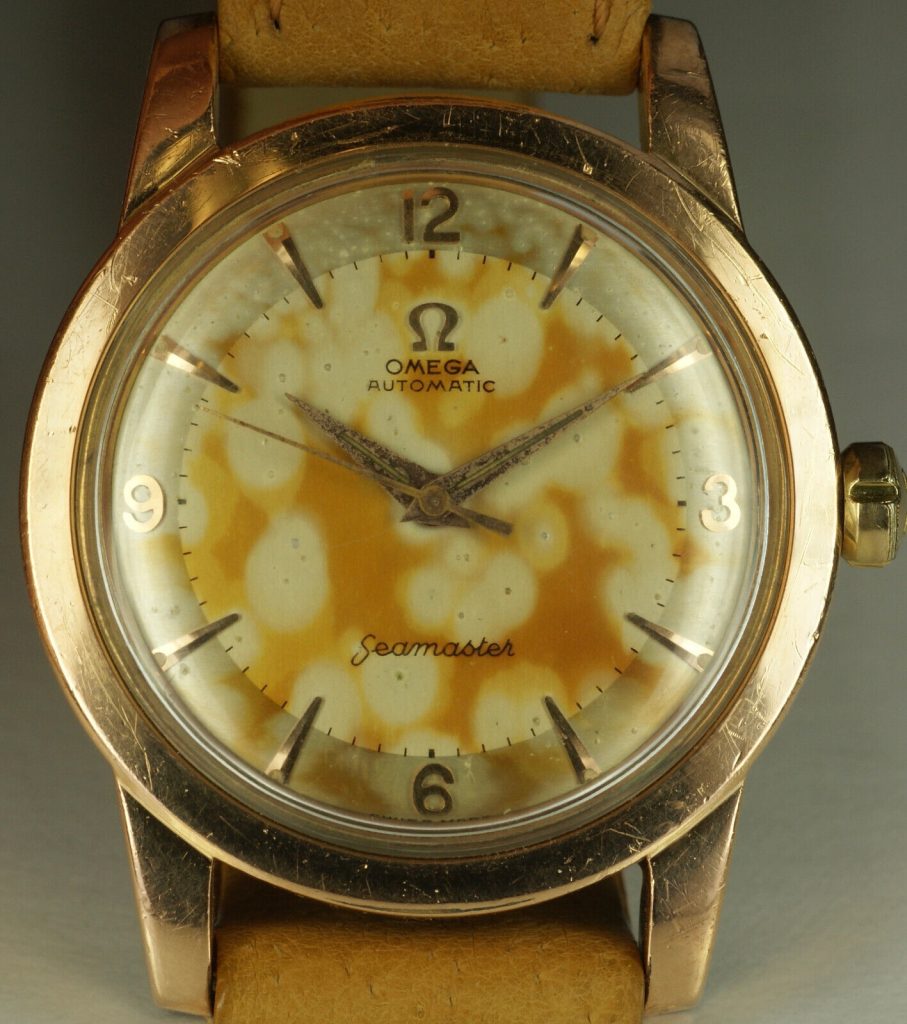
The cracked “spider” dial for a Rolex Sea-Dweller 16660/16600 (left), Circa 1950’s Omega Seamaster with a “Tropical” Dial (right)
The chemistry is identical. The storytelling isn’t. Patina works when it invites imagination. Damage shuts the door. A tropical dial whispers of salty air and Caribbean sunlight. A faded GMT hand conjures up decades of globe-trotting. A softened case edge suggests a life lived rather than a safe queen existence.
Damage, on the other hand, lacks poetry. A water-stained dial makes you think of a leaky basement. A moldy lume plot doesn’t feel adventurous — it feels unsanitary. The same physical reality provokes entirely different feelings depending on how we frame it.
Social media has only poured gasoline on this fire. The hashtag #patina has millions of posts, many featuring watches deliberately angled to show off every fade, crack, and spot. Patina photographs beautifully.
It gives a sense of individuality in a grid full of perfection. A flawless watch might look sterile. A slightly aged one feels alive. But notice the double standard in your feed. Post a ghost Submariner and you’ll rack up likes. Post a blotchy Seiko 5 and you’ll get DMs that read: “Sorry about the damage, bro.”
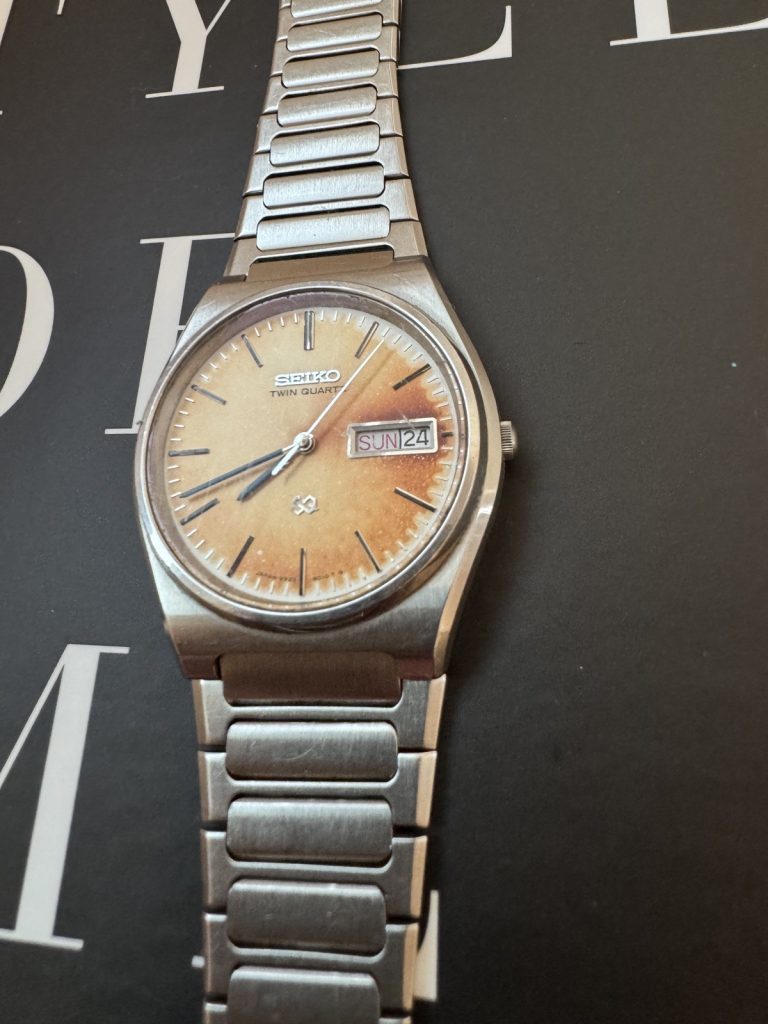
This “Tropical” Dial Patina on a “Vintage” Seiko Quartz 9923-8010
Ironically, brands have caught on and now sell patina straight out of the box. Bronze cases are designed to oxidize, fume dials are engineered to fade, and faux-aged lume arrives pumpkin-colored on release day. Collectors pay premiums for this pre-packaged character. Think about that for a moment. Natural discoloration on an old watch is often dismissed as “damage,” but the exact same discoloration on a brand-new release is called “heritage-inspired charm.” If that isn’t proof that patina is cultural rather than chemical, what is?
There’s also a deeply personal angle to consider. The fine line between patina and damage isn’t only drawn by dealers, auction houses, or collectors’ forums — it’s drawn by the wearer. If patina is meant to show age and tell a story, then what looks like obvious damage to some might be a treasured reminder to someone else.
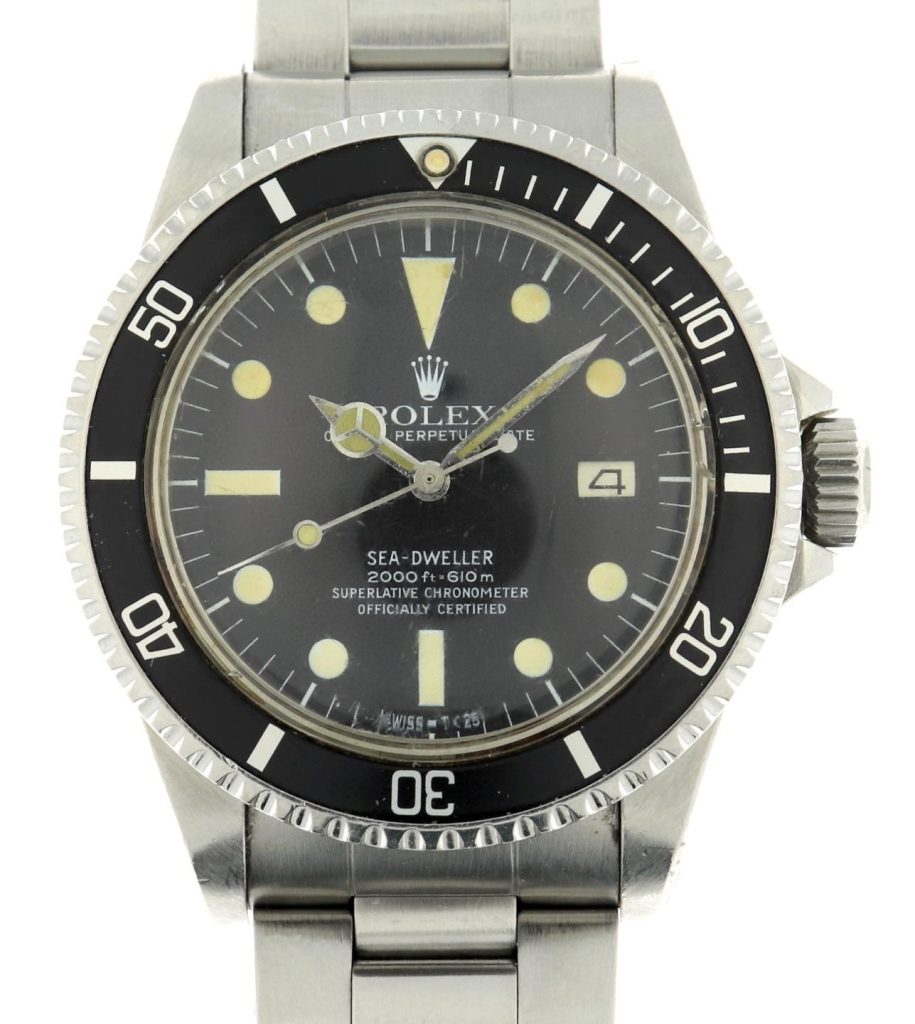
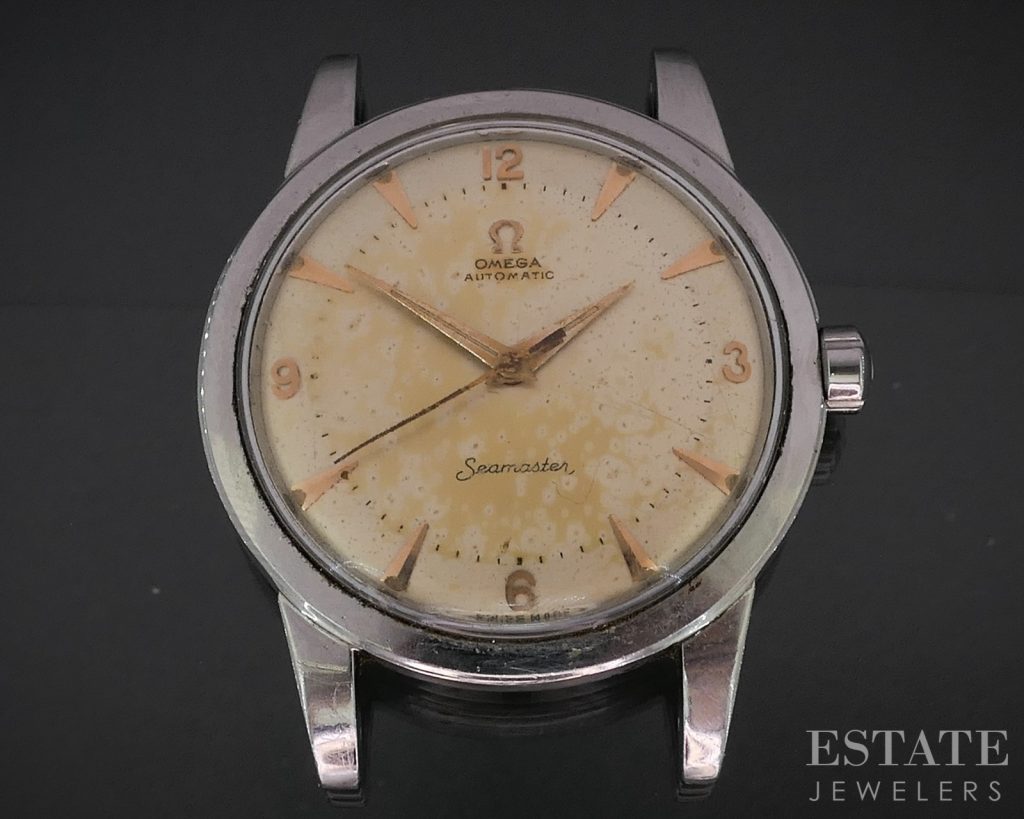
A 1980 Rolex Sea-Dweller 1665 “Great White” with lume patina (left), A 1950 Omega Seamaster 2657-1 with a “Tropical” dial (right)
A cracked crystal on eBay might scream “needs service,” but on the wrist it might whisper something entirely different: the afternoon it shattered leaping out of a seat to snag a Yankees home run ball, or the night it caught the edge of a table during a wedding reception that would later become family lore. Even scratches on a case can shift in meaning. One person sees neglect; another sees the mark from the watch that got them through their first deployment, their first promotion, or even their first heartbreak.
In those moments, damage stops being a flaw and becomes a timestamp. It doesn’t just tell a story — it tells your story. And that is perhaps the purest form of patina there is.
Wabi-Sabi on the Wrist
There’s a Japanese aesthetic principle that captures this entire paradox: wabi-sabi. The term is centuries old, rooted in Zen Buddhism, and it emerged as a way of valuing simplicity, impermanence, and the quiet dignity of wear. Originally, wabi referred to a kind of rustic solitude or understated elegance, while sabi spoke to the beauty of age — the patina on an old teacup, the weathering of wood, the moss that creeps across a stone. Together, they formed a philosophy that found richness not in perfection, but in imperfection.

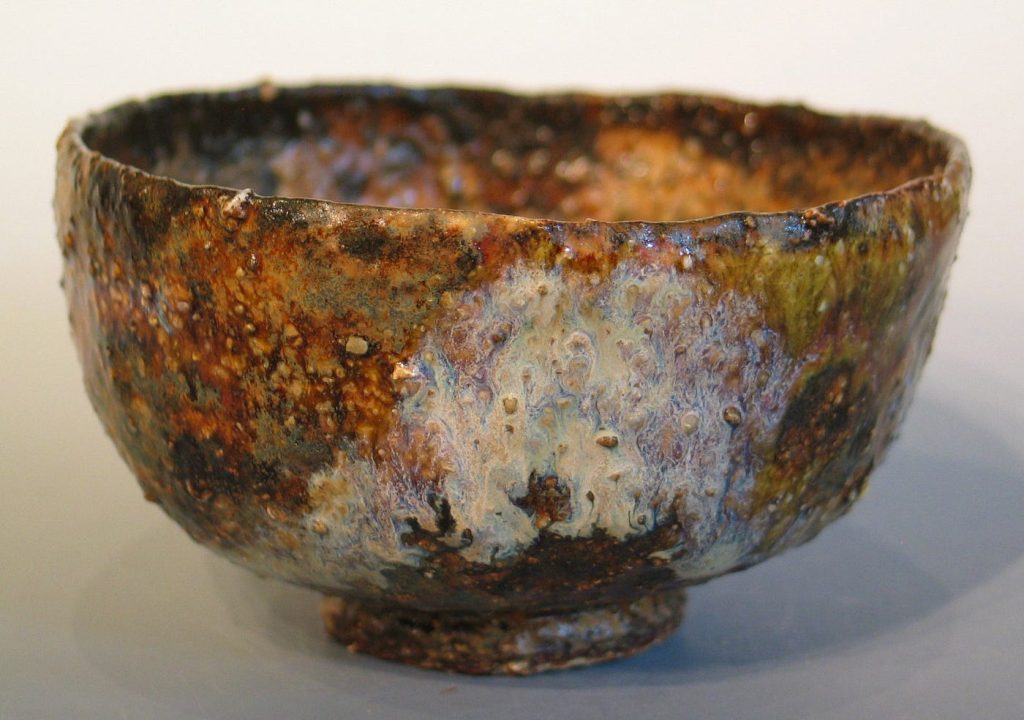
Japanese tea bowls embodying the imperfection that defines Wabi-Sabi
In Japanese tea ceremonies, for instance, the most treasured utensils were not flawless porcelain but rather bowls that had been mended, scarred, or unevenly glazed. Their irregularities told a story of human use, of time, of the world leaving its fingerprints. By the 20th century, wabi-sabi had drifted westward, first through art and design circles and later into mainstream pop culture, often simplified into a kind of minimalist chic. Today it shows up in architecture magazines, lifestyle blogs, and interior design manifestos, usually boiled down to a celebration of the imperfect, the impermanent, and the incomplete.
Applied to watches, wabi-sabi becomes a surprisingly apt lens for our obsession with patina. Take Seiko and Grand Seiko, for example. Their dial-making often embraces imperfection-as-beauty — not in the sense of flaws, but in the way texture and variation bring character to a piece. Think of the speckled surface of the Snowflake dial, which mimics uneven snowfall, or the soft gradients of Presage enamel and Urushi lacquer dials, which never emerge quite the same twice. These watches aren’t designed to be flawless in the sterile sense; they’re designed to be flawlessly imperfect — to breathe, to reflect the hand of the artisan, and to remind the wearer that time is not static, but always passing.
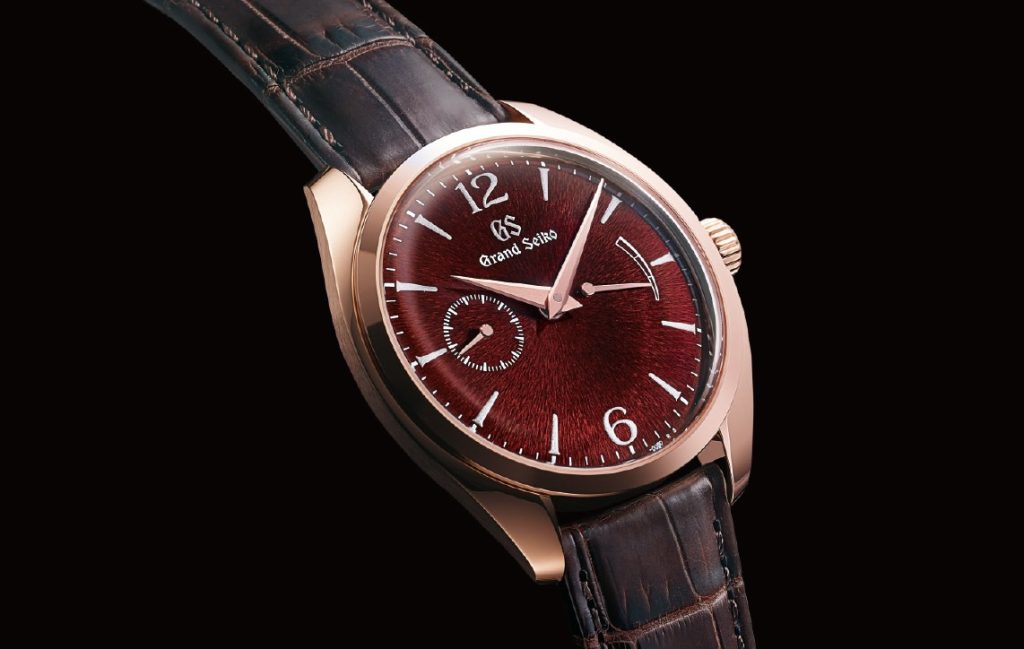
The SBGK002 with a new dial, combines Grand Seiko’s signature Mt. Iwate pattern and “Suki-urushi” lacquer.
Collectors of vintage pieces, too, unconsciously channel wabi-sabi when they prize a ghosted bezel on a Submariner or the mellow fade of tritium plots on an old Speedmaster. Bronze divers lean even further into the philosophy, marketed with the promise that their cases will corrode and discolor uniquely on each owner’s wrist. A flawless watch can look sterile, as though frozen in time. A worn one looks alive, carrying the scars of its journey.
Of course, not everyone subscribes. Some chase untouched dials and razor-sharp lugs as though perfection alone carries value. Others revel in the imperfections, finding beauty in each softened edge and uneven lume plot. Most of us, if we’re honest, live somewhere in between. We love patina when it flatters our narrative, and we dismiss it as damage when it doesn’t.

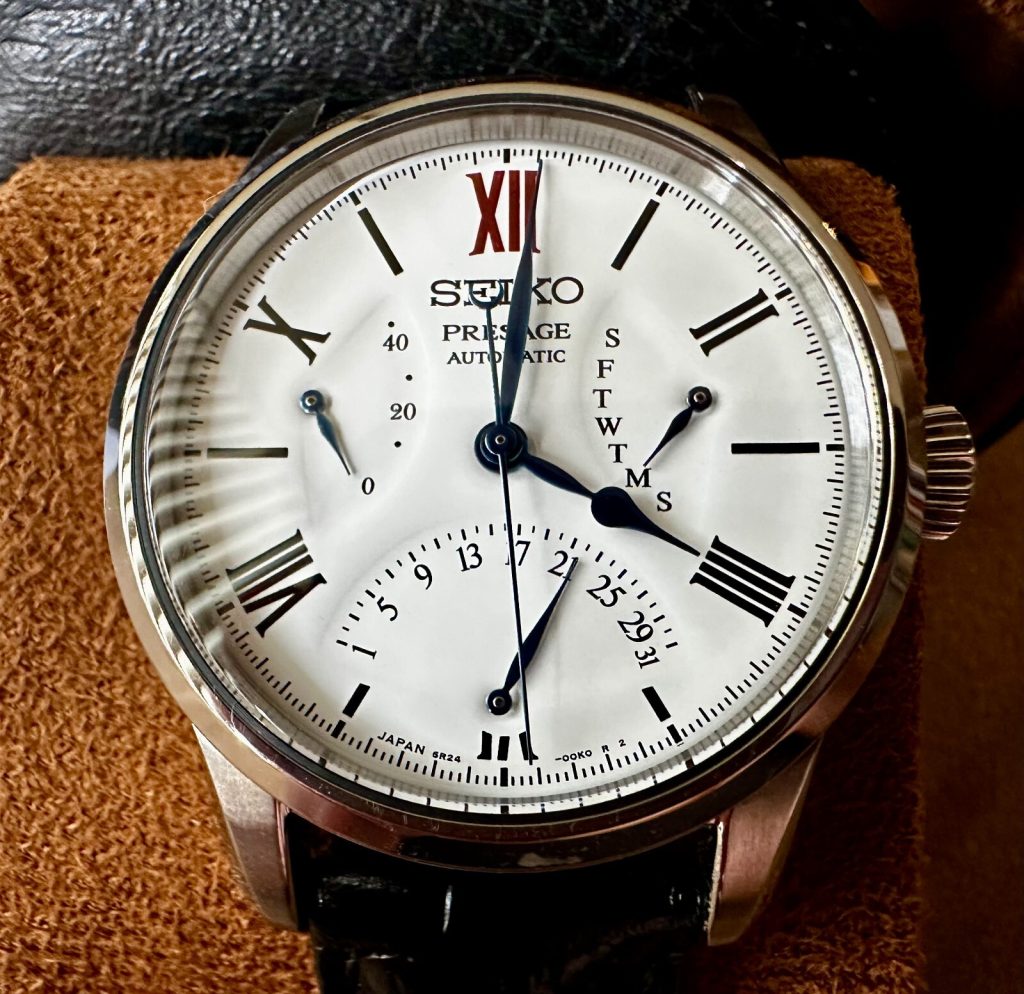
Grand Seiko SBGW283 from the Elegance Collection with a Light Blue Dial (left), Seiko Presage SARD017 with an enamel dial (right)
In that way, our hobby mirrors the philosophy itself — a constant negotiation between ideal forms and the lived beauty of imperfection. Whether we call it patina or damage often depends less on what’s in front of us and more on which side of the wabi-sabi scale we’re leaning that day.
So where does that leave us? With a coin toss. If we like the watch, we call it patina. If we don’t, we call it damage.
Maybe that isn’t hypocrisy so much as humanity. Watches are deeply personal objects. They aren’t just steel and lume; they’re memory, imagination, and identity. A faded bezel, a cracked dial, a softened case — all of these are open to interpretation, and the story we tell about them often matters more than the reality itself.

So the next time you’re squinting at a dial under a loupe, remember: the line between ruin and romance is thin, flexible, and usually drawn by your own hand. And if nothing else, admit it with a smile:
“It’s patina if I like it. It’s damage if I don’t.”
⌚· · · ⌚ · · ·⌚· · · ⌚ · · ·⌚· · · ⌚ · · ·⌚· · · ⌚ · · ·⌚· · · ⌚
What about you? Have you ever called it patina one day and damage the next? Drop a comment or find me on Instagram @bowearswatches — I’d love to hear your take.


