Strap in everyone! Today, we’re exploring a slice of watch history that’s out of this world. Imagine the golden age of the Space Race, when humanity was glued to TVs watching rocket launches and dreaming of distant galaxies. Designers everywhere were channeling that cosmic energy into everything from cars to coffee tables, and of course, watches. Enter the “Disco Volante”, a design aesthetic that turned humble timepieces into miniature UFOs. With their sleek, domed cases and futuristic vibes, Disco Volante watches weren’t just about telling time; they were about carrying a little slice of the cosmos wherever you went.
So, what sparked this obsession with saucer-shaped horology? The Space Race? An alien invasion? Or just some really creative watchmakers caught up in the orbit of mid-century modern design? Let’s take a look at these “flying saucers” of the wrist and explore how they became a timeless testament to humanity’s space-age dreams.

A vintage newspaper comic depicting UFOs over the Capitol Building in Washington D.C.
The Space Race brought space exploration into the global consciousness, sparking a widespread fascination with the cosmos and futuristic technology. Milestones such as the launch of Sputnik In 1957, Yuri Gagarin’s historic first human spaceflight in 1961, and the Apollo moon landing in 1969 captivated the world and fueled dreams of exploring the final frontier. This enthusiasm permeated popular culture, inspiring science fiction films, television shows, and literature that romanticized spacecraft, alien encounters, and the boundless possibilities of space.


From left: Sputnik in orbit, a poster for the movie “The Flying Saucer”.
The term “Disco Volante”, meaning “flying saucer” in Italian, became a descriptor for designs inspired by the sleek, aerodynamic forms of spacecraft and UFOs. This aesthetic appeared in various fields, including automotive design, architecture, and even consumer goods.


From left: A Disco Volante inspired chandelier and lounge chair.
The Disco Volante aesthetic is a fascinating intersection of automotive innovation, cultural fascination with space, and the elegance of mid-century modernism. It had a significant impact on automotive design during the 1950s and 1960s, marked by smooth, rounded forms and futuristic styling that captured the era’s fascination with space exploration. Italian automakers, particularly Alfa Romeo and Ferrari, were instrumental in shaping this design language during the 1950s. A defining moment came with the release of the 1952 Alfa Romeo C52 Disco Volante concept car, designed by Carrozzeria Touring. This vehicle showcased a sleek, curved body that prioritized aerodynamics while exuding futuristic sophistication. Its design was a bold statement of modernist ideals, blending speed, elegance, and the spirit of innovation. This influence spread across the automotive world, as designers sought to emulate the aerodynamic and visually striking qualities of this groundbreaking car.

The 1952 Alfa Romeo C52 Disco Volante concept car
The Space Race also left its mark on architecture and furniture design, inspiring creations that embraced flowing, aerodynamic lines and dome-like structures. In the late 1940s, a small coffee shop called Googie’s opened in West Hollywood, unaware it was about to inspire a new architectural movement. Designed in 1949 by renowned architect John Lautner, the shop featured bold, futuristic designs that embodied post-World War II optimism. The name “Googie” came from Lillian K. Burton, the wife of the original owner, Mortimer C. Burton. Fueled by the era’s fascination with space exploration and futuristic technology, architects like Lautner and others used this style to capture America’s hopeful vision of the future.
Googie architecture, a style that gained popularity in the 1950s and 1960s, featured futuristic elements such as parabolic arches and starburst motifs, reflecting the era’s optimism about space exploration. Similarly, furniture and household products adopted organic, space-age forms, often crafted from innovative materials like molded plastics and metals, highlighting modernity and technological progress.


From left: Early examples of Googie architecture in a McDonald’s franchise and the 1949 West Hollywood coffee shop now known as “Googies”.
The proliferation of UFO sightings and the rise of science fiction during the mid-20th century ignited the public’s imagination about extraterrestrial life, directly influencing the aesthetic of Disco Volante designs. Flying saucer-like shapes became a staple in everyday objects, appearing in items such as lamps, clocks, radios, and toys. This fascination was part of a broader cultural movement characterized by optimism and a belief in technological progress. The Disco Volante aesthetic embodied this forward-looking vision, with its streamlined and futuristic forms reflecting the era’s embrace of new frontiers and its alignment with the Space Race’s spirit of innovation and discovery.

The 1952 Alfa Romeo C52 Disco Volante concept car
Beyond the automotive and architectural realms, the Disco Volante aesthetic found a natural home in the world of watchmaking, influencing the design of timepieces with its characteristic rounded, thin, and domed cases. During the 1950s and 1960s, brands like Piaget and Vacheron Constantin embraced this design language, particularly in their dress watches. These watches embodied elegance and sophistication, with smooth contours and harmonious proportions that mirrored the streamlined ideals of the mid-century modern era. The aesthetic wasn’t just about visual appeal—it also reflected a commitment to precision and refinement, aligning perfectly with the aspirations of luxury watchmakers during this transformative period.
Today, the Disco Volante aesthetic remains a hallmark of timeless and sophisticated design in watchmaking. Modern interpretations of this style continue to evoke a sense of refined luxury, paying homage to its Italian origins and the futuristic aspirations of mid-century design. Whether in vintage-inspired reissues or contemporary creations, the domed and minimalist cases harken back to an era where form and function converged beautifully. This enduring appeal highlights the versatility and iconic status of the Disco Volante concept in horology, ensuring its legacy remains deeply ingrained in the world of luxury timepieces.


From the left: Duralmy 6010-L16045, 1970s Audemars Piguet Chaumet & Audemars Piguet from the 1960s
As mentioned previously, the term Disco Volante, meaning “flying saucer” in Italian, is used to describe a distinctive aesthetic in watch design characterized by smooth, rounded, and domed shapes. It embodies the streamlined elegance and minimalism of mid-20th-century design, originating from influences in Italian automotive and aerospace engineering. Here are the key elements of Disco Volante style in watches:
Disco Volante watches are defined by their iconic round, ultra-thin cases with smooth, seamless edges, often featuring a domed or convex case back and a bezel-less design. This streamlined silhouette, reminiscent of a “flying saucer,” captures the futuristic elegance of mid-century design, emphasizing simplicity and sophistication. Domed acrylic or sapphire crystals enhance the flowing, aerodynamic lines of the case, creating a cohesive and organic aesthetic tied to the Space Age.


From the left: Front, case back and movement images of a stainless steel Jaeger-LeCoultre “Disco Volante”.
The dials of Disco Volante watches are minimalist, often featuring thin hands and understated hour markers. This clean design highlights clarity and refinement, ensuring the watch’s overall form takes center stage. Traditionally crafted from precious metals like gold or platinum, modern interpretations incorporate materials such as steel, titanium, and ceramic, blending timeless luxury with contemporary versatility.
The ultra-thin profile of these watches is made possible by slender mechanical movements, with high-end brands utilizing in-house calibers to balance refinement and performance. Paired with elegant leather straps or minimalist metal bracelets, Disco Volante watches exude versatility, effortlessly transitioning between formal and casual settings while maintaining their focus on streamlined elegance.
While no watch was ever specifically named the Disco Volante, there have been several models over the decades that have embodied the style through a variety of the style’s elements.


From the left, Audemars Piguet ref. 5093 in yellow gold & a rare Ref. 5093 in white gold a with four-tone dial
The Audemars Piguet 5093, often referred to by collectors as the Disco Volante due to its unique design, is a rare and exquisite vintage timepiece from the mid-20th century that embodies the sleek, minimalist aesthetics of the Disco Volante style. This nickname, inspired by its domed, saucer-like case, reflects the watch’s smooth, rounded contours and ultra-thin profile, which align with the futuristic design ethos of the era. The 5093 was part of Audemars Piguet’s broader exploration of ultra-thin and elegant dress watches, showcasing the brand’s commitment to technical mastery and refined aesthetics.


A stunning 1963 Audemars Piguet Ref. 5093 being angled indifferent directions to show the beautiful pattern on the case bezel.
The hallmark of the 5093 is its ultra-thin case, crafted from precious metals like gold or platinum, emphasizing the understated luxury for which the brand is renowned. The seamless integration of the domed crystal and curved case enhances the watch’s fluid appearance, giving it a timeless and sophisticated look. The minimalist dial design, typically featuring simple hour markers and slender hands, further accentuates the clean lines and balanced proportions. This simplicity allows the craftsmanship and form of the watch to take center stage, making it a perfect example of mid-century modernist design principles.

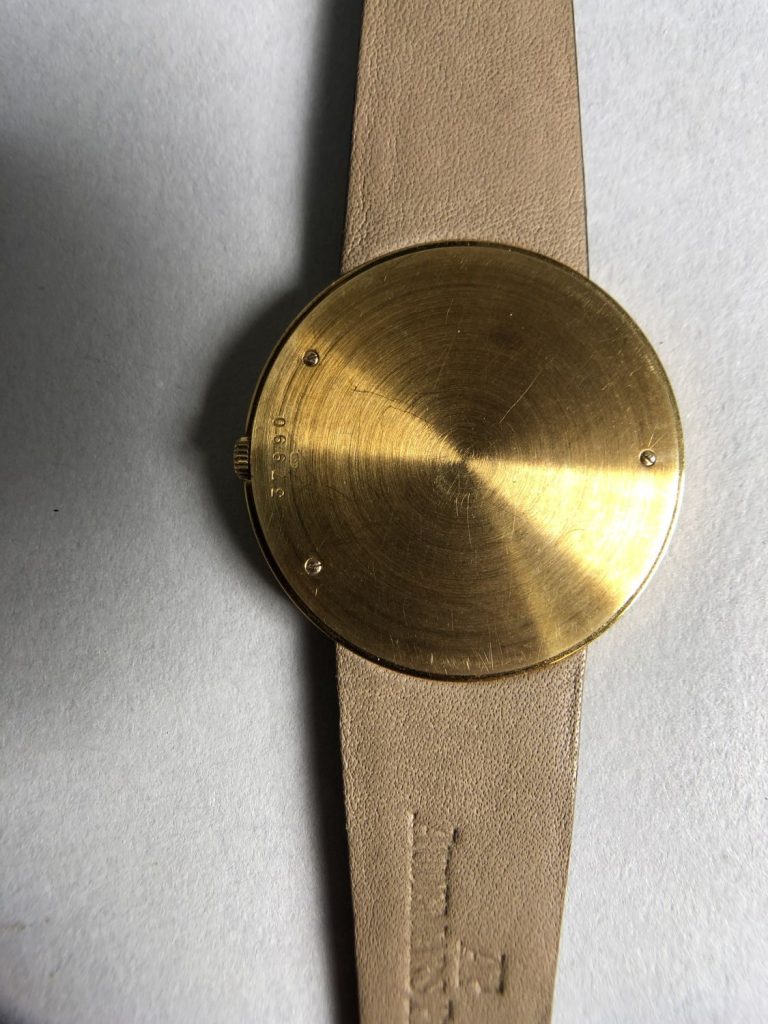
From the left: a 1963 Audemars Piguet Ref. 5093 Movement, A 18 kt yellow gold 5093 case back
Mechanically, the 5093 is powered by Audemars Piguet’s ultra-thin manual-winding movements, such as the Caliber 2003, developed in collaboration with Jaeger-LeCoultre. Measuring only 1.64mm thick, this movement was a marvel of horological engineering and one of the thinnest ever produced at the time. Its precision and reliability ensured that the watch was not only visually stunning but also technically advanced. The integration of such a movement allowed the Disco Volante to achieve its exceptionally slim profile, a key feature that has made it a prized piece among collectors.
Next up, the Jaeger-LeCoultre “Disco Volante” is a nickname given by collectors to certain Jaeger-LeCoultre Ultra-Thin dress watches produced by the brand during the mid-20th century. While not an official designation, this term aptly captures the sleek, rounded design and domed case profile of these watches, reminiscent of a flying saucer or “Disco Volante.” These models were highly representative of the era’s fascination with streamlined forms and minimalist elegance, reflecting Jaeger-LeCoultre’s mastery in blending technical precision with refined aesthetics. The smooth, bezel-less cases and gently domed crystals created a harmonious, futuristic appearance, aligning with the mid-century modernist ethos and the Space Age fascination.


From the left: A 1972 E562 Stainless Steel Jaeger-LeCoultre Automatic “Disco Volante” with Date. With box and original warranty
At the heart of these watches was Jaeger-LeCoultre’s expertise in ultra-thin movements, a hallmark of the brand’s technical innovation. Many “Disco Volante” models were powered by the Caliber 818/2, a manual-winding movement that was only 1.85mm thick. This caliber was part of the brand’s pioneering efforts in creating slim, reliable movements, allowing for the sleek profiles that defined these watches. Despite its thinness, the movement was remarkably robust and precise, underscoring Jaeger-LeCoultre’s commitment to horological excellence. The Caliber 818/2’s thin construction also made it a popular choice for luxury dress watches of the time, as it provided both technical functionality and aesthetic versatility. Other options in these watches included iconic movements like the 18 jewel manual wind calibre K818CW.


From the left: An example of the JLC Caliber 818/2 movement, Another shot of the 1972 E562
The dials of these watches were typically minimalist, with simple hour markers, thin baton hands, and understated design elements. This focus on simplicity emphasized the elegance of the case and proportions, ensuring that the overall presentation remained clean and sophisticated. Crafted in precious metals such as gold or platinum, these watches exuded understated luxury while maintaining a practical and wearable design. Today, Jaeger-LeCoultre’s “Disco Volante” watches are highly sought after by collectors, not only for their timeless aesthetics but also for their historical significance in the evolution of ultra-thin watchmaking.
Similarly, the Piaget Altiplano is a cornerstone of luxury watchmaking, celebrated for its unparalleled thinness, minimalist elegance, and technical innovation. The Altiplano draws on Piaget’s legacy of ultra-thin horology, which began with the revolutionary Caliber 9P in 1957—a manual-winding movement measuring just 2mm thick. This tradition continued with the automatic Caliber 12P in 1960, setting a standard for slimness and mechanical sophistication. The Altiplano collection epitomizes refined simplicity with its sleek, round cases, often less than 4mm thick, and dials that are clean and understated. Featuring minimal hour markers, thin hands, and subtle decorative finishes, the Altiplano emphasizes clarity and harmony, embodying timeless elegance. Crafted from luxurious materials such as gold, platinum, and, in some cases, titanium or ceramic, the watches often feature exquisite dial treatments, including meteorite, enamel, and mother-of-pearl, underscoring Piaget’s commitment to artistry.

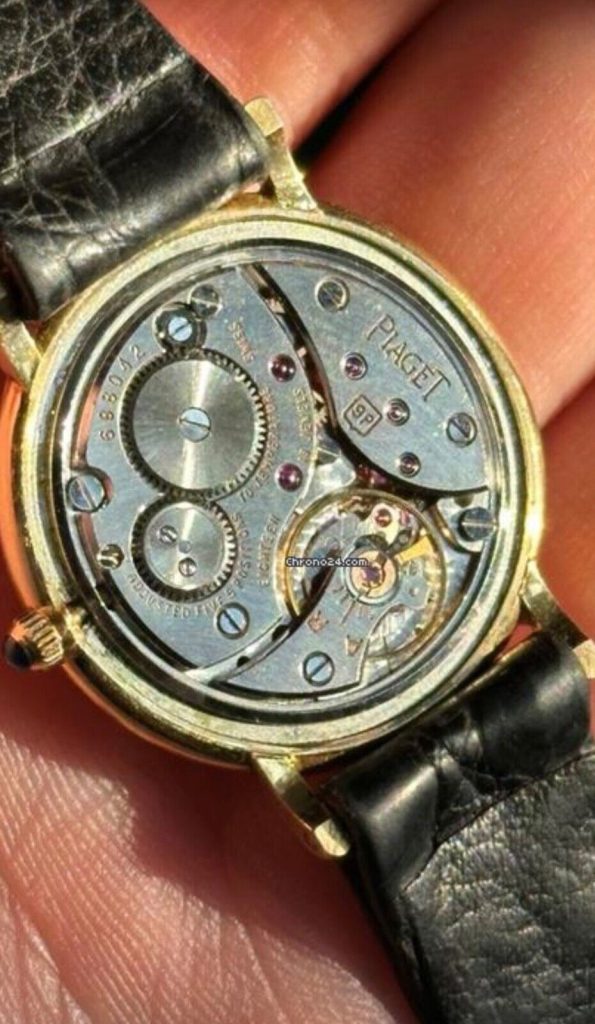
From the left: Front and movement shots of a Piaget Altiplano (ref. 9035) with a 27mm 18k Gold Case
At the heart of the Altiplano is Piaget’s mastery of ultra-thin movements, with many models boasting record-breaking calibers. The collection’s technical highlights include the Caliber 900P, which integrates the case and movement into a single structure to achieve incredible slimness, and the Caliber 910P, an automatic version with an off-center micro-rotor. In 2018, Piaget introduced the Altiplano Ultimate Concept, a groundbreaking watch measuring just 2mm thick, showcasing the brand’s relentless pursuit of innovation. Despite its slender dimensions, the Altiplano often incorporates complications like date displays, dual time zones, and skeletonization, demonstrating Piaget’s ability to balance technical complexity with aesthetic purity. Paired with elegant leather straps or minimalist metal bracelets, these timepieces are versatile yet unmistakably luxurious.
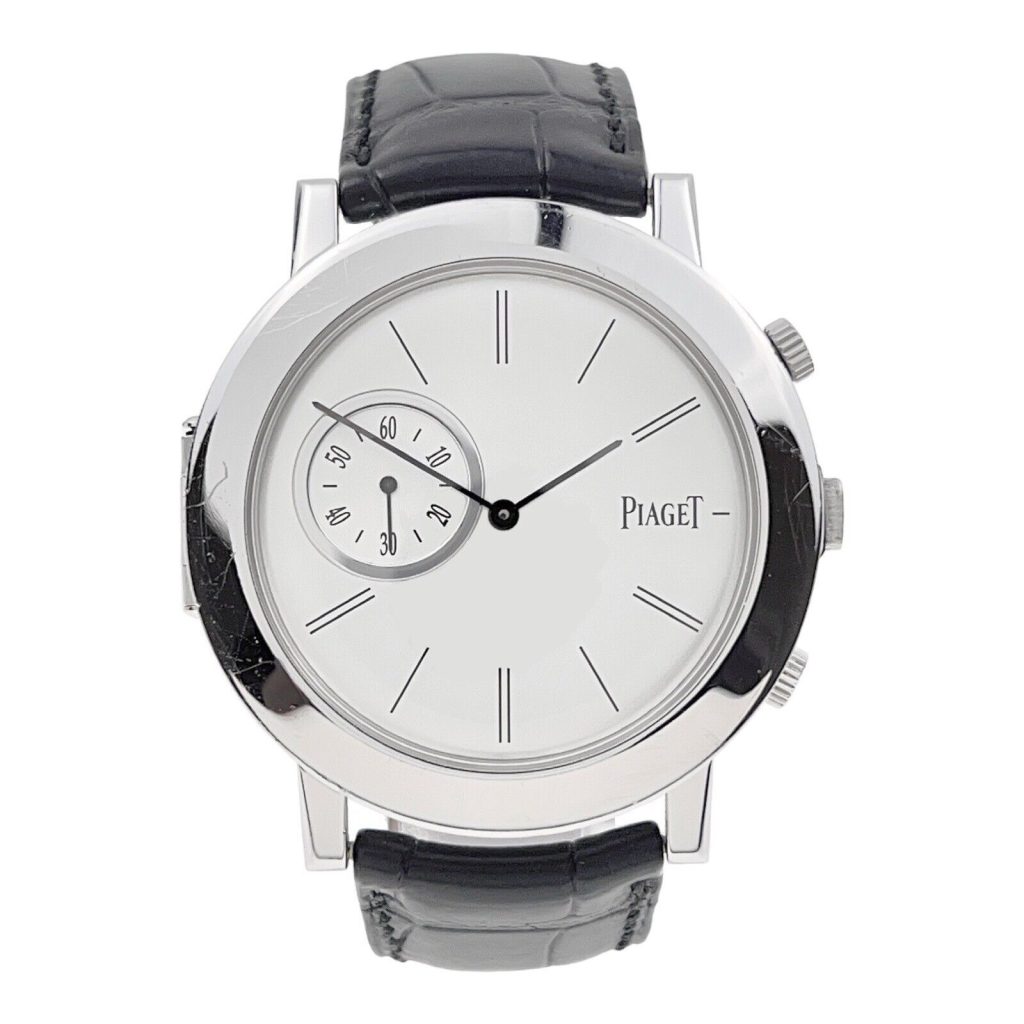
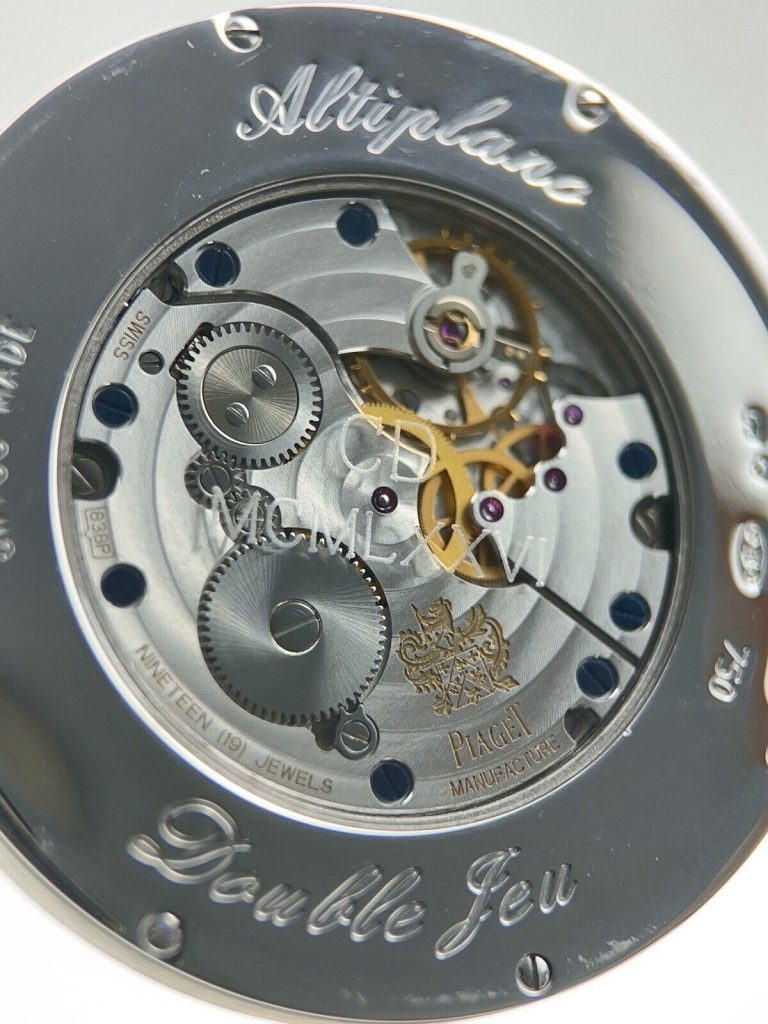
From the left: Front and case back shots of an 18k White Gold Piaget Altiplano ref. PI0436
The Vacheron Constantin Patrimony collection is a cornerstone of the brand’s portfolio, embodying the essence of understated elegance and timeless design. Rooted in the classical aesthetic traditions of mid-20th-century watchmaking, the Patrimony line draws inspiration from the minimalist dress watches that defined the era, particularly those produced by Vacheron Constantin in the 1950s. The hallmark of the Patrimony is its clean and harmonious design, characterized by a slim, round case, minimalist dials, and perfect proportions. These elements combine to create a refined and sophisticated timepiece that captures the essence of Vacheron Constantin’s centuries-long legacy of horological excellence.

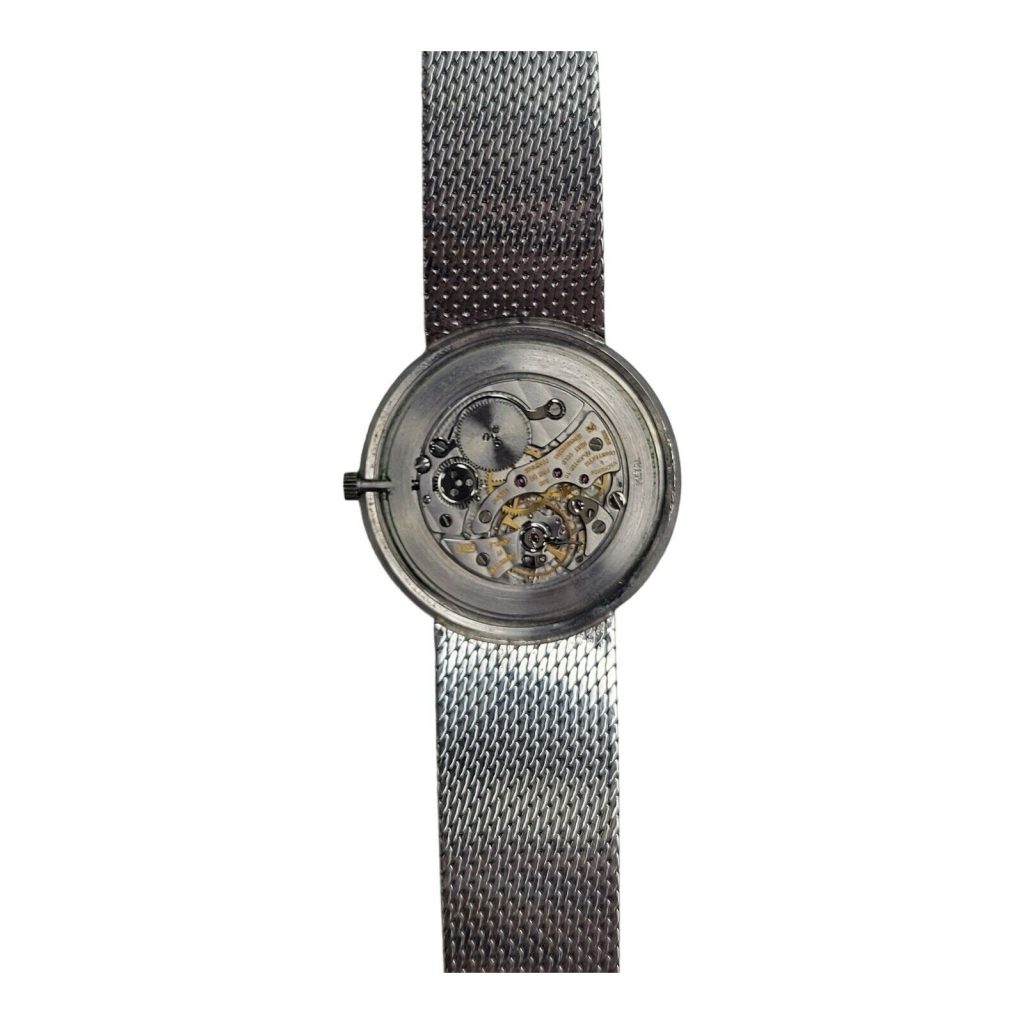
From left: Front and movement shots of a circa 1970-1979 Vacheron Constantin Patrimony Model 6352
At the heart of the Patrimony collection are high-precision in-house movements, a testament to Vacheron Constantin’s commitment to technical mastery. Many models are equipped with ultra-thin calibers, such as the Caliber 1400, a manual-winding movement renowned for its slim profile and exceptional finishing. Automatic versions, like those powered by the Caliber 2450, feature a Geneva Seal-certified movement, showcasing both technical innovation and artisanal craftsmanship. Complications within the Patrimony collection, including perpetual calendars, moon phases, retrogrades, and minute repeaters, are seamlessly integrated into the design, maintaining the collection’s focus on elegance and simplicity without compromising functionality.
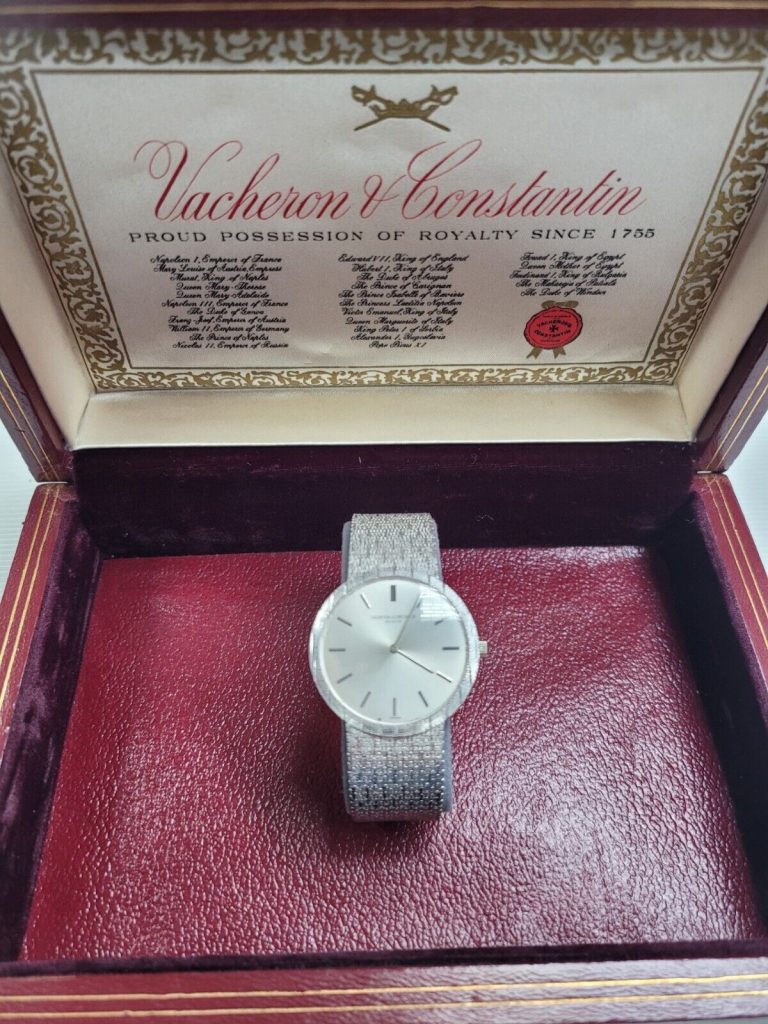
The Vacheron Constantin Patrimony in its original box featuring the slogan “Proud Possession of Royalty Since 1755”
The Patrimony’s minimalist dials are among its most iconic features, often adorned with applied baton hour markers, slender hands, and subtle details like a small seconds sub-dial or date aperture. Finishes such as sunburst, opaline, or guilloché enhance the visual depth while maintaining a clean aesthetic. These dials are complemented by a domed sapphire crystal and a slim bezel, further emphasizing the timeless design language. The cases, available in materials like rose gold, white gold, platinum, or stainless steel, reflect a balance of luxury and durability, paired with premium alligator leather straps or integrated bracelets for a versatile yet refined look.
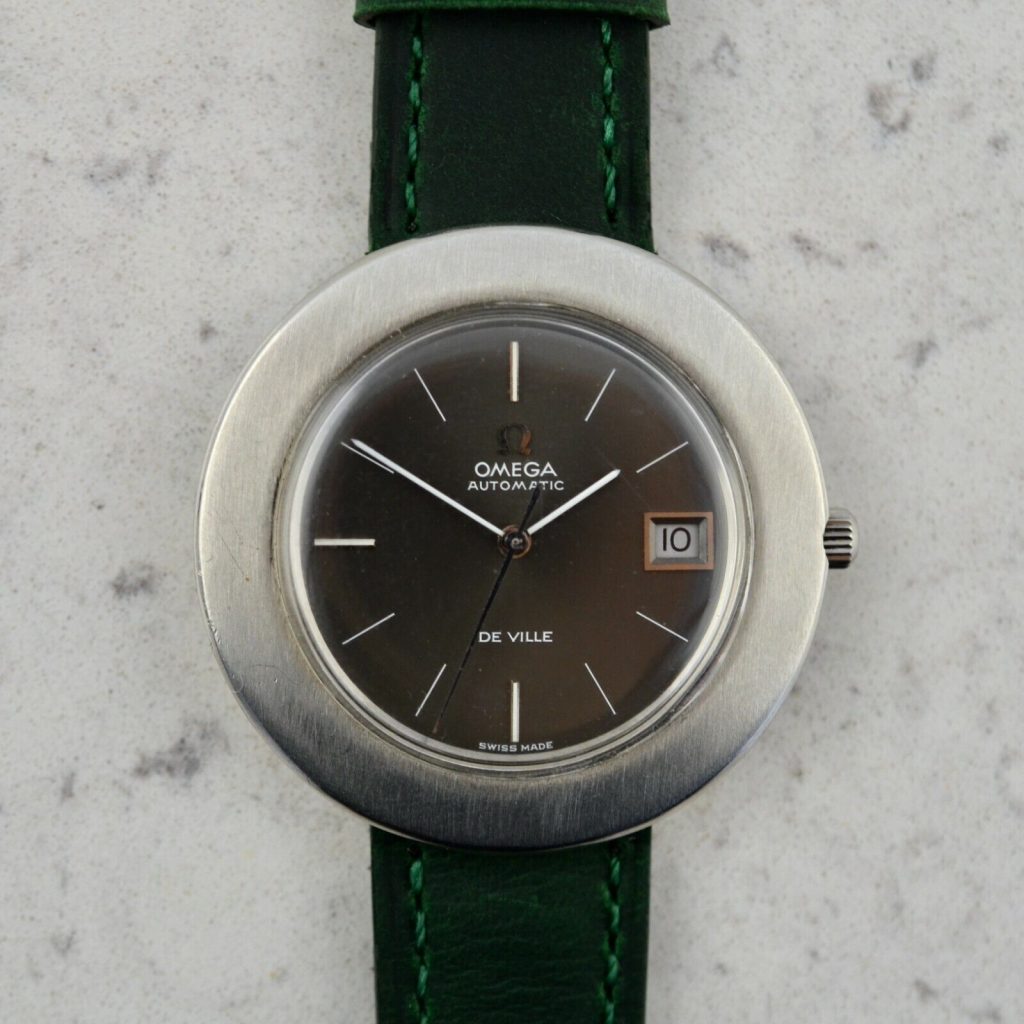
Finally, the vintage Omega Seamaster De Ville models from the 1960s are quintessential examples of the Disco Volante aesthetic, blending timeless elegance with the streamlined design ethos of the mid-20th century. Initially part of the Seamaster line, the De Ville models distinguished themselves with their sleek, minimalist styling and refined proportions. These watches featured slim, domed cases that sat comfortably on the wrist, embodying the “flying saucer” look that characterized the Disco Volante design language. The combination of smooth, flowing contours and thin profiles gave the watches a harmonious and futuristic appearance, aligning with the broader cultural fascination with modernism and space exploration during the era.
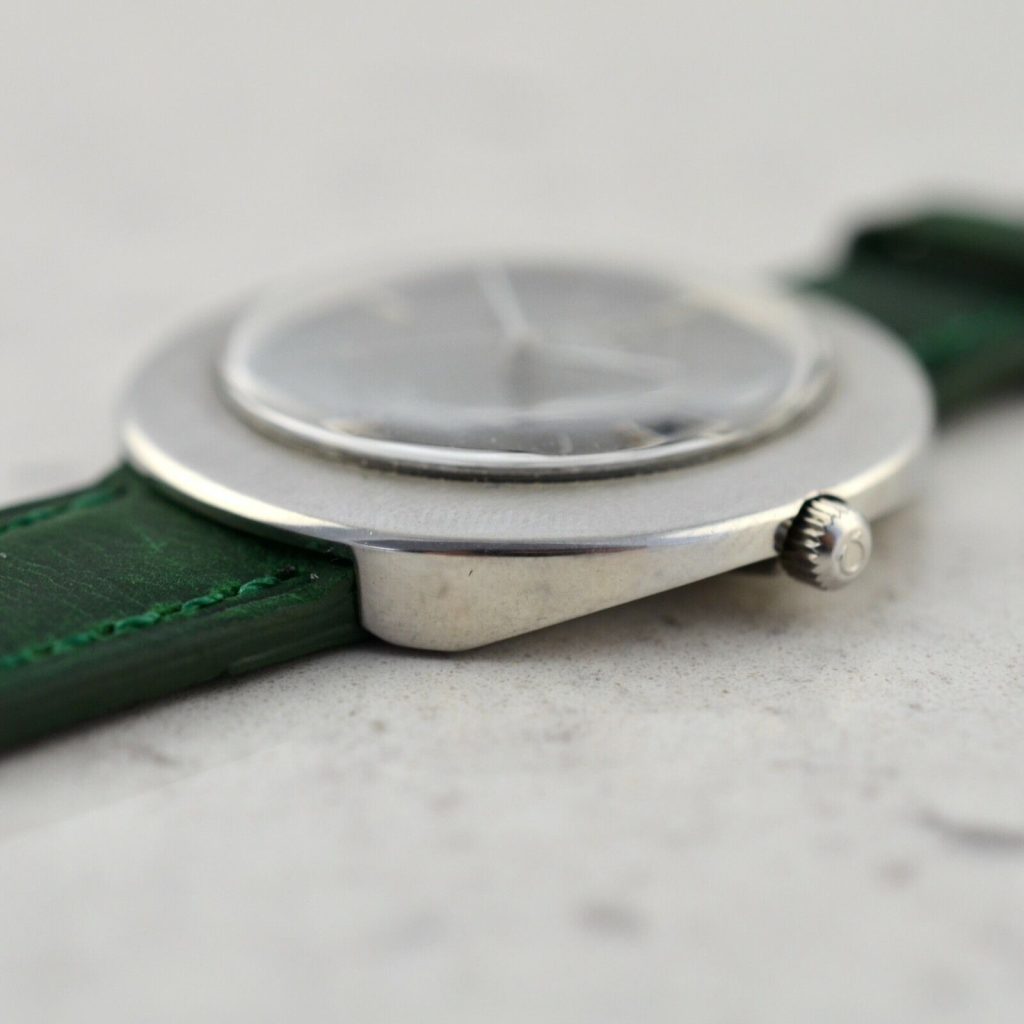
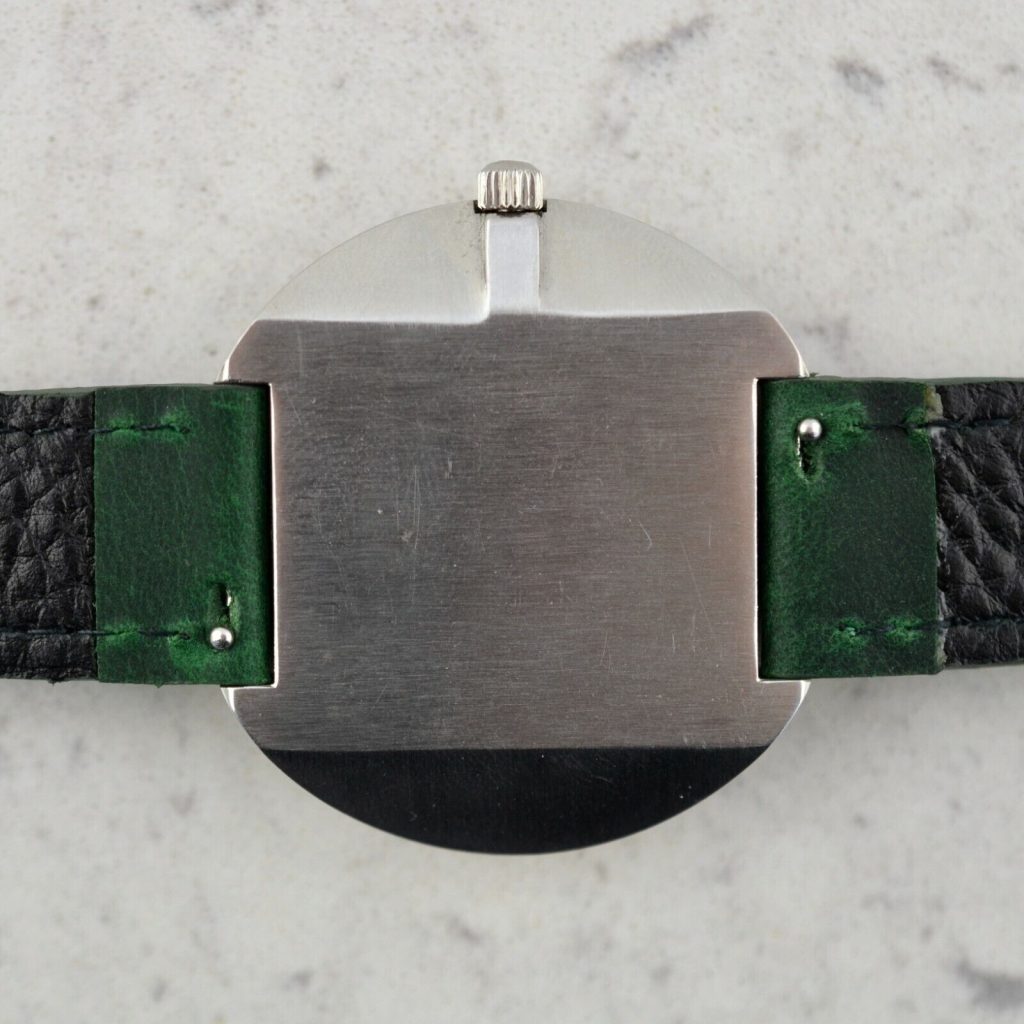
From the left: Front and case back images of a circa 1970 Omega De-Ville “Disco Volante” (ref. 166.0094)
Omega’s attention to detail extended to every aspect of the Seamaster De Ville’s design. The dials were often simple and understated, with applied baton or Roman numeral hour markers and slender hands, maintaining the clean aesthetic associated with the Disco Volante style. Subtle sunburst or brushed finishes added depth to the dials, while domed acrylic crystals enhanced the organic, flowing look of the case. The integration of the crown into the case design further emphasized the smooth, uninterrupted lines, making these watches as visually cohesive as they were functional.
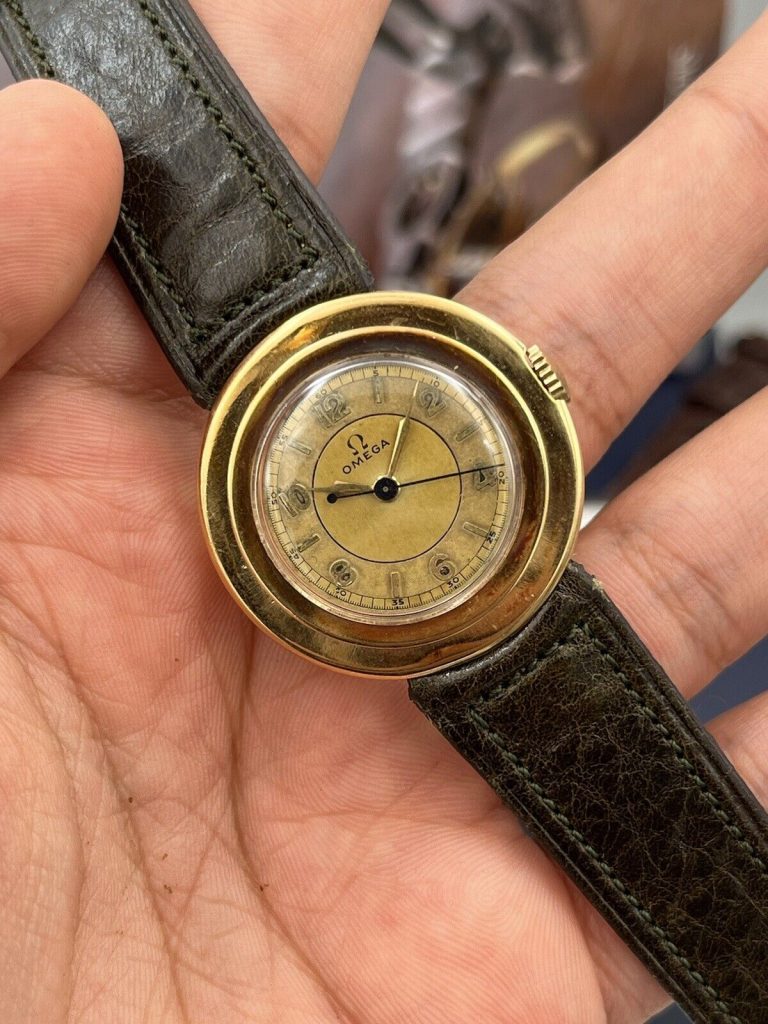

Front/back shots of a vintage “Disco Volante” Omega, showcasing its UFO inspired case.
Mechanically, the Seamaster De Ville was powered by Omega’s reliable automatic and manual-winding calibers, such as the Caliber 552 or Caliber 565. These movements were known for their precision and durability, ensuring the watches performed as well as they looked. The combination of high-quality mechanics and impeccable design made the Seamaster De Ville a favorite among discerning buyers seeking a versatile yet sophisticated timepiece.
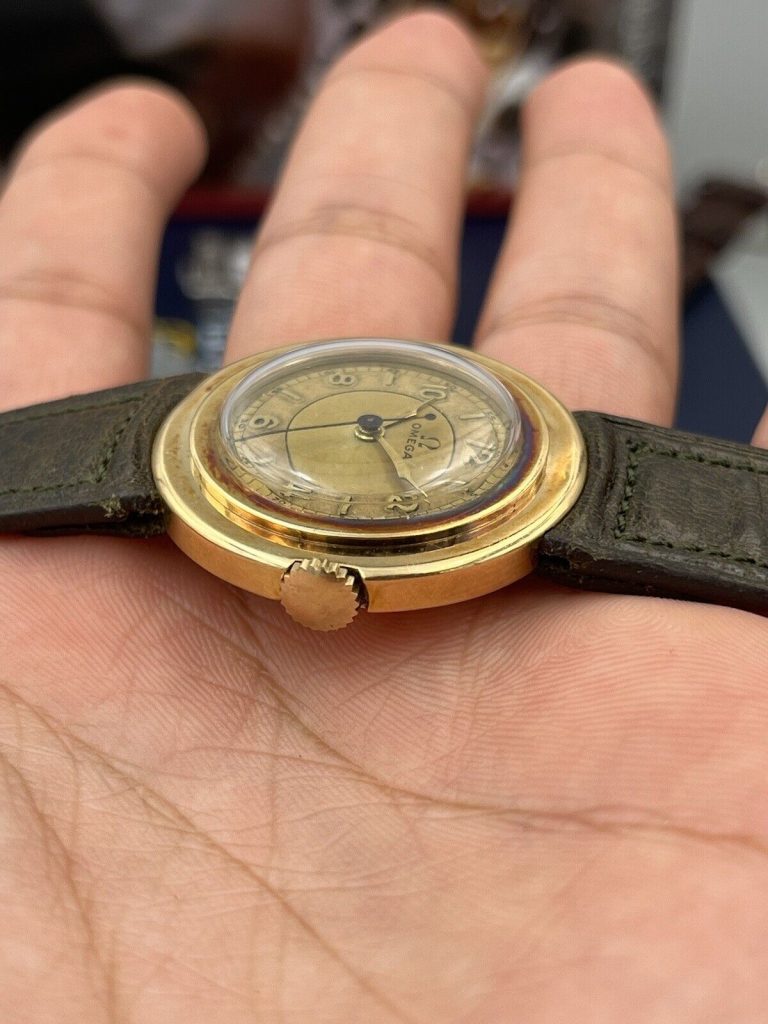
Additional images of these two phenomenal examples of “Disco Volante” inspired vintage Omegas
From mid-century Swiss manufacturers to smaller, independent watchmakers, the influence of the Disco Volante aesthetic was widespread and touched every corner of the horological world. Countless brands incorporated domed crystals, slim profiles, and rounded cases into their designs, creating timepieces that resonated with the cultural zeitgeist of the 1950s and 1960s. These watches ranged from high-end luxury pieces crafted in precious metals to more accessible models made with steel or plated materials, allowing a broader audience to embrace the futuristic, streamlined look. The aesthetic’s reach extended beyond the US and Europe, influencing designs everywhere, showcasing its global appeal and lasting impact on the evolution of watch design that extended through the decades and still pops up occasionally in designs today.


A really neat example of an Art Deco “Disco Volante” inspired watch from the 1930s (brand unknown).
Collectors are drawn to Disco Volante watches for their unparalleled design purity, which emphasizes clean, elegant aesthetics. The minimalist approach, characterized by domed cases, thin profiles, and simple dials, resonates deeply with those who appreciate the “less is more” philosophy. These watches focus on timeless beauty, eschewing unnecessary embellishments to highlight form and proportion. The flowing contours and bezel-less designs not only capture the essence of mid-century modernism but also ensure that these timepieces remain relevant and stylish, even decades after their introduction.
The historical importance of Disco Volante watches is another reason for their enduring appeal. These timepieces emerged during the mid-20th century, a pivotal era in horological history when watchmakers began prioritizing the integration of form and function. This period marked significant advancements in ultra-thin movements and case design, and Disco Volante watches represent the culmination of those efforts. They serve as tangible reminders of an era when technological innovation met cultural fascination with streamlined, futuristic design, making them cherished artifacts for collectors interested in both history and craftsmanship.
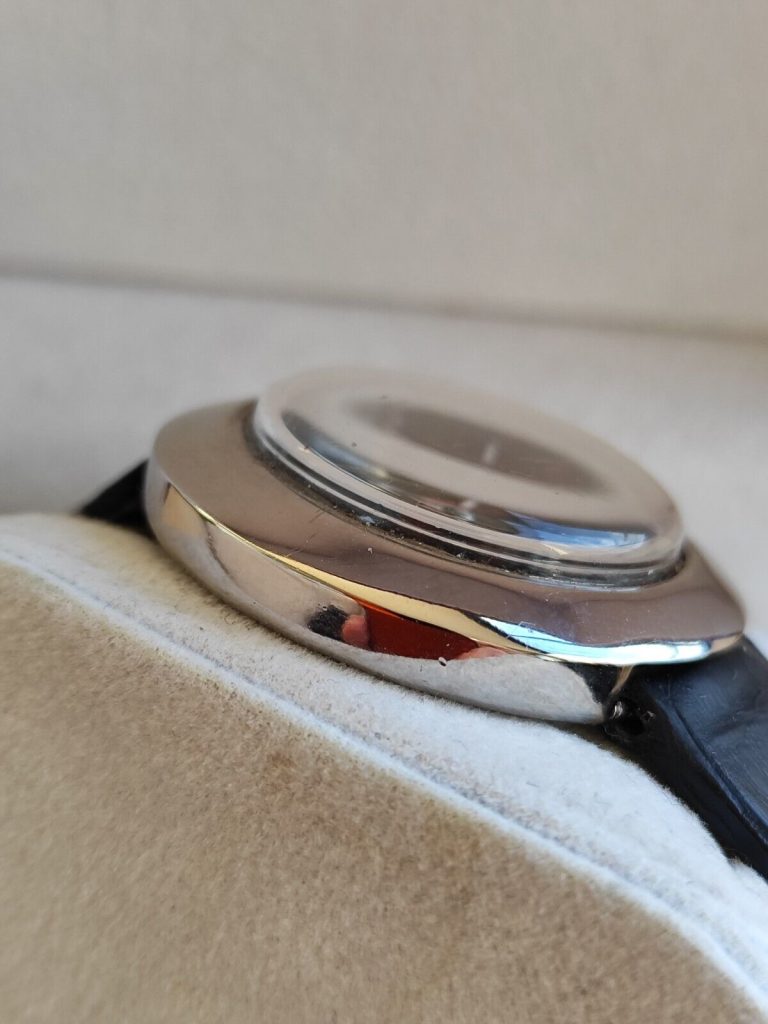

From the left: UFO inspired profile of a vintage Disco Volante watch, Audemars Piguet (ref. 5093)
In recent years, there has been a notable resurgence in the Disco Volante aesthetic among contemporary watchmakers. Many modern brands are revisiting the style, blending its iconic domed cases and minimalist design language with modern materials like titanium, ceramic, and sapphire. These updated interpretations often incorporate advanced technology, such as enhanced mechanical movements or hybrid features, to cater to today’s discerning audience. This revival underscores the timeless appeal of the Disco Volante aesthetic and its ability to adapt to evolving tastes while preserving its roots. By bridging the past and present, these modern iterations ensure that the cultural significance of Disco Volante watches continues to thrive in the world of horology.
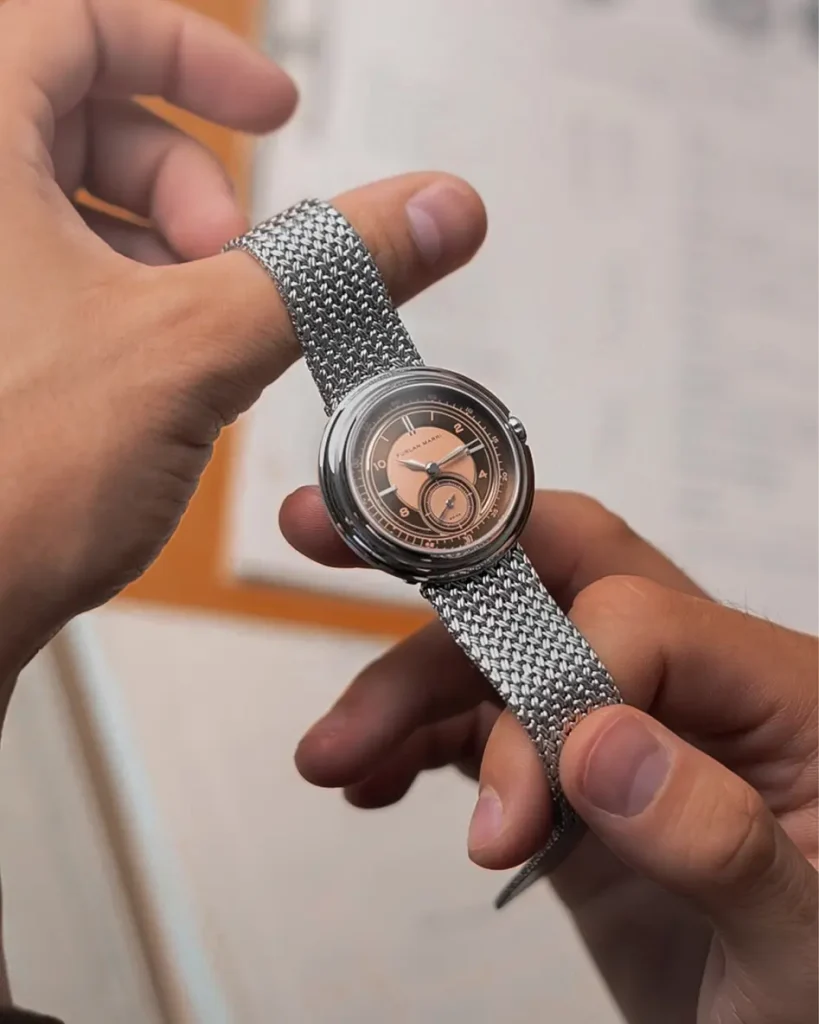

Really cool shots of the Furlan Marri Disco Volante
One such modern influence is being offered by Furlan Marri. The Furlan Marri Disco Volante is a contemporary homage to the mid-century design aesthetic characterized by sleek, domed cases that evoke the “flying saucer” or “Disco Volante” style. Furlan Marri, a microbrand celebrated for its meticulous attention to detail and accessible luxury, introduced this model as part of its commitment to blending vintage-inspired designs with modern watchmaking craftsmanship. The Disco Volante showcases a distinctive rounded case with smooth edges and a domed crystal, faithfully capturing the essence of the 1950s and 1960s design ethos. Its minimalist and elegant profile is complemented by refined details, making it a standout timepiece in the brand’s portfolio.


From the left, the Furlan Marri in the Celeste, Verde and Havana color offerings.
The dial of the Furlan Marri Disco Volante is a masterclass in simplicity and balance, featuring applied markers, slim hands, and subtle finishes. This approach underscores the brand’s focus on creating a clean, harmonious aesthetic that pays tribute to vintage horology while appealing to contemporary tastes. The domed sapphire crystal enhances the watch’s retro feel while providing modern durability and scratch resistance. The case, available in materials such as stainless steel or gold-plated finishes, further emphasizes the brand’s ability to deliver luxury at an accessible price point.

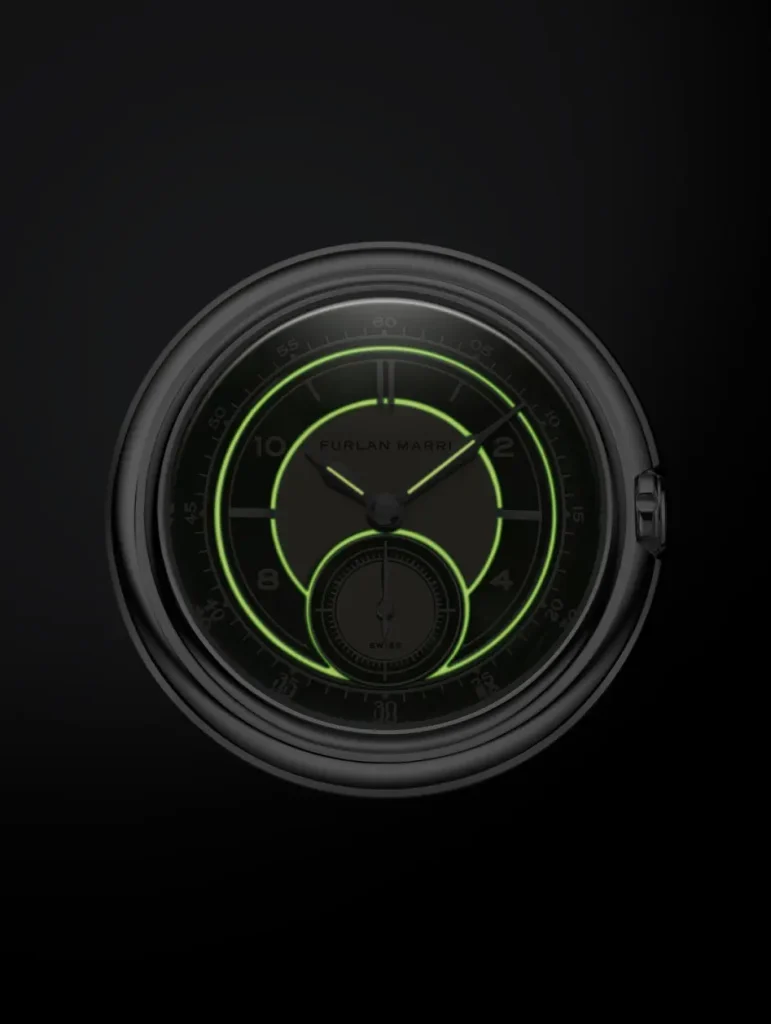
From the left: the Furlan Marri Peseux 7001 movement, the unique sci-fi inspired lume pattern on the Disco Volante’s face.
The Furlan Marri Disco Volante is powered by the reliable Peseux 7001 manually wound mechanical movement, a caliber renowned for its precision and slim profile. With a diameter of 10½ lignes (23.73 mm) and a thickness of just 2.50 mm, the Peseux 7001 perfectly complements the sleek and minimalist design of the Disco Volante. Featuring 17 jewels, the movement is both efficient and durable, ensuring smooth operation and longevity. This choice of movement allows the watch to maintain a slim profile, aligning with the ultra-thin cases that define the Disco Volante style. Paired with carefully crafted leather straps, the Disco Volante offers both comfort and versatility, suitable for formal occasions or everyday wear.

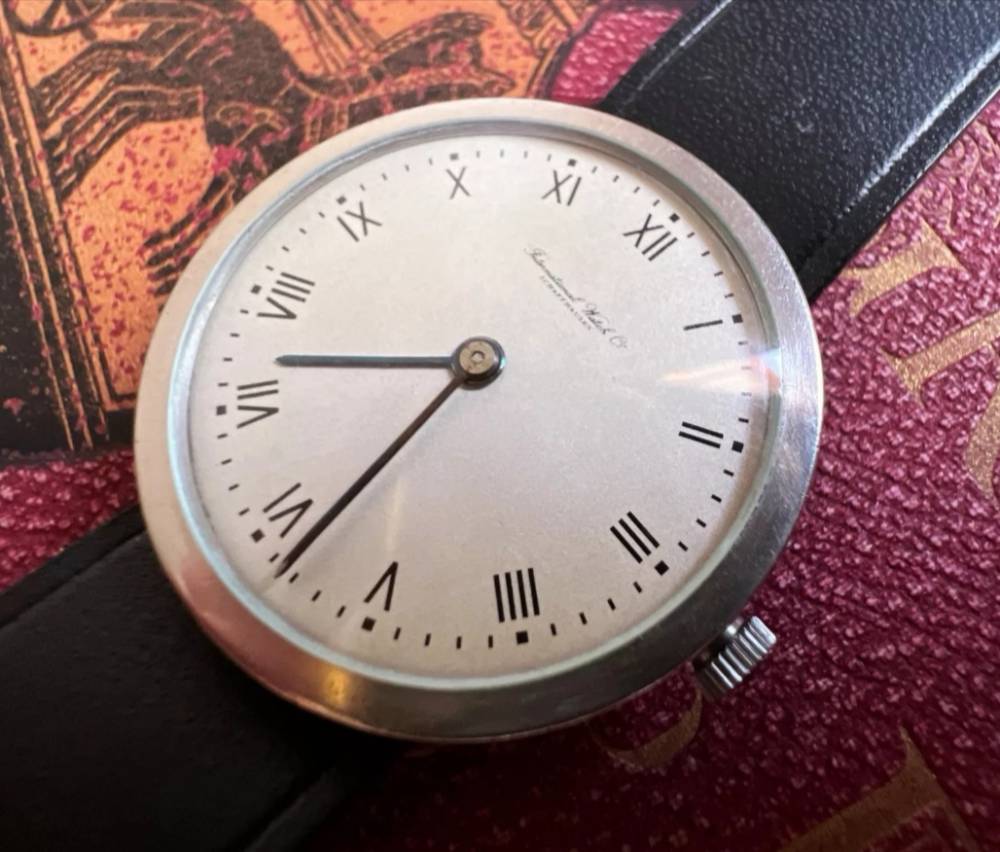
From the left: Citizen and IWC models with Disco Volante inspired designs.
The Disco Volante aesthetic represents the intersection of art, engineering, and timeless design. Its combination of elegance, simplicity, and futurism ensures it remains an enduring symbol of sophistication in horology. From its roots in the mid-century Space Age fascination to its widespread influence across multiple design industries, the Disco Volante aesthetic encapsulates an era of optimism and innovation. Watches that embody this style, both vintage and modern, continue to captivate collectors and enthusiasts with their harmonious proportions, minimalist beauty, and advanced technical craftsmanship.
As we see contemporary watchmakers revive this iconic aesthetic, the Disco Volante style proves its ability to transcend time, seamlessly bridging the past and the present. Whether through vintage treasures that reflect the peak of mid-century modernism or modern reimaginings that integrate cutting-edge technology, these timepieces represent more than just tools for timekeeping—they are wearable art that celebrates human ingenuity and creativity. The legacy of Disco Volante watches ensures they will always remain a testament to the enduring power of design and the allure of exploring new frontiers, both terrestrial and beyond.