

I first stumbled upon the Bulova x Frank Lloyd Wright Collection when someone shared a funky-looking watch in a group I follow. The bold square case and intricate geometric dial instantly caught my eye. A quick search revealed it was a tribute to the Ennis House (see below)—and from that moment on, I had to learn more.
There’s a natural kinship between watchmaking and architecture. Both disciplines are where art meets engineering, and beauty is born from precision. They could be purely functional—mundane tools of daily life. But instead, they’ve become arenas where the best in the world compete to create objects of wonder, brilliance, and opulence.

A collage of some of Frank Lloyd Wright’s most iconic designs.
It’s no wonder, then, that many watch enthusiasts are equally drawn to great buildings, and that architects often marvel at the elegance of a finely made timepiece. Each depends on proportion, light, shadow, and the delicate interplay between structure and design.

A Bulova tribute to Wright’s Coonley Playhouse, located right outside Chicago (ref. 96B367).
In this shared space of thoughtful creation, Bulova’s Frank Lloyd Wright Collection emerges as a tribute to both worlds. One of the most compelling collaborations in recent memory, this series honors Wright’s architectural genius by translating his most iconic design motifs into wearable, ticking art.

The collection was not limited to just watches, here is a Bulova Frank Lloyd Wright Waterlilies Bluetooth Mantel Clock.
Founded in 1875, Bulova has long been known for its innovation and American heritage—from developing the first fully electronic watch (Accutron) to pioneering televised advertising. In partnering with the Frank Lloyd Wright Foundation starting in the 1990s, Bulova brought its design-driven ethos into direct conversation with one of America’s most iconic architectural legacies. The result: a collection that doesn’t just tell time, but tells a story.
Frank Lloyd Wright: Master of Lines and Living Spaces
“Every great architect is – necessarily – a great poet. He must be a great original interpreter of his time, his day, his age.” —Frank Lloyd Wright
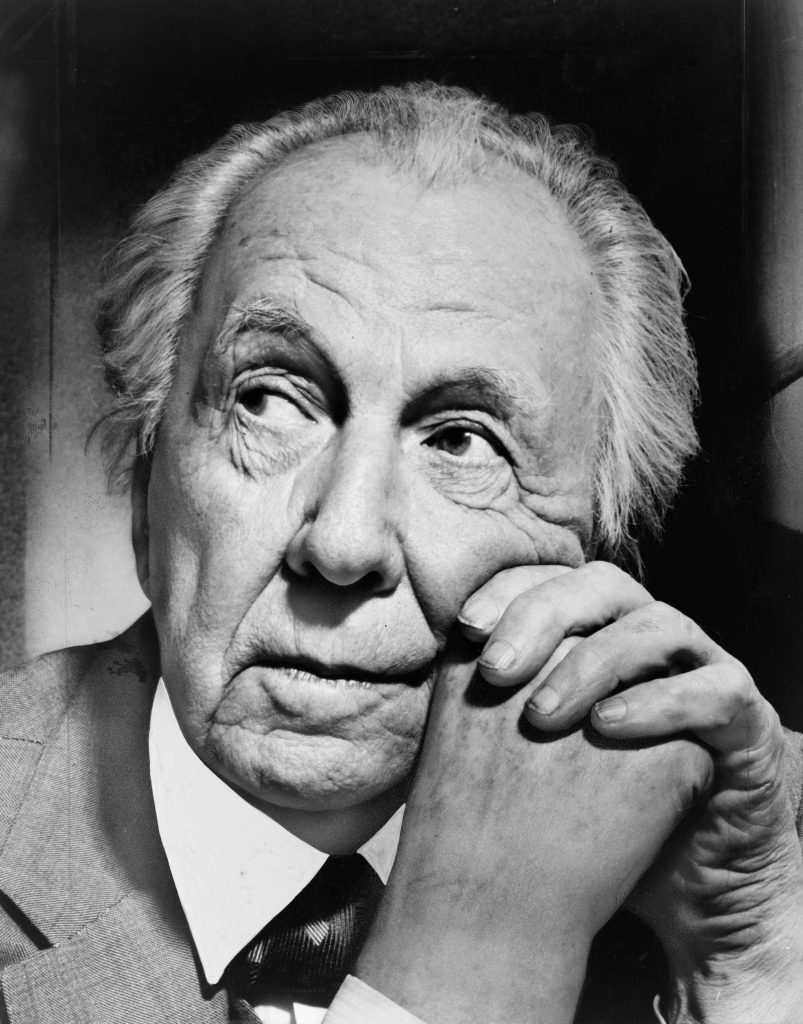

Frank Lloyd Wright (left), The Guggenheim Museum, NYC — One of Wright’s most iconic works, reflecting his love of circular design (right).
Wright wasn’t just an architect—he was, by his own assertion and practice, a poet in stone and space. Over his 70-year career, he designed more than 1,000 structures, with over 500 completed, including homes, offices, churches, schools, museums, and even a mile-high skyscraper concept. His work was deeply influenced by the principles of organic architecture—designing buildings that exist in harmony with humanity and their environment.
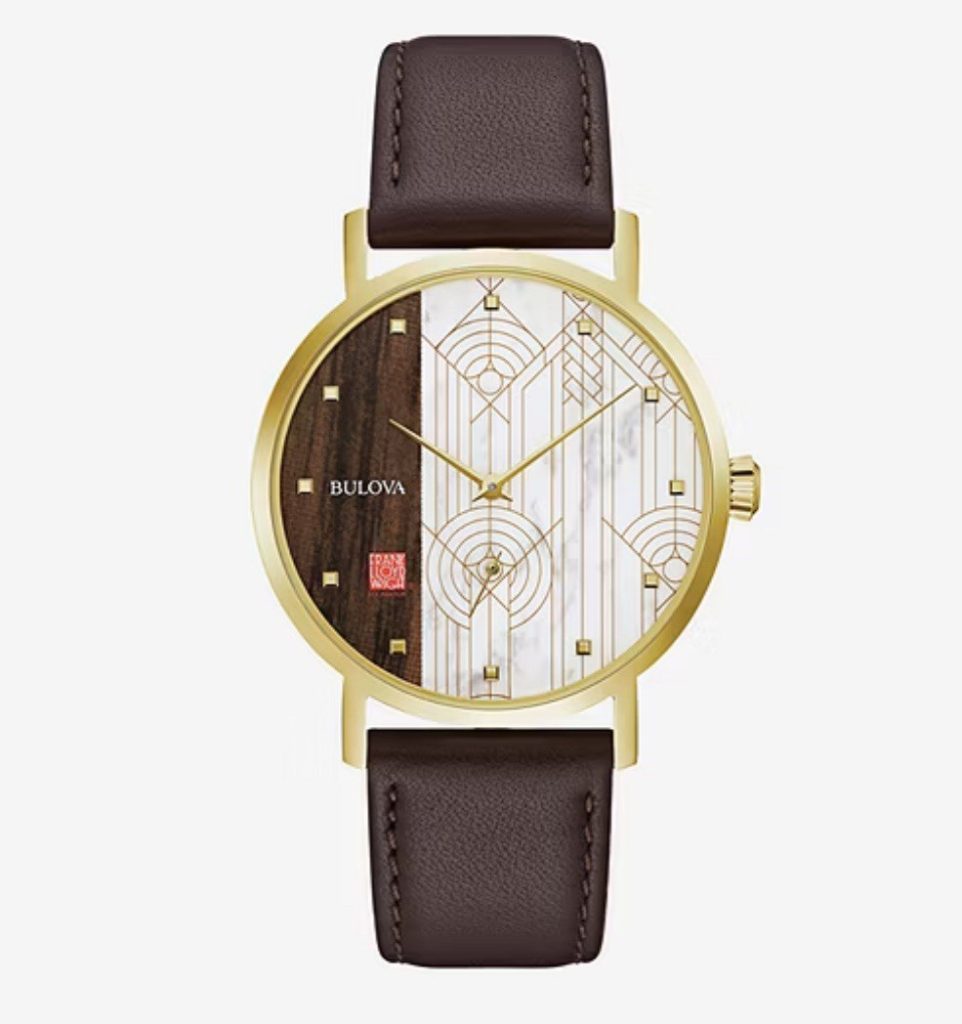
Bulova’s tribute to Frank Lloyd Wright’s April Showers (ref. 97A141)
One of Wright’s most enduring contributions to architectural thought was his philosophy of organic architecture. This approach emphasized harmony between human-made structures and the natural world. Rather than imposing buildings onto landscapes, Wright designed them to grow out of their surroundings, integrating materials, forms, and spaces in a way that felt cohesive and purposeful. He often used natural materials like stone and wood, employed horizontal lines to echo the horizon, and developed open floor plans that allowed spaces to flow freely. In Wright’s vision, a building should be as alive and evolving as the environment it inhabits—each element serving both function and aesthetic, without one overpowering the other.

Wright’s Iconic Fallingwater Design
One of the most iconic examples of this philosophy is Fallingwater (1935), where Wright designed the home to sit directly above a waterfall in the Pennsylvania woods. The structure’s cantilevered terraces stretch out like rock ledges, blending seamlessly with the surrounding forest and soundscape. Similarly, the Taliesin West complex in Arizona was built using local desert rock and wood, adapting to the landscape’s harsh sunlight and arid climate.


Interior shots of Wright’s Iconic Fallingwater House
In his Prairie Style homes, such as the Robie House in Chicago, Wright used low, horizontal lines and open floor plans to echo the flat Midwestern plains. These homes were not only physically anchored to their environment but also reflected the broader philosophy that living spaces should nurture the human spirit by fostering connection to nature and natural forms. Through each of these works, Wright demonstrated that architecture could be more than shelter—it could be an extension of the environment itself.
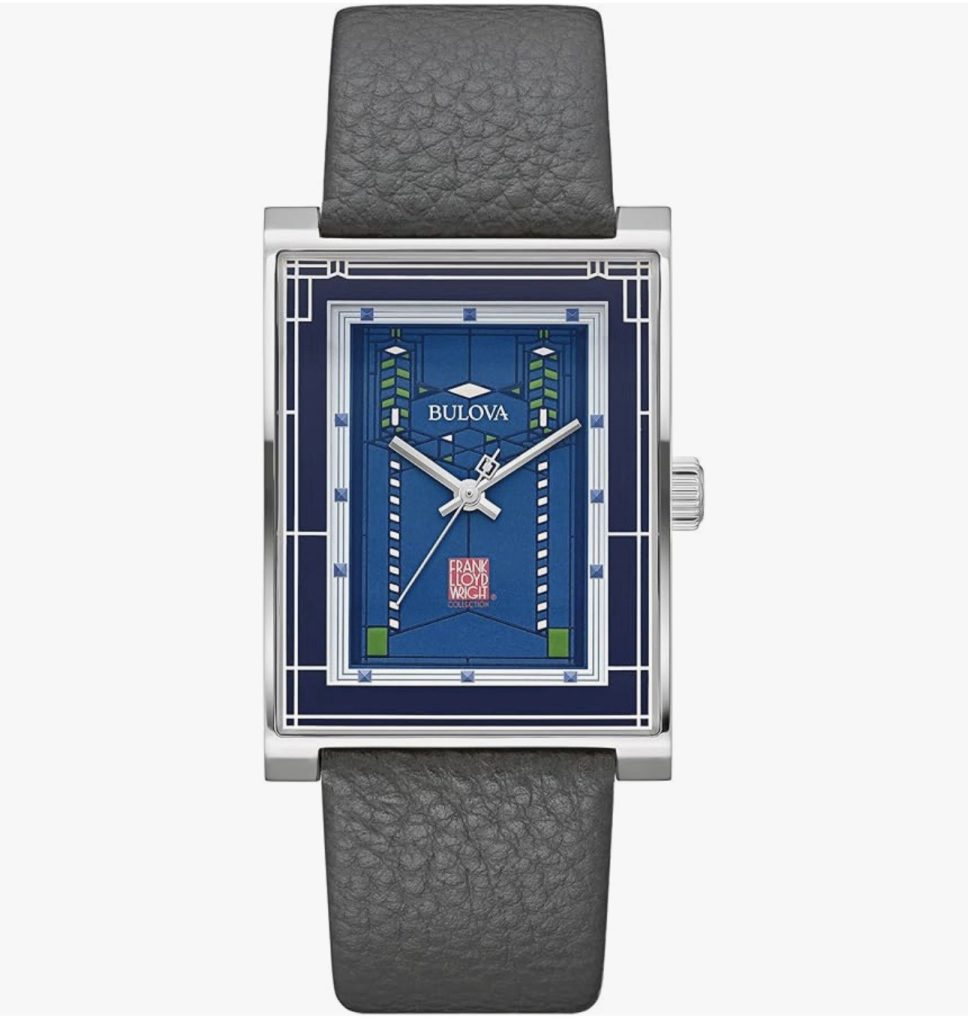
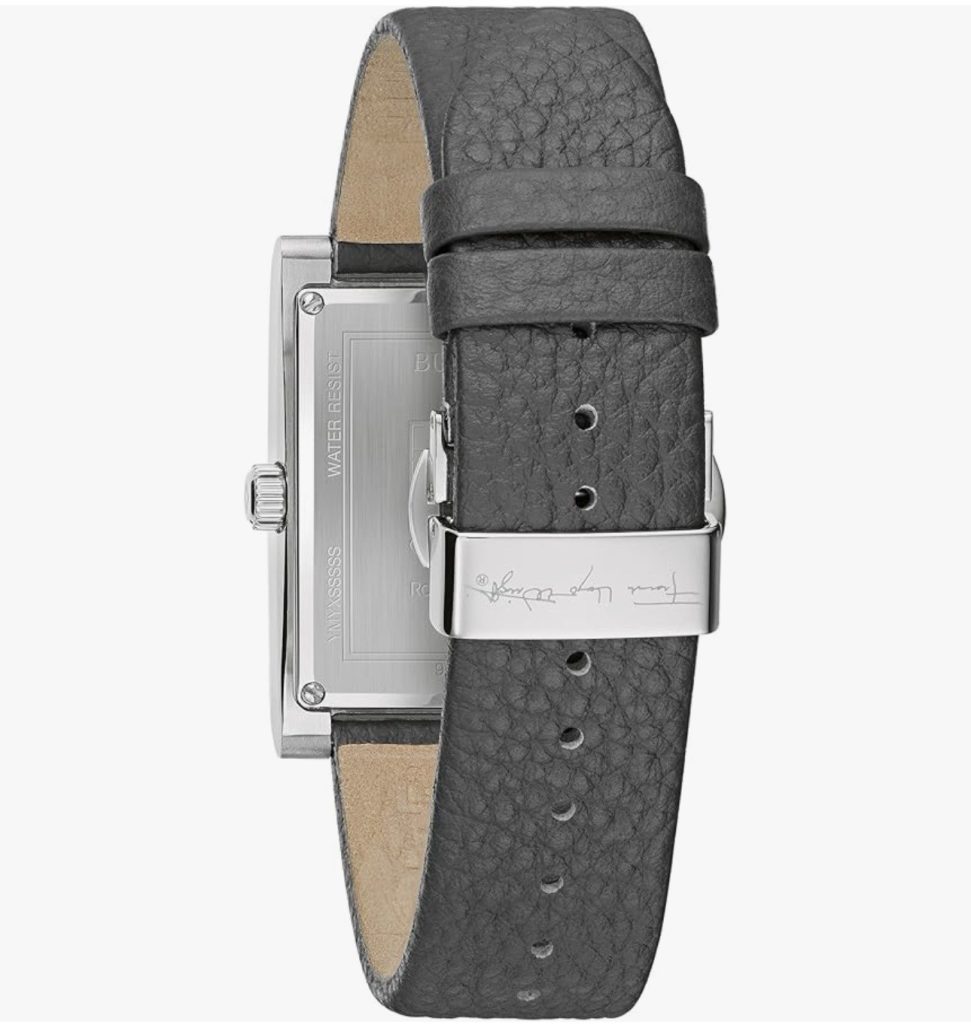
Bulova’s Frank Lloyd Wright Robie House Tribute (ref. 96A287)
Wright was also an innovator in integrating art, furniture, lighting, and textiles into a unified aesthetic vision. He believed that good design should be accessible and enriching, and he often emphasized the importance of beauty in everyday life. His philosophies were documented in numerous essays and books, and he established the Taliesin Fellowship to mentor the next generation of architects.
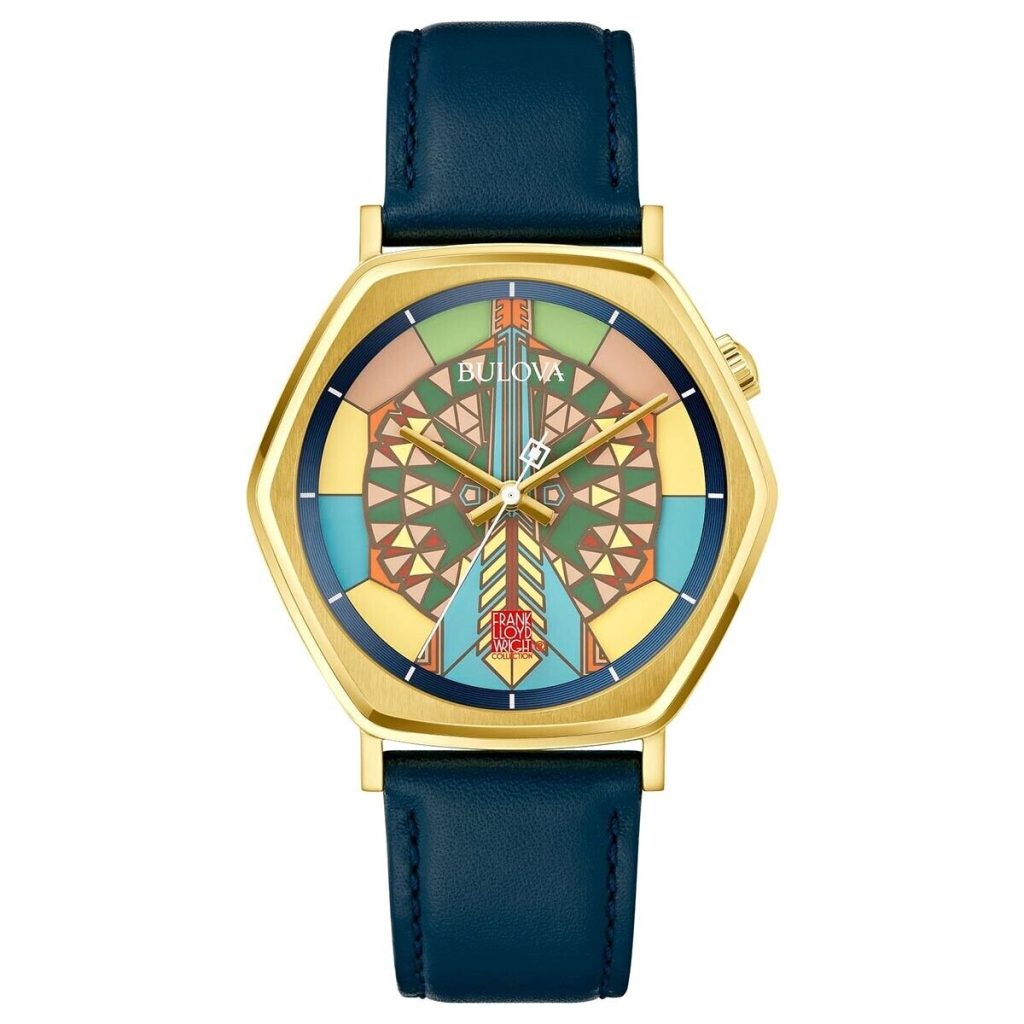

Bulova’s Tributes to the Wright Imperial Hotel ref. 97A177 (left) and a Bulova Women’s Wilits House watch (right)
Wright’s influence stretches far beyond architecture. His belief in integrated, purposeful design laid the groundwork for everything from minimalist interior trends to modern prefab housing. Today, his work is studied not only by architects, but by designers, artists, and even tech innovators seeking timeless solutions in a disposable world.
The Bulova Frank Lloyd Wright Collection captures this spirit of innovation, unity, and attention to detail—reminding wearers that great design doesn’t only belong in buildings, but can live on the wrist as well.
From Blueprints to Bracelets
The Frank Lloyd Wright Foundation and Bulova first joined forces in the 1990s, forming a partnership rooted in a shared respect for craftsmanship, precision, and timeless design. Rather than creating mere novelty watches, Bulova has crafted a collection that deeply reflects Wright’s architectural ethos.


Wrights Ennis House with the L.A. skyline in the distance (left), Ennis house interior (right).
Each piece in the series draws from an iconic Wright structure or design motif. Whether it’s the textile-block patterns of the Ennis House, the horizontal lines of the Robie House, or the stylized floral elements of the Hollyhock House, every watch captures a moment from Wright’s design journey and reframes it within the small canvas of a dial.

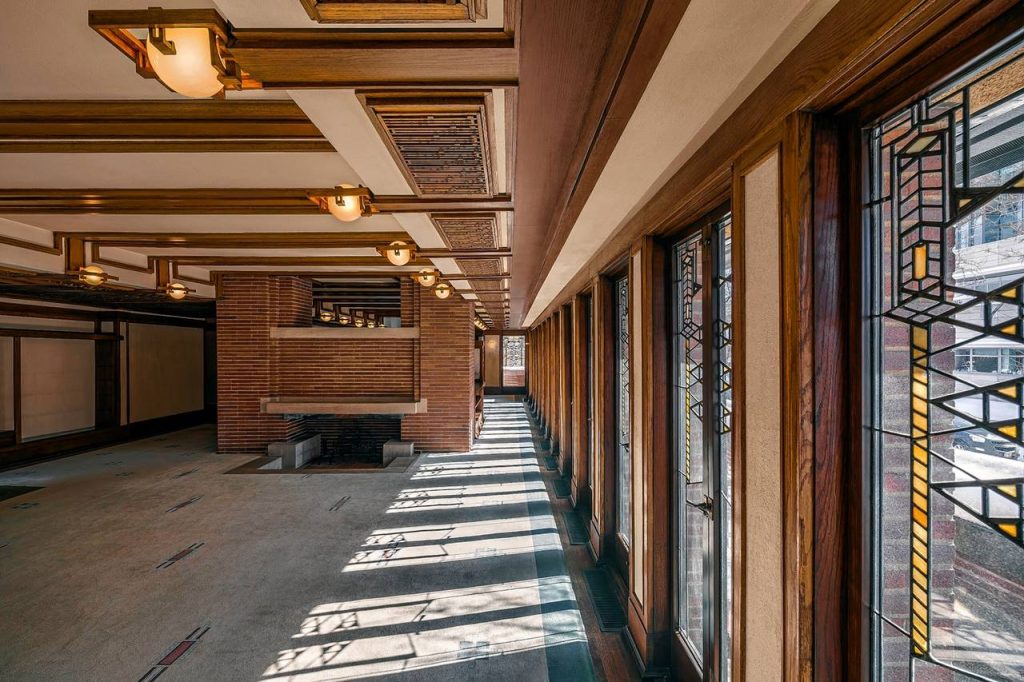
Wright’s Robin House exterior (left) and interior (right) shots.
Notably, the collection also includes a piece based on Wright’s 1927 “December Gifts” illustration for Liberty magazine. In this watch, symbolic geometric shapes representing virtues are layered across the dial, offering both visual intrigue and philosophical depth.

Wright’s 1927 “December Gifts” illustration features ribbon-wrapped geometric gifts arranged around an abstract Christmas tree of concentric lines.
Standout Models
Here are a few pieces from the collection that I personally found especially intriguing:
Featuring an open-heart design, the Oculus Automatic (ref. 96A248) draws from Wright’s fascination with circular motifs—seen in structures like the Guggenheim Museum’s spiraling rotunda and his use of oculi in skylights and decorative windows. These elements symbolized unity and fluidity. The Oculus reflects these principles with its open-heart dial—celebrating internal mechanics as both function and form.


Front and Caseback shots of the Bulova Oculus Automatic (ref. 96A248)
Next is the Ennis House Limited Edition (ref. 96A314). Limited to just 1500 pieces, this model boasts a dial texture that mirrors the Ennis House’s iconic concrete blocks.
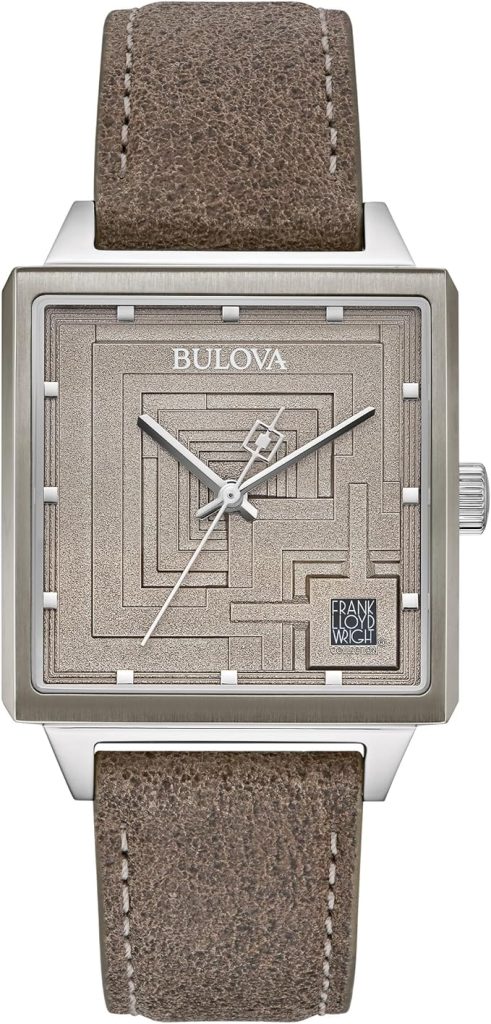

Front and Rear shots of the Bulova Ennis House Limited Edition (ref. 96A314) – note the Wright inspired details embossed into the leather strap.
Built in 1924 in Los Angeles, the Ennis House is one of Wright’s most distinctive examples of his textile block construction method, combining Mayan Revival influences with modernist sensibilities. The intricate relief patterns in the blocks are echoed on the watch dial, lending it a sculptural, architectural feel that connects the wearer directly to the bold physicality of Wright’s design.
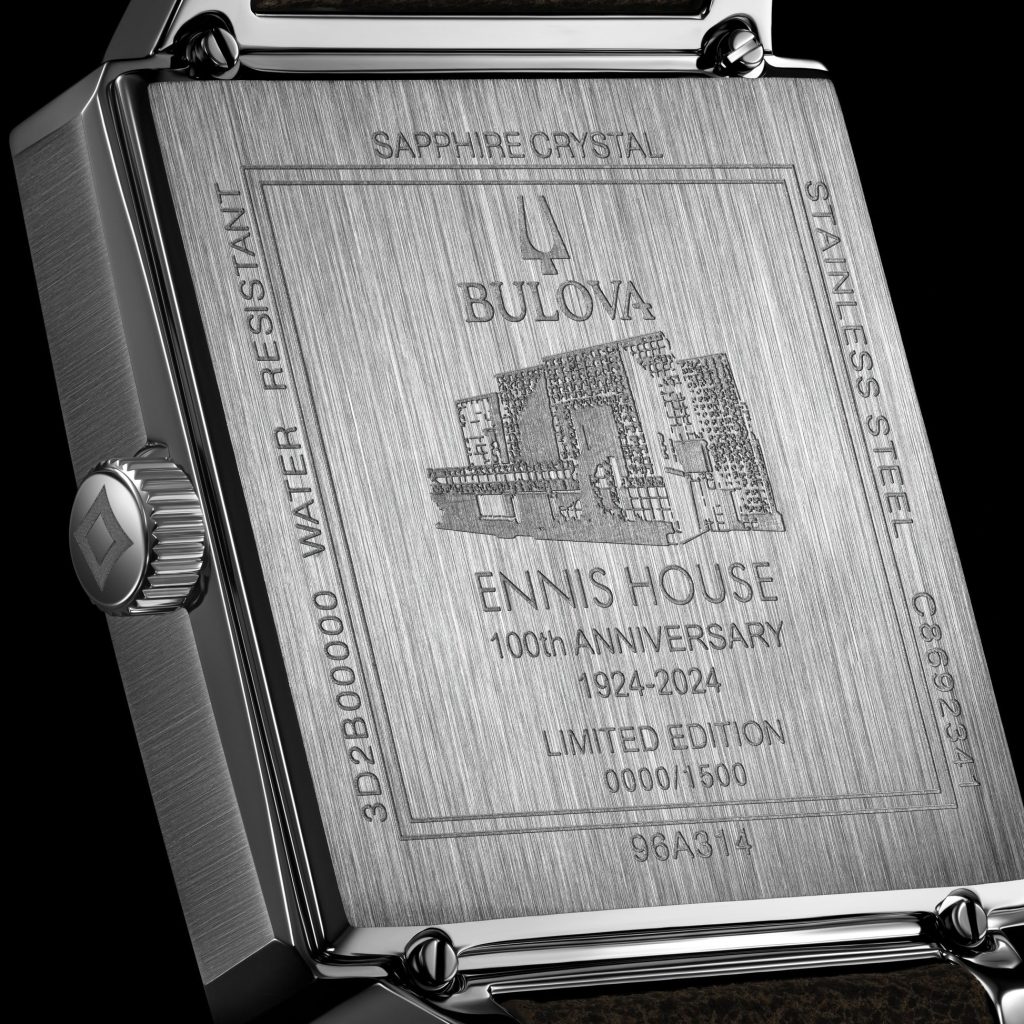
A gorgeous shot of the 96A314’s caseback.
Available in both stainless steel and gold-tone, the Hollyhock House (ref. 96A286 & 97A173) timepieces incorporate green dial tones that recall the lush garden elements of the original house. Built between 1919 and 1921 in Los Angeles, the Hollyhock House was Wright’s first commission in the city and reflects his early exploration of indoor-outdoor fluidity.


The Bulova Hollyhock House references 96A286 (left) & 97A173 (right).
The house was designed around the motif of the hollyhock flower—favored by his client, oil heiress and arts patron Aline Barnsdall—and this floral abstraction recurs in both structure and ornamentation. The watch’s design nods to this motif through subtle dial textures and organic hues, offering a wearable homage to Wright’s California modernism and botanical inspirations.
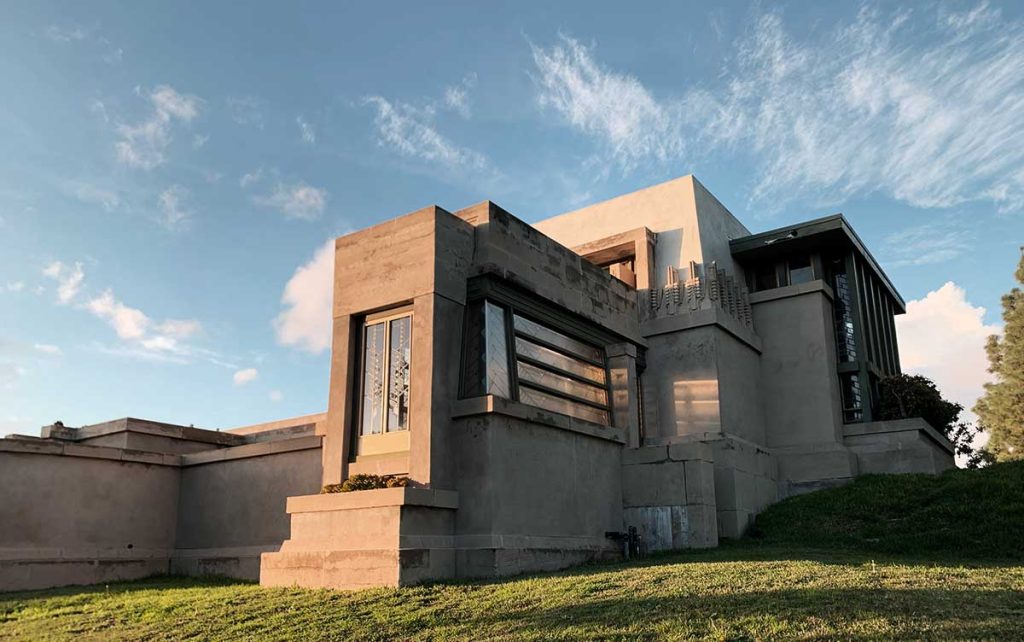
An exterior shot of Wright’s Hollyhock house.
Lastly, with a dial inspired by one of Wright’s rare graphic designs, the December Gifts (ref. 96A223) watch merges geometric abstraction with historical symbolism. The design is based on Wright’s 1927 cover proposal for Liberty magazine titled “December Gifts,” which was never published but has since become celebrated for its bold use of color and form. The artwork features interlocking circles, squares, and triangles in vivid primary hues, symbolizing the virtues of imagination, hope, and giving. Bulova’s interpretation thoughtfully echoes this composition, using layered geometric shapes and metallic finishes to create a timepiece that feels both modern and deeply rooted in Wright’s philosophy of harmonious design.

Bulova’s December Gifts Tribute (ref. 96A223)
While architecture-inspired watches aren’t new—think of Jaeger-LeCoultre’s tribute to Le Corbusier, or Nomos’ Bauhaus editions—Bulova’s Wright Collection remains one of the few that balances affordability, authenticity, and artistic interpretation.
Among all of Frank Lloyd Wright’s works, Fallingwater stands as a personal favorite. Its daring composition—built directly over a waterfall—and seamless integration into the Pennsylvania landscape make it a profound embodiment of Wright’s organic architecture. There’s a poetry in how the structure flows with its environment, not against it. It’s curious, then, that Bulova has yet to release a watch inspired by this masterpiece. Given its dramatic cantilevers, natural palette, and dynamic relationship with light and space, a Fallingwater timepiece would seem like a natural addition to the collection. As a longtime admirer of both Bulovas and Wright’s work, I can only hope it’s on the horizon.
Engineering Excellence
While the design is certainly the standout feature, Bulova hasn’t skimped on the technical details. Most watches in the collection are powered by either quartz or automatic movements. The quartz models typically use Japanese Miyota movements known for their accuracy and reliability, making them ideal for daily wear without the need for winding. The automatic models, such as the Oculus, house self-winding mechanical movements—specifically the Miyota 82S0 caliber, which features 21 jewels, a 42-hour power reserve, and a hacking function for precise time setting. Other automatic models inspired by Wright’s graphic designs utilize movements like the Miyota 8S20, which offer similar durability and are viewable through exhibition casebacks, allowing wearers to admire the inner workings.

Miyota’s 82S0 caliber movement.
Case sizes typically range between 30mm and 42mm, making the collection accessible for a variety of wrists. Straps and bracelets vary from leather to metal, often chosen to enhance the architectural theme of each model. Water resistance is generally rated to 30 meters—enough for everyday wear but clearly designed more for admiration than adventure.
Architectural Watches for the Cultured Collector
What sets this series apart is its ability to speak across disciplines. These are not watches designed simply for the architect, or merely for the watch aficionado—they are for the aesthete who recognizes the value in design that transcends its medium.
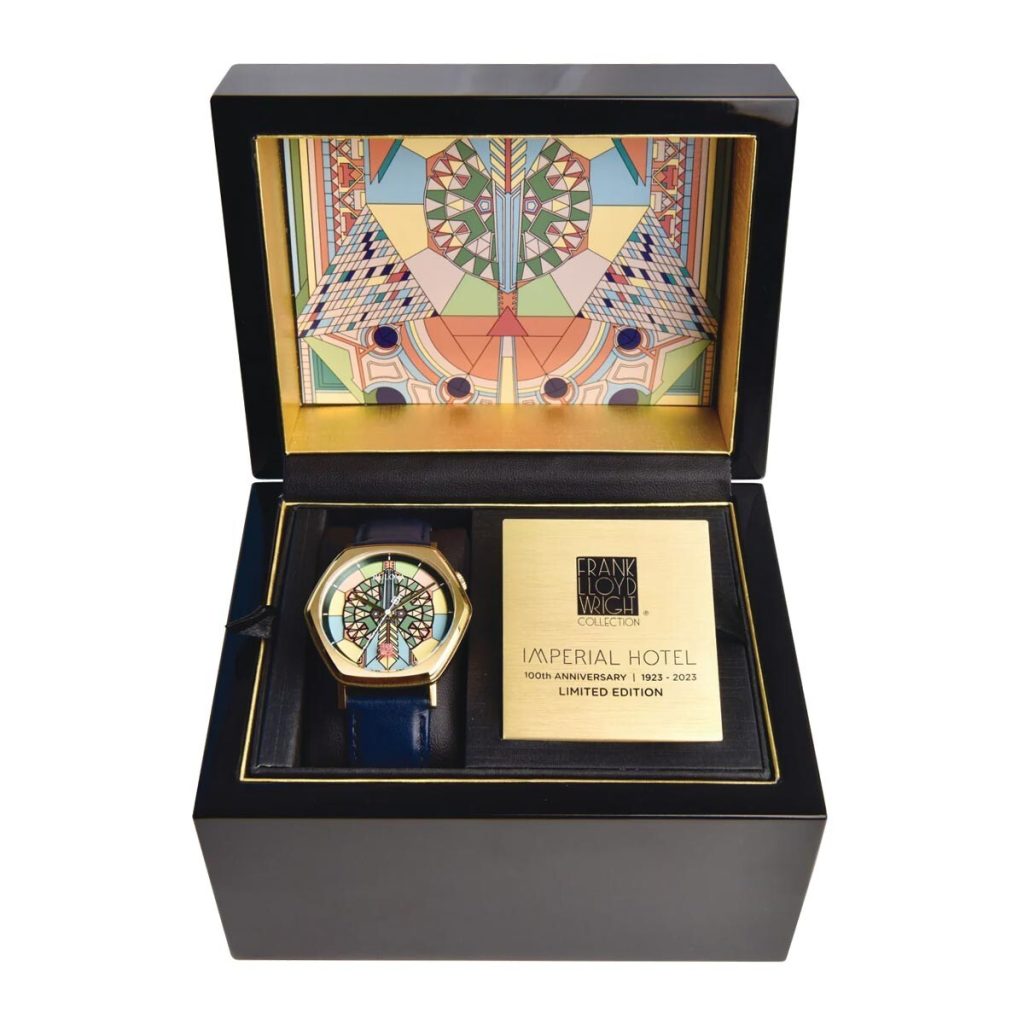
Bulova’s Classic Frank Lloyd Wright Imperial Hotel Limited Edition Watch & Box (ref. 97A177)
Wearing a Bulova Frank Lloyd Wright watch is like strapping a fragment of American architectural history to your wrist. It’s a quiet conversation starter, a subtle celebration of form, function, and the power of visionary design.
Whether you’re drawn to the stark geometry of a Prairie home or the ornamental stylings of early California modernism, there’s likely a watch in this series that reflects your personal taste—one that reflects not just your taste, but your philosophy of beauty, balance, and time.
⌚· · · ⌚ · · ·⌚· · · ⌚ · · ·⌚· · · ⌚ · · ·⌚· · · ⌚ · · ·⌚· · · ⌚
Read more at www.bowearswatches.com and follow @bowearswatches on Instagram for more unique watch stories and design inspiration.


